

Maddy summaryHRES 384 is a non-binding congressional resolution expressing support for designating May 2023 as Motorcycle Safety Awareness Month. It highlights that motorcycles are used by approximately 30 million Americans annually and emphasizes the importance of rider safety education, proper licensing, protective gear, and mutual awareness between motorcyclists and other road users. The resolution encourages all road users to share the road safely and recognizes motorcyclists' right to participate in transportation. It does not create new laws or regulations but aims to promote existing safety practices through public awareness. The resolution directly affects motorcyclists, drivers, and the broader public by encouraging safer road behavior during May 2023.
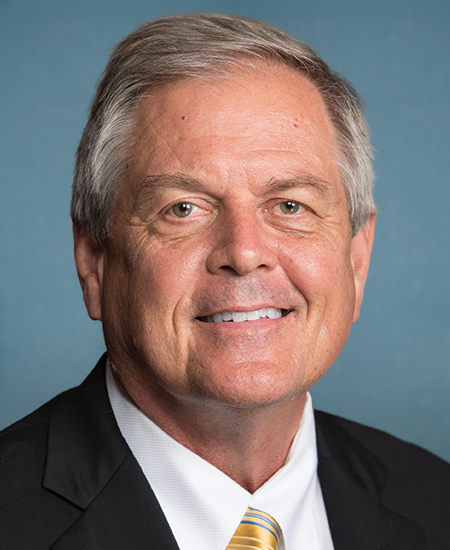
Rep. Ralph Norman
Sponsored bills
Maddy summaryHR 3175, the Regulation Reduction Act of 2023, requires federal agencies to repeal two existing regulations before issuing a new rule, and three for "major rules" (those with significant economic impact). For major rules, the new rule's cost must not exceed the cost of the repealed rules, and the Office of Management and Budget must certify this. Agencies must also submit a 90-day review to Congress identifying costly, ineffective, duplicative, or outdated regulations. This bill directly affects federal agencies and the businesses, states, and local governments subject to federal regulations.
Traditional Screening Application Act or the TSA Act This bill prohibits the Transportation Security Administration (TSA) from using the X gender designation in the TSA PreCheck advanced security program and instead authorizes the TSA to allow program applicants and participants to select from only Male or Female . The bill defines the terms male and female as the biological classification of male and female sex in the context of reproductive potential or capacity, as indicated by sex chromosomes, naturally occurring sex hormones, gonads, and nonambiguous internal and external genitalia present at birth.
Maddy summaryHRES 358 is a symbolic resolution commemorating the 50th anniversary of the National Wild Turkey Federation (NWTF). It recognizes the NWTF's 50 years of work, including conserving over 22 million acres of habitat, investing $500 million in conservation, and recruiting over 1.5 million hunters since 2012. The resolution celebrates the NWTF's role as a key partner in wildlife conservation and hunting heritage efforts. As a non-binding resolution, it does not create new laws or funding but formally honors the organization's contributions to habitat conservation and outdoor traditions.
Scope 3 Act This bill prohibits any securities law requirement that an issuer of securities must disclose the greenhouse gas emissions of its value chain (i.e., scope 3 emissions).
No Taxpayer Funding for United Nations Green Climate Fund Act This bill requires the Department of State to withhold the same proportion of funds from the mandatory U.S. contribution to the United Nations as the proportion of the U.N. budget made available to the U.N. Green Climate Fund. Such withheld funds must be rescinded and may not be considered arrears to be repaid to the United Nations. The bill also prohibits the State Department from making voluntary contributions to the U.N. Green Climate Fund.
Maddy summaryThis bill prohibits financial institutions (like banks and credit card processors) from using special transaction codes that separately identify firearm or ammunition sellers. It directly affects gun retailers and the financial services they use, ensuring these businesses are treated the same as other merchants for payment processing. The key provision amends the Truth in Lending Act to ban covered entities from categorizing firearm transactions differently, requiring uniform handling of all business types. This changes how payment systems classify transactions but does not alter gun ownership laws.
Maddy summaryThe Employee Rights Act (HR 2700) amends key labor laws to strengthen employee rights in collective bargaining and privacy. It requires employers to use secret ballot elections for selecting bargaining representatives and to provide labor organizations with voter lists containing employee names and one form of contact information (chosen by the employee) within two business days of an election. The bill prohibits employers from using employee personal information for non-organizing purposes and mandates written authorization for using union dues on non-bargaining activities, with authorizations expiring after one year. Additionally, it clarifies joint employment standards to prevent misclassification and adds tribal sovereignty protections to labor law definitions.
Maddy summaryThis bill requires the Pentagon to obtain a clean audit of its finances. If the Department of Defense fails to get an unqualified audit (a "clean" opinion) for a department or agency, it triggers automatic spending cuts: 0.5% in the first year of failure and 1.0% in subsequent years. These cuts apply broadly across programs but exclude military personnel, National Guard, reserve forces, and the Defense Health Program. The President may temporarily waive cuts for national security reasons, but must justify the waiver to Congress. The goal is to link defense spending to financial accountability, using existing audit standards.
Maddy summaryHR 2937, the Repeal CFPB Act, would end the Consumer Financial Protection Bureau (CFPB) by repealing the 2010 law that created it. If passed, this bill would eliminate the CFPB entirely, restoring all financial regulations and enforcement powers that existed before the CFPB was established. It directly affects consumers and financial institutions that currently interact with the CFPB for oversight of products like mortgages, credit cards, and loans. The key mechanism is a complete repeal of the Consumer Financial Protection Act of 2010, reversing the creation of the agency and returning regulatory authority to other agencies like the Federal Reserve.