

Maddy summaryThis resolution (HRES 209) designates April 5, 2025, as "Barth Syndrome Awareness Day" to raise public awareness about Barth syndrome, a rare genetic disorder primarily affecting males. It directly supports patients, families, and caregivers of the estimated fewer than 150 diagnosed individuals in the U.S. who face challenges with diagnosis, limited treatments, and high mortality rates. The bill’s key mechanism is a symbolic House resolution expressing support for the awareness day, recognizing the need for improved diagnosis, research, and treatment development for this ultrarare condition. It does not create new programs or funding but aims to foster greater attention to Barth syndrome through official recognition.
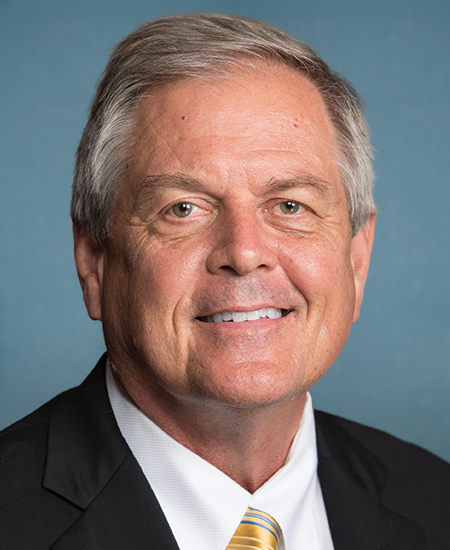
Rep. Ralph Norman
Sponsored bills
Maddy summaryThis resolution (HRES 204) removes Representative Al Green of Texas from the House Committee on Financial Services. It directly affects Rep. Green due to his conduct during the March 4, 2025, State of the Union address, where he repeatedly interrupted the President despite warnings from House staff and the Speaker. The resolution cites House Rule XXIII, which requires Members to behave in a manner reflecting creditably on the House, and notes Green's unrepentant attitude after being censured for his actions. The resolution is a disciplinary measure, not a policy change, and specifies his removal from the Financial Services Committee.
Maddy summaryH.J.Res. 74 disapproves a rule by the Bureau of Consumer Financial Protection (BCFP) that would have prohibited creditors and consumer reporting agencies from using medical information - such as unpaid medical bills - in credit reports and credit scoring. The rule, published in the Federal Register on January 14, 2025, aimed to prevent medical debt from affecting credit scores. If enacted, this resolution would block the rule from taking effect, maintaining the current practice where medical debt can influence credit decisions. This disapproval follows standard Congressional Review Act procedures for overturning agency rules.
Maddy summaryHR 1772 designates English as the official language of the United States federal government, requiring all official government functions (like laws, regulations, and public proceedings) to be conducted in English. It directly affects federal agencies, naturalization processes (mandating English ceremonies and language standards for new citizens), and government communications. Key exceptions include language teaching, disability education, national security needs, census activities, and protections for Native American languages under existing law. The bill does not restrict the use of other languages in private settings or ban bilingual services for essential government functions. It amends U.S. Code to establish these requirements, with implementation set for 180 days after enactment.
Maddy summaryHR 1792 prohibits U.S. federal funds from being provided to three United Nations agencies: the International Organization for Migration (IOM), the High Commissioner for Refugees (UNHCR), and the Relief and Works Agency for Palestine Refugees (UNRWA). The bill requires the Government Accountability Office (GAO) to conduct a study identifying all U.S. funding to these agencies from 2021-2025, including amounts and restrictions, and to assess any funds owed to the U.S. government. It also mandates an audit of the State Department’s Refugee Travel Loan Program. The GAO must submit a report to Congress within 180 days of the bill’s enactment detailing these findings. This bill directly affects federal funding mechanisms for international refugee and migration programs.
Federal Firearms Licensee Protection Act of 2025 This bill modifies criminal penalties for an offense involving the theft of a firearm from a licensed importer, manufacturer, or dealer, or from their business premises. Specifically, the bill does the following: increases from 10 to 20 years the maximum prison term, and creates a 3- or 5-year mandatory minimum prison term for an offense that occurs during the commission of a burglary or robbery. An attempt to commit an offense is subject to the same penalties as a substantive offense.
Maddy summaryThis bill, HR 1761, would require the U.S. Treasury to print $250 Federal Reserve notes featuring a portrait of Donald J. Trump within one year of enactment, primarily to commemorate the 250th anniversary of the United States. It amends the Federal Reserve Act (Section 3) to mandate this specific currency denomination and attempts to modify existing law (Section 4) to allow living presidents on currency. The bill directly affects the U.S. Treasury's currency printing authority and would override current practices, as $250 bills do not exist in circulation and the Constitution prohibits denominations above $100. This is a symbolic procedural measure with no practical implementation under current U.S. currency law.
Maddy summaryThe Repeal CFPB Act would end the Consumer Financial Protection Bureau (CFPB) by repealing the 2010 law that created it. It would restore all financial regulations that existed before the CFPB was established, reverting to the system in place prior to 2010. This change would directly affect how consumer financial products - like credit cards, mortgages, and loans - are regulated, shifting oversight back to pre-2010 rules.
Maddy summaryHR 1551, the Protect and Serve Act of 2025, creates a new federal criminal offense for intentionally harming law enforcement officers under specific circumstances. It imposes harsher penalties, including up to 10 years in prison for serious injury or life imprisonment if death occurs, kidnapping is involved, or a firearm is used. The law applies when the crime crosses state lines, involves interstate weapons, occurs on federal property, or targets federal officers. Prosecutions require the Attorney General’s written certification, considering factors like prior state convictions and public safety impact. The bill directly affects law enforcement officers and federal prosecutors by expanding federal jurisdiction for certain violent crimes against them.
Dentist and Optometric Care Access Act of 2025 or the DOC Access Act of 20 25 This bill prohibits private health insurance plans from setting rates for items and services, except for dental cleanings, provided by a doctor of optometry, of dental surgery, or of dental medicine (or an employer of such a doctor) for which the plan does not pay a substantial amount. Additionally, an agreement between a plan and such a doctor for limited scope dental or vision benefits may last longer than two years only with the prior acceptance of the doctor for each term extension. Plans also may not restrict such a doctor's choice of laboratories or suppliers. Such doctors may elect to waive the application of the payment amount and choice of laboratories provisions of this bill. The bill does not supersede state laws regarding health insurers and dental or vision benefit plans.