

Resetting the Impact Act of 2021 or the TRIA Act of 2021 This bill requires certain data collection and recommendations relating to a Medicare post-acute care prospective payment system to incorporate the effects of COVID-19 on providers and patients. Current law requires the Centers for Medicare & Medicaid Services (CMS) and the Medicare Payment Advisory Commission to develop a prototype for a unified Medicare payment system for post-acute care that is based primarily on patient characteristics (e.g., cognitive ability, functional status, or impairments) rather than the provider setting (e.g., skilled nursing facility, home health agency, inpatient rehabilitation facility, or long-term care hospital). The bill requires the prototype to account for the role of post-acute care providers during public health emergencies, particularly in light of the COVID-19 emergency and the related effects on such providers and their patients. The bill also delays the development of the prototype until two years after the later of January 1, 2022, and the date by which the CMS has collected eight calendar quarters of data after the emergency ends and other changes have been implemented.
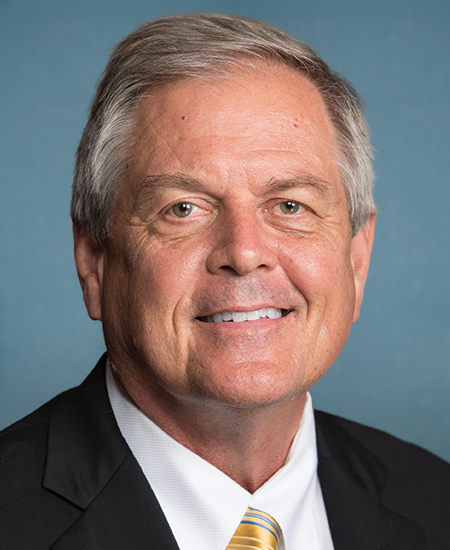
Rep. Ralph Norman
Sponsored bills
This resolution honors and recognizes the patriotism and contributions made by generations of veterans service organizations and commends the members of such organizations for their dedicated service to members of the Armed Forces, veterans, their families, and their communities. Additionally, the resolution encourages citizens to volunteer their support and services to veterans service organizations and to promote awareness of the contributions of such organizations to members of the Armed Forces, veterans, and their families.
Fly Safe and Healthy Act of 2021 This bill directs the Transportation Security Administration (TSA) to establish a 120-day pilot program to conduct temperature checks for domestic and international passengers, individuals accompanying those passengers, crew members, and other individuals who pass through airports and airport security screening locations. In developing the pilot program, the TSA must address certain policies and procedures, including (1) accommodating individuals with disabilities or observing certain religious practices, and (2) exempting individuals who may have a fever unrelated to COVID-19 (i.e. coronavirus disease 2019). The pilot program must ensure airlines allow passengers who are prohibited from flying due to a fever or a secondary medical screening to reschedule or cancel a flight at no cost. The TSA must, within 90 days after the completion of the pilot program, create a policy for deploying a temperature check program at airports and airport security screening locations through the end of the COVID-19 public health emergency. The Department of Transportation must revise its regulations to require the inclusion of certain information about traveling in the passenger notification system during the COVID-19 public health emergency, including (1) a message discouraging any individual who has a fever from traveling in air transportation, and (2) a notification that each passenger and any individual accompanying a passenger into the sterile area of the airport will undergo a temperature check if the pilot program established under this bill is in effect in that airport.
No Vaccine Passports Act This bill prohibits certain actions related to vaccine passports and proof of COVID-19 (i.e., coronavirus disease 2019) vaccination. Specifically, a federal agency may not issue a vaccine passport, vaccine pass, or other standardized documentation for the purpose of certifying the COVID-19 vaccination status of a U.S. citizen to a third party, or otherwise publish or share any COVID-19 vaccination record of a U.S. citizen or similar health information. Additionally, proof of COVID-19 vaccination shall not be required to access federal or congressional property or services.
This resolution condemns Iranian state-sponsored terrorist attacks against U.S. citizens and officials and Iranian dissidents and expresses support for the people of Iran who are engaged in legitimate and peaceful protests against the Iranian regime.
Border Surge Response and Resilience Act This bill requires the Department of Homeland Security (DHS) to develop a plan for responding to irregular increases in migration at the border that present risks to border security. The plan shall include various elements including (1) a list of each agency, component, and office involved; (2) a process for quickly expanding capacity to temporarily process and hold individuals; and (3) a strategy for coordinating with local governments and other entities when DHS releases detained individuals. DHS must also identify metric thresholds for determining when to activate the plan and must activate the plan when such thresholds are satisfied. Furthermore, DHS must notify Congress no later than 14 days after activating the plan.
Higher Education Transparency Act of 2021 This bill requires an institution of higher education (IHE) that participates in federal student-aid programs to make available on its website the full content of any agreement between the IHE and a foreign source that provides language and cultural teaching resources and services to its students.
Supporting Accurate Views of Emergency Services Act of 2021 or the 911 SAVES Act This bill requires the Office of Management and Budget, by 30 days after the bill's enactment, to categorize public safety telecommunicators as a protective service occupation under the Standard Occupational Classification System.
Military Hunger Prevention Act This bill requires the Department of Defense (DOD) to pay a basic needs allowance to certain low-income members of the Armed Forces. Specifically, those eligible for the basic needs allowance are members who (1) have completed initial entry training, (2) have a gross household income that did not exceed an amount equal to 130% of the federal poverty guidelines of the Department of Health and Human Services (HHS), and (3) do not elect to decline the allowance. In situations where a household contains two or more eligible members, the bill specifies that only one allowance may be paid per year to one member they jointly elect. The amount of the allowance must be the aggregate amount equal to 130% of the HHS federal poverty guidelines minus the gross household income of the covered member during the preceding year divided by 12. The Defense Finance and Accounting Service (DFAS) of DOD must notify, in writing, individuals determined to be eligible for the allowance. The notice must include information regarding financial management and assistance programs administered by DOD for which the individuals are also eligible. Individuals who seek to receive the allowance must submit specified information to DFAS.
This resolution requires the chair of a House committee to administer a specific oath to any witness appearing before the committee. Currently, a committee chair is only authorized to administer an oath.