

LEOSA Reform Act This bill broadens the authority for certain law enforcement officers to carry concealed firearms across state lines. Specifically, the bill allows qualified active and retired law enforcement officers to carry concealed firearms and ammunition (including magazines) in school zones; in national parks; on state, local, or private property that is open to the public; and in certain federal facilities that are open to the public. Further, the bill permits states to reduce the frequency with which retired law enforcement officers must meet certain qualification standards.
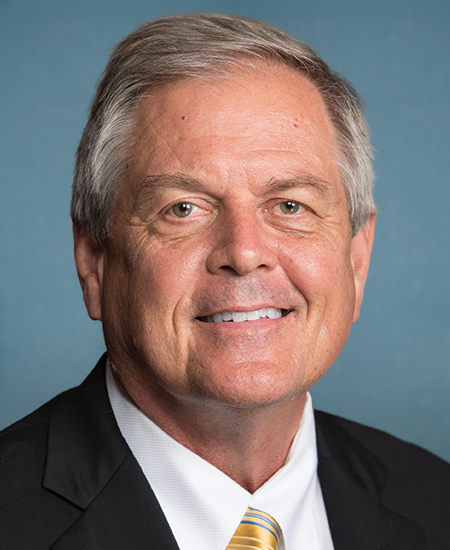
Rep. Ralph Norman
Sponsored bills
Return Excessive Migrants and Asylees to International Neighbors in Mexico Act of 2021 or the REMAIN in Mexico Act of 2021 This bill requires the Department of Homeland Security (DHS) to implement the Migrant Protection Protocols as outlined in the January 25, 2019, memo titled Policy Guidance for Implementation of the Migrant Protection Protocols . (The protocols generally required aliens who are not clearly admissible, including those seeking asylum, arriving by land along the U.S.-Mexico border to be returned to Mexico while their immigration proceedings are pending, rather than remain in the United States. On January 21, 2021, DHS stopped applying the protocols to newly-arrived individuals.)
Pain-Capable Unborn Child Protection Act This bill establishes a new criminal offense for performing or attempting to perform an abortion if the probable post-fertilization age of the fetus is 20 weeks or more. A violator is subject to criminal penalties—a fine, a prison term of up to five years, or both. The bill provides exceptions for an abortion (1) that is necessary to save the life of the pregnant woman, or (2) when the pregnancy is the result of rape or incest. A physician who performs or attempts to perform an abortion under an exception must comply with specified requirements. A woman who undergoes a prohibited abortion may not be prosecuted for violating or conspiring to violate the provisions of this bill.
The American PPE Supply Chain Integrity Act This bill requires specified federal departments to purchase certain items, including medical supplies, personal protective equipment (PPE), and clothing, from the United States, with exceptions. Specifically, the bill requires the Department of Health and Human Services, the Department of Homeland Security (DHS), and the Department of Veterans Affairs to purchase items such as specified medical supplies (including disinfecting wipes), PPE, and fabric products (including clothing, bags, and tents) from products that are 100% grown, reprocessed, reused, or produced in the United States. The bill requires regulations to (1) prohibit the use by any federal department or agency of reverse auctions or lowest price technically acceptable contracting methods for the procurement of PPE if the level of quality or failure of the item could result in infection, illness, or death; and (2) establish a preference for the use of best value contracting methods for the procurement of such equipment. The bill applies the Berry Amendment (which requires the Department of Defense to give preference in procurement to domestically produced, manufactured, or homegrown products) to specified supplies and equipment, such as surgical dressing materials, hospital and surgical clothing, and textile medical supplies and equipment.
Abortion Providers Loan Elimination Act This bill makes abortion providers ineligible to receive a loan under the Paycheck Protection Program, which was established to support small businesses in response to COVID-19. This prohibition shall not apply to hospitals or entities that exclusively provide abortions (1) where the pregnancy is the result of rape or incest, or (2) where the pregnancy endangers the life of the mother. The Inspector General of the Small Business Administration must report on the number of paycheck protection loans made to the Planned Parenthood Federation of America and to other abortion providers.
This joint resolution proposes a constitutional amendment requiring Representatives to be apportioned according to the number of U.S. citizens in each state, rather than the number of persons in each state.
This resolution expresses the sense of the House of Representatives that the U.S. government should not infringe upon the ability of American citizens to act in accordance with their sincerely held religious beliefs. It condemns any behavior by the states that limits the ability of individuals to express such beliefs.
Woman's Right To Know Act This bill specifies requirements for informed consent that health care providers must obtain before performing an abortion procedure. Providers must present a woman seeking an abortion with an authorization form at least 24 hours before performing the procedure. The form must (1) include specified information concerning gestational age, associated developmental characteristics, and medical risks; (2) disclose penalties that providers may face for failing to obtain the requisite informed consent; and (3) include an affirmation that the individual signing the form understands the information. The form must be signed and witnessed in person and retained in the medical file. Providers do not have to obtain such consent if, in reasonable medical judgment, obtaining it would pose a greater risk of death or substantial physical impairment of a major bodily function, excluding psychological or emotional conditions, of the pregnant woman. The bill also establishes civil penalties for providers who do not comply with these requirements.
Pharmacy and Medically Underserved Areas Enhancement Act This bill provides for Medicare coverage and payment with respect to certain pharmacist services that (1) are furnished by a pharmacist in a health-professional shortage area, and (2) would otherwise be covered under Medicare if furnished by a physician.
English Language Unity Act of 2021 This bill establishes English as the official language of the United States. It establishes a framework for implementation and enforcement, including by testing English as part of the naturalization process.