Servicemember Credit Monitoring Enhancement Act This bill makes available to uniformed service members free electronic credit monitoring that is currently available to active duty service members.
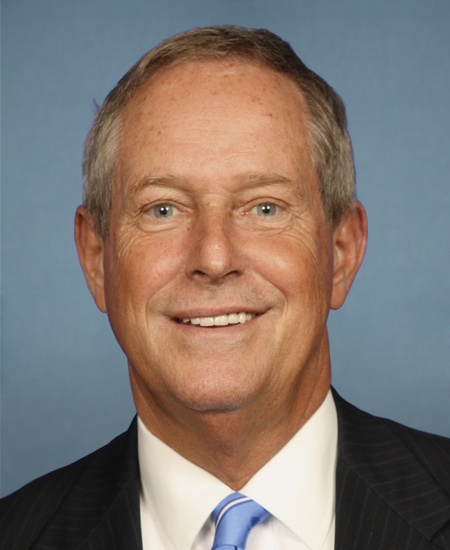
Rep. Joe Wilson
Sponsored bills
Maddy summaryThis resolution amends House rules to prohibit members, officers, and employees from serving on the board of directors of any organization connected to the Chinese Communist Party (CCP) or designated foreign adversaries. It specifically bans board service on entities receiving funding from or affiliated with the CCP’s United Front Work Department, other CCP elements, or entities labeled "foreign adversaries" by the State Department under a specific 2023 regulation. The rule change applies to all House staff and members in their official capacities, targeting potential conflicts of interest with foreign entities. It does not affect private board roles outside of official House duties.
Maddy summaryThis bill expands the use of 529 college savings accounts to cover career training and credentialing costs. It allows funds to pay for tuition, fees, books, and testing expenses related to recognized postsecondary credential programs (like vocational certifications) that meet specific standards under the Workforce Innovation and Opportunity Act. The change directly affects workers seeking industry-recognized credentials - such as nursing certifications or IT certifications - instead of traditional degrees. It treats these expenses the same as traditional college costs for 529 account withdrawals, making it easier to save for career-focused training. The provision applies to expenses paid after the bill's enactment date.
Maddy summaryThis bill amends U.S. financial sanctions law to require the Treasury Secretary to specifically consider whether foreign banks knowingly provide banking services (including personal accounts) to entities designated under the Taylor Force Act, which targets groups that murder U.S. citizens. It directs Treasury to designate as "of primary money laundering concern" foreign banks that facilitate terrorism payments, particularly those using U.S. correspondent accounts. The law adds two new factors for Treasury to evaluate: (1) whether a bank knowingly serves entities listed in the Taylor Force Act regulations, and (2) whether the bank’s accounts or transactions help fund acts of terrorism. This directly affects foreign financial institutions operating in the U.S. financial system that may inadvertently or intentionally support terrorist organizations.
Feral Swine Act This bill extends through FY2028 the feral swine eradication and control pilot program to respond to the threat feral swine pose to agriculture, native ecosystems, and human and animal health.
Maddy summaryThis bill prohibits the Department of Defense from using funds to pay for or reimburse abortion services, except when the pregnancy endangers the mother's life, results from rape, or results from incest. It directly affects military personnel, civilian DOD employees, and contractors receiving medical care at military facilities by restricting funding for abortion-related expenses. Key provisions include amending federal law to ban reimbursement for travel or licensing costs related to abortion services and repealing a 2022 DOD memo that expanded access to such care. The bill explicitly blocks all funding for abortion services beyond the existing exceptions, with no new exceptions added. It does not change abortion access for civilians outside the military healthcare system.
Maddy summaryHRES 132 is a non-binding House resolution expressing condolences for the over 36,000 earthquake victims in Türkiye and Syria and commending humanitarian response efforts. It specifically condemns the Assad regime for obstructing aid delivery and exploiting the disaster, urging the Biden administration to open all UN border crossings for aid and prevent U.S.-funded assistance from being diverted to Syria’s government. The resolution also calls for continued enforcement of the Caesar Syria Civilian Protection Act to protect Syrian civilians. As a symbolic resolution, it does not create new law but formally directs the administration’s diplomatic approach to the crisis.
Maddy summaryHR 1218, the Expediting Israeli Aerial Refueling Act of 2023, requires the U.S. Air Force to train Israeli pilots and ground personnel to operate KC-46 aircraft within 60 days of enactment, including participation in the U.S. Military Personnel Exchange Program. The bill mandates the rotational deployment of U.S. KC-46 aircraft to Israel for up to five years or until Israel commissions its own KC-46s, with each deployment lasting at least 270 days annually. It directly affects the Israeli Air Force by enabling their use of U.S. refueling capabilities and the U.S. military through specific training and deployment obligations. The law expires ten years after enactment.

Maddy summaryHR 1200, the National Right-to-Work Act, prohibits requiring workers to join a union or pay dues as a condition of employment in both private-sector workplaces (covered by the National Labor Relations Act) and railroad industries (covered by the Railway Labor Act). The bill amends key sections of these laws to eliminate provisions that allowed union security agreements, meaning workers in unionized settings would no longer be forced to pay dues to retain their jobs. This directly affects employees in unionized workplaces across the U.S., particularly those in industries with existing union contracts that included mandatory dues. The law changes the legal framework to ensure union membership and dues payment remain voluntary for all workers.
Maddy summaryThe Stop the Cartels Act (HR 597) aims to disrupt drug trafficking organizations and related criminal activities by requiring enhanced intelligence gathering on cartels in Mexico and Central American countries, mandating improved U.S.-Mexico law enforcement cooperation, and cutting federal funding from jurisdictions that restrict immigration enforcement. The bill creates a "Special Transnational Criminal Organization" designation for major cartels like the Sinaloa Cartel and Jalisco New Generation Cartel, requires monthly reports on migrant encounters at the border, and establishes refugee processing centers in Mexico and Central America. It also increases staffing for immigration courts by 500 judges, prohibits asylum applications from nationals of countries with refugee processing centers, and reauthorizes substance abuse prevention funding at higher levels while repealing several existing drug programs. These provisions directly affect U.S. intelligence and law enforcement agencies, Mexican and Central American governments, local jurisdictions receiving federal funds, and migrants seeking asylum or refugee status.