

Maddy summaryHR 1826 (PSA Screening for HIM Act) requires health insurance plans and issuers to cover prostate cancer screenings without out-of-pocket costs for men aged 40 and over who are at high risk of prostate cancer. This directly affects African-American men and men with a family history of prostate cancer (defined as having a first-degree relative diagnosed with or who died from prostate cancer). The bill mandates coverage for evidence-based screenings under the same requirements as other preventive services, effective for plan years starting January 1, 2024. It aims to address disparities in prostate cancer outcomes by removing financial barriers to early detection for high-risk groups.
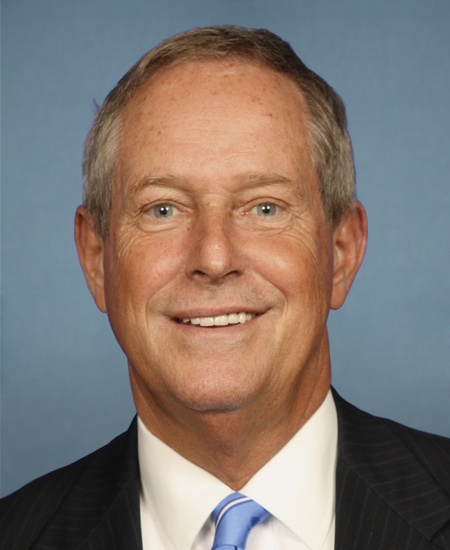
Rep. Joe Wilson
Sponsored bills
Maddy summaryHR 2539 permanently extends the New Markets Tax Credit (NMTC) program, which incentivizes private investment in low-income communities. The bill directly affects community development financial institutions (CDFIs) and investors who fund projects in designated low-income areas by ensuring the credit remains available beyond 2025. Key provisions include automatically adjusting the credit amount annually for inflation starting in 2024 and clarifying that the credit can be used to offset alternative minimum tax liability. This maintains the program’s effectiveness in channeling capital to underserved neighborhoods without changing eligibility or funding levels.
Maddy summaryThis bill amends the law governing Basic Allowance for Housing (BAH) for uniformed service members stationed in the U.S. It changes the calculation method so that BAH amounts must equal the actual monthly cost of adequate housing in each location, as determined by the Secretary of Defense. This directly affects active-duty service members and their families who receive BAH for housing. The key provision replaces the previous formula with a requirement that BAH payments match local housing costs for members in the same pay grade and dependency status. The change ensures BAH reflects current housing expenses rather than an older calculation method.
This resolution urges the President to take actions to limit, suspend, or terminate Russia's participation in the organs and specialized agencies of the United Nations (U.N.), including the U.N. Security Council.
Maddy summaryThis bill, HR 2451 (Freedom of Association in Higher Education Act of 2023), prevents colleges receiving federal funds from punishing students or single-sex social organizations (like fraternities/sororities) solely because of their single-sex membership policies. It prohibits actions such as denying housing, scholarships, or leadership roles, or forcing students to waive these protections as a condition of enrollment. The law does not require colleges to recognize such groups, nor does it block disciplinary action for misconduct unrelated to membership (e.g., academic issues). It directly affects students in single-sex organizations and institutions participating in federal student aid programs under Title IV.
Maddy summaryHR 1139, the GUARD VA Benefits Act, amends federal law to strengthen penalties for individuals or organizations charging veterans unauthorized fees when helping with VA benefit claims. It directly affects veterans seeking assistance with VA claims and the representatives (like advocates or attorneys) who might charge them fees. The bill adds a new provision making it a violation to solicit, charge, or receive any fee for preparing, presenting, or prosecuting VA claims, punishable by fines under Title 18. This change specifically targets unauthorized fee-charging while excluding fees covered under existing exceptions in sections 5904 or 1984 of the law.
Maddy summaryHR 1819, the Foreign Influence Transparency Act, modifies U.S. laws to increase transparency around foreign influence. It tightens exemptions under the Foreign Agents Registration Act by requiring that activities not promote a foreign government's political agenda, and lowers the disclosure threshold for foreign gifts and agreements at colleges from $250,000 to $50,000. The bill mandates that institutions of higher education publicly disclose the full text of all agreements with foreign entities - including Confucius Institutes funded by China - and provide these to the Department of Education and relevant congressional committees. Non-compliant schools lose eligibility to enroll foreign students under the Student and Exchange Visitor Program.
Maddy summaryHR 5, the Parents Bill of Rights Act, would require public schools receiving federal funding to provide parents with greater access to educational information. The bill mandates that schools post curricula online or widely distribute it to parents, include school budgets in report cards, and provide specific information about school activities including violent incidents and plans to eliminate gifted programs. It also guarantees parents the right to meet with teachers twice a year, review library materials, and address school boards. These requirements would apply to all local educational agencies and schools covered by the Elementary and Secondary Education Act. The bill amends existing education laws to strengthen parental transparency and involvement in their children's education.
Maddy summaryHR 1777 establishes a $50 million annual fund (2024-2028) for collaborative defense research between the U.S. and Israel in emerging technologies like artificial intelligence, cybersecurity, directed energy, and automation. The bill directly supports U.S. and Israeli military forces by enabling joint development of new warfare capabilities to address current and future defense challenges. Key provisions include authorizing $50 million per year for collaborative projects, building on existing U.S.-Israel defense partnerships like counter-tunnel and counter-drone systems. This funding aims to strengthen bilateral defense innovation without altering existing military aid structures.
Maddy summaryH.J. Res. 30 seeks to block a Department of Labor rule that would have required retirement plan managers (like those handling 401(k)s) to follow strict "prudence and loyalty" standards when selecting investments and voting on company matters. The rule, published in December 2022, aimed to protect retirement savings by ensuring fiduciaries prioritize participants' interests. This resolution, if passed, would prevent the rule from taking effect, avoiding new compliance requirements for retirement plan managers and sponsors. It directly affects retirement plan administrators and the millions of participants in these plans.