

Maddy summaryHRES 492 is a congressional resolution condemning the Iranian government's systematic persecution of the Baha'i minority, which directly affects Baha'is in Iran facing arrests, property confiscation, and imprisonment. The resolution specifically calls for Iran to immediately release Baha'is detained for their faith, end state-sponsored hate propaganda against them, and reverse discriminatory policies denying equal access to education, employment, and religious freedom. It urges the U.S. President and Secretary of State to demand Iran’s compliance with international human rights treaties and to use existing sanctions authorities (under the 2010 and 2012 Iran sanctions laws) against officials responsible for these abuses. The resolution does not impose new legal requirements but serves as a formal U.S. government statement of condemnation and a call for diplomatic and sanctions action.
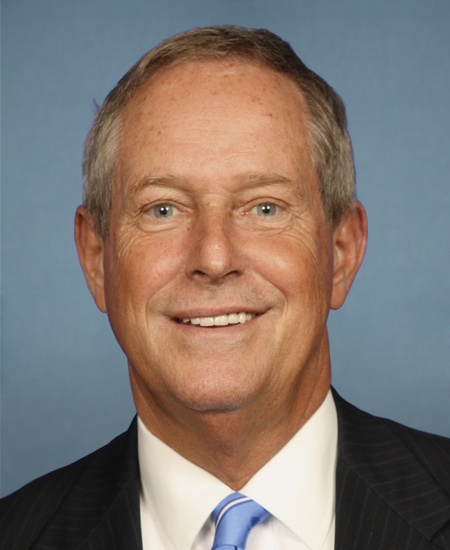
Rep. Joe Wilson
Sponsored bills
This resolution directs the Fine Arts Board to obtain a bust of Volodymyr Zelensky, the President of Ukraine, for permanent display in the U.S. Capitol.
Maddy summaryHR 4003, the Let Freedom Sing Act, removes permit requirements for singing the national anthem in specific public areas of the U.S. Capitol, including National Statuary Hall, when it does not disrupt government operations. The bill directly affects individuals who wish to sing the anthem in these federally owned spaces without prior authorization. It prohibits Capitol Police or the Sergeant at Arms from requiring permits for such singing and overrides local D.C. code restrictions in these areas. The law explicitly states singing the anthem in designated Capitol spaces is not considered disruptive protest under the First Amendment.
Passport Notification Act of 2023 This bill requires the Bureau of Consular Affairs to notify U.S. citizens at least 180 days prior to the date on which their passport is scheduled to expire. The notification must include information on the process for renewal and identify locations where renewal applications may be submitted. The notification may be in electronic or paper form.
Maddy summaryHR 5127, the Visitor Visa Wait Time Reduction Act, requires the State Department to report on consular posts with visitor visa interview wait times exceeding 100 days and to take steps to reduce those waits. If wait times at any post exceed 300 days, the Secretary must temporarily reassign State Department personnel to assist consular staff at that location. The bill directly affects U.S. embassies and consulates handling visitor visa applications and the applicants waiting for interviews. It mandates specific administrative actions to address processing delays but does not change visa eligibility or fees. The focus is on improving internal staffing efficiency at consular posts, not altering immigration policy.
Maddy summaryHR 4914, the South Asian Heart Health Awareness and Research Act of 2023, provides $2 million annually from 2024-2028 to fund grants for states to address heart disease disparities in communities disproportionately affected by it, specifically targeting South Asian populations in the U.S. The grants require states to develop culturally tailored heart health materials (like nutrition and exercise programs), support community organizations serving these groups, improve research methodologies to better include South Asian participants, and conduct studies on cardiovascular disease and type 2 diabetes in at-risk communities. States must report on these activities and heart disease data to Congress within two years of the bill's enactment. The legislation directly affects South Asian communities by aiming to reduce health disparities through targeted awareness, community support, and inclusive research.
This resolution condemns Iran for the 1988 massacre of political prisoners. It also urges the Biden Administration and U.S. allies to publicly condemn the massacre and to pressure Iran to provide information to the families of the victims.
This bill requires the Department of State to make certain information regarding the 2021 withdrawal of U.S. personnel from Afghanistan available to Congress and to the public. Specifically, the State Department must provide Congress with the July 13, 2021, dissent channel cable regarding the likely consequences of a U.S. withdrawal from Afghanistan and the official State Department response to the cable. (The dissent channel is a tool that foreign service officers may use to communicate alternative or dissenting views about foreign policy matters with senior State Department officials. ) The unredacted cable and official response must be provided to Congress within five days of the bill's enactment, except that the names of the cable signatories may be redacted. The bill also requires the State Department to complete a declassification review of (1) the dissent channel cable and official response, and (2) the after-action review developed with respect to the Afghanistan withdrawal. After determining what information may be declassified, the State Department must publish such information online within 60 days of the bill's enactment.
Build the Wall and Fight Fentanyl Act of 2023 This bill establishes accounts to fund the construction of physical barriers along the U.S. southern border and to provide grants to address fentanyl abuse. These accounts shall be funded from the sale of assets belonging to cartels that have been seized by the Drug Enforcement Administration, U.S. Immigration and Customs Enforcement, or U.S. Customs and Border Protection. The bill defines cartel as (1) an organization with operations in Mexico and the United States designated as a significant transnational criminal organization; (2) certain named organizations, such as the Sinaloa Cartel and the Juarez Cartel; and (3) other organizations as designated by the President.
Maddy summaryThis bill modifies the Arms Export Control Act to streamline defense trade between the U.S., United Kingdom, and Australia under the AUKUS security partnership. It removes licensing requirements for defense exports and transfers between these three nations, specifically for items related to the multilateral cooperation announced in September 2021. The President must submit semiannual reports to Congress on these transfers and provide 90-day post-transfer notifications for defense items moving among the three countries. This directly affects U.S. defense companies exporting to the U.K. and Australia and simplifies trade under the AUKUS framework.