

Maddy summary# Summary of Proposed Higher Education Act Amendments This document outlines significant proposed amendments to the Higher Education Act of 1965, primarily as part of the "College Cost Reduction Act." The key elements include: ## Accreditation Reform - Major overhaul of accreditation standards, requiring accrediting agencies to demonstrate independence from trade associations - New requirements for accrediting agencies to assess student achievement outcomes, including median value-added earnings relative to median total price charged - Introduction of an "Alternative Quality Assurance Experimental Site Initiative" to test non-accredited institutions - Protections for religious institutions, including a new process for appealing accreditation decisions related to religious mission - Removal of "litmus tests" that would require institutions to support specific political viewpoints ## Student Success Initiatives - Establishment of "Postsecondary Student Success Grants" to increase participation, retention, and completion rates for high-need students - Focus on evidence-based practices, with tiered requirements (tier 1, 2, and 3 reforms) - Mandatory inclusion of high-need student populations (low-income, first-generation, military-connected, etc.) - Requirements for institutions to report on completion rates, retention rates, and student demographics ## Regulatory Changes - Repeal of numerous existing regulations including: * Closed school discharges * Borrower defense to repayment * Pre-dispute arbitration * False certification requirements * Ability-to-benefit rules * Financial responsibility regulations - New restrictions on incentive compensation for recruiters - Changes to third-party servicer definitions and regulations ## Transfer and Credit Policies - New requirement that institutions cannot deny transfer credit based solely on the source of accreditation - Requirements for transparent transfer policies - Changes to reverse transfer policies ## Other Key Provisions - Modifications to the National Advisory Committee on Institutional Quality and Integrity (NACIQI) - New definitions for "total price" and "value-added earnings" - Changes to the process for institutions to change accrediting agencies - New requirements for institutions to report on student outcomes The overall focus of these proposed amendments is to reduce regulatory burden on institutions, promote transparency, improve student outcomes (particularly for high-need students), modernize accreditation processes, and protect religious institutions' rights in accreditation decisions.
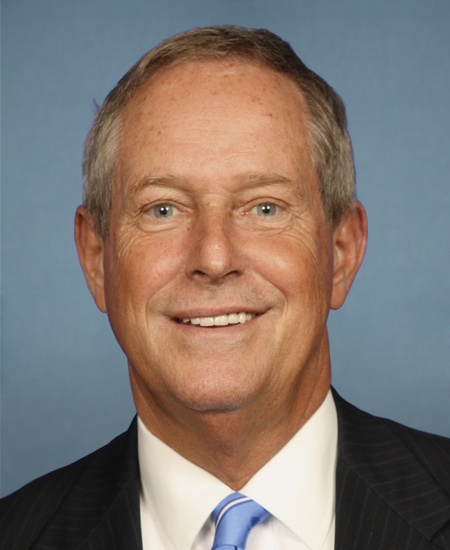
Rep. Joe Wilson
Sponsored bills
Maddy summaryThis bill authorizes a single gold medal to honor the 320th Barrage Balloon Battalion, an all-African American unit that served during the D-Day invasion in World War II. The medal commemorates their unique role as the only African American combat unit to land in Normandy, their deployment of barrage balloons to protect troops from air attacks, and their contributions to the Allied victory. The gold medal, to be struck by the Treasury and displayed at the Smithsonian Institution (including locations like the National Museum of African American History and Culture), will be made available for public display and research. This is a commemorative measure with no policy changes or direct impact on current laws or citizens.
Maddy summaryThe WISER Act of 2024 provides automatic discharge status upgrades and a one-time $25,000 compensation payment to eligible female veterans who were involuntarily separated from military service under Executive Order 10240 between April 1951 and February 1976. It directly affects these veterans (and their surviving spouses if the veteran died after the bill's enactment) by treating them as if they completed their assigned duty for benefits purposes and authorizing the $25,000 payment. The bill establishes automatic eligibility for veterans separated under the executive order, with additional eligibility for those who gave birth, gained custody of a child, or experienced a pregnancy loss within 10 months of separation. The Secretary of Veterans Affairs and Secretary of Defense will administer the programs, requiring applications but not further proof of eligibility for the covered groups.
Maddy summaryHRES 1537 is a non-binding House resolution condemning Hamas' October 7, 2023, attacks on Israel, which killed over 1,200 people and took 251 hostages, including 7 Americans still held captive. It calls on Hamas to immediately surrender, cease attacks, and release all hostages unconditionally, while reaffirming Israel's right to self-defense. The resolution also urges international organizations to condemn Hamas' actions and address the global surge in antisemitism following the attacks. As a symbolic statement, it does not create new laws or alter policy but expresses congressional position. The bill specifically references the ongoing captivity of seven U.S. citizens: Edan Alexander, Itay Chen, Sagui Dekel-Chen, Gadi Haggai, Judith Weinstein Haggai, Omer Neutra, and Keith Siegel.
Maddy summaryHRES 1509 is a symbolic resolution designating the week beginning November 11, 2024, as "National Pregnancy Center Week." It recognizes community-supported pregnancy centers across the U.S. for providing services like pregnancy testing, counseling, ultrasounds, parenting education, and material support to individuals facing pregnancy decisions. The resolution highlights that these centers, which serve approximately 2 million people annually through volunteer and staff efforts, operate as local, nonprofit organizations. It does not create new laws or funding but formally acknowledges their role in offering support to women and men.
Maddy summaryHRES 1469 is a formal House resolution condemning 15 specific officials in the Biden-Harris administration for their roles in the 2021 Afghanistan withdrawal. It alleges failures including inadequate planning for evacuations, disregarding warnings about Taliban actions, and misleading the public - leading to the Abbey Gate terrorist attack that killed 13 U.S. service members. The resolution does not create new legal requirements but formally condemns these individuals for "decisionmaking and execution failures" during the withdrawal. It directly addresses President Biden, Vice President Harris, National Security Advisor Jake Sullivan, Secretary of State Antony Blinken, and other senior officials named in the resolution. This is a symbolic statement of congressional disapproval, not a binding policy change.
Maddy summaryThis symbolic resolution (HRES 1435) expresses U.S. House concern about proposed constitutional reforms in Mexico, particularly those affecting the judiciary. It highlights that Mexico’s reforms would require federal judges (including Supreme Court justices) to be directly elected, eliminate independent judicial oversight, and reduce qualification standards. The resolution states these changes could undermine Mexico’s democratic institutions, separation of powers, and judicial independence - potentially harming U.S.-Mexico trade (over $750 billion in 2023) and security cooperation on issues like fentanyl trafficking. The House calls the reforms a risk to shared commitments under the USMCA and urges Mexico to preserve its rule of law framework.
Maddy summaryHRES 1348 is a non-binding resolution urging Nigeria to immediately release Tigran Gambaryan, a U.S. citizen and former IRS agent detained since February 2024. The resolution cites his unlawful detention after legal deadlines expired, deteriorating health (including malaria), and poor conditions at Kuje Prison, where he was transferred despite a court order for hospital care. It calls for Nigeria to grant him medical access, consular support, and due process, while urging the U.S. government to use all resources to secure his release. The resolution highlights concerns that his detention appears linked to pressure on his employer, Binance, rather than legitimate legal grounds.
Maddy summaryThe DISPOSE Act authorizes the U.S. government to partner with Colombia, Mexico, and Peru to safely destroy chemicals used in illegal drug production. It requires the State Department, in coordination with Justice and Defense, to create a detailed implementation plan within 90 days - including timelines, budgets, and measurable goals - and provide annual progress reports to Congress on chemical destruction efforts. The initiative aims to prevent these chemicals from re-entering drug manufacturing, free storage space for future seizures, and reduce environmental harm from hazardous waste.
Maddy summaryHR 8683 requires the Secretaries of Defense and State to map global strategic ports critical to U.S. interests (military, economic, or diplomatic) and track China's efforts to build or buy such ports. Within 180 days of enactment, they must submit a strategy to counter Chinese port investments, including analyzing Chinese port capabilities, ongoing projects, and vulnerabilities like cyber attacks linked to China. The bill also mandates coordination with agencies like the Export-Import Bank to promote U.S. or allied alternatives to Chinese port investments. It directly affects federal agencies responsible for defense, diplomacy, and development finance, focusing on monitoring and strategic planning rather than immediate policy changes.