

Maddy summaryThis bill imposes U.S. sanctions on foreign individuals and entities that facilitate North Korea's transfer of arms or material support to Russia for use in Russia's invasion of Ukraine. It targets those responsible for such transfers, including foreign financial institutions enabling significant transactions related to these activities, requiring property blocks and visa restrictions. The bill also amends existing North Korea sanctions to explicitly require halting such material support and mandates the President to submit regular reports to Congress on North Korea's involvement and U.S. strategies to counter it.
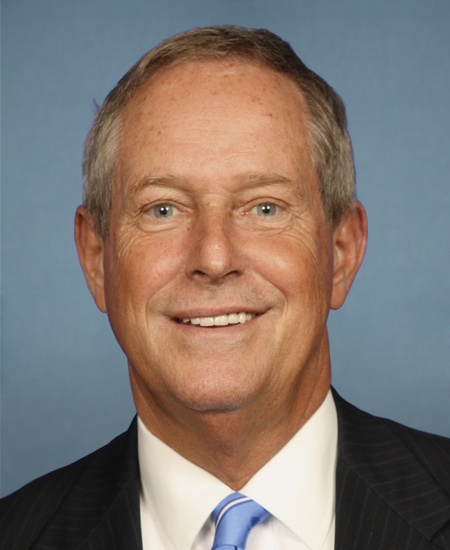
Rep. Joe Wilson
Sponsored bills
Maddy summaryThis bill creates an exemption for Medicare Advantage plan physicians who had at least 90% of their prior authorization requests approved for specific services in the previous year. These doctors would be exempt from needing pre-approval for those same services in subsequent plan years, reducing administrative delays for patients. The exemption continues until revoked (based on updated approval rates) or the physician opts out. It also requires plans to allow providers to discuss treatment plans with a qualifying physician during the authorization process.
Maddy summaryHR 4847, the Safeguarding Syria Sanctions Act, prohibits the Treasury Department from extending or renewing any temporary licenses allowing transactions with Syria's Assad regime for earthquake relief after the initial 180-day period. It directly affects the Treasury Department (which must halt new licenses) and humanitarian groups relying on exemptions, though existing pre-earthquake humanitarian licenses remain in effect. The bill mandates that Treasury notify Congress 15 days before any changes to Syria sanctions regulations, including new licenses or authorizations. Its core purpose is to maintain existing U.S. sanctions against the Assad regime and its allies (Russia/Iran), preventing potential exploitation of relief efforts for regime gain.
Maddy summaryThis bill creates a presumption that minerals from the Democratic Republic of Congo (DRC) containing cobalt and lithium, mined with child or forced labor, cannot be imported into the United States. It requires the U.S. government to develop an enforcement strategy to identify and block such imports, including monitoring supply chains and working with international partners. The bill mandates diplomatic efforts to address child and forced labor in the DRC's mining sector and establishes sanctions against foreign entities that facilitate or engage in such labor practices. The focus is on minerals critical for electric vehicles and electronics, which are heavily sourced from the DRC and processed in China, with specific attention to Chinese mining companies like China Molybdenum that dominate the DRC's cobalt sector.
Maddy summaryThis bill modifies the $800 de minimis exemption for small shipments entering the U.S. duty-free. It excludes goods from nonmarket economy countries and nations on the U.S. trade "priority watchlist" from this exemption. Importers must submit detailed documentation (including origin, value, shipper details, and classification) to U.S. Customs within 180 days of enactment. Providing false information could result in $5,000 civil penalties per violation. The changes apply to shipments entered on or after 180 days after the bill’s enactment.
Maddy summaryHR 4034 would add cranial prostheses (such as medical wigs) to Medicare's list of covered durable medical equipment. It requires a dermatologist, oncologist, or attending physician to certify in writing that the prosthesis is medically necessary as part of rehabilitative treatment. This change directly affects Medicare beneficiaries experiencing hair loss due to medical conditions like cancer treatment who need these prostheses for health reasons. The bill does not cover cosmetic wigs but specifically targets medically necessary cranial prostheses under existing Medicare coverage rules.
Maddy summaryThe Leveling the Playing Field 2.0 Act (HR 3882) updates U.S. trade law to better address international trade practices that disadvantage American businesses. It establishes special rules for handling multiple investigations of the same merchandise (called "successive investigations"), requiring the Commerce Department to consider previous injury determinations when making new findings. The bill also creates mechanisms to address market distortions from foreign government subsidies, including currency undervaluation, and strengthens procedures to prevent duty evasion through certification requirements for importers. These changes primarily affect foreign exporters of goods subject to U.S. antidumping and countervailing duty investigations, as well as U.S. importers of those goods.
Maddy summaryHR 3611, the Kazakhstan Permanent Normal Trade Relations Act of 2023, makes Kazakhstan's existing "normal trade relations" (NTR) status permanent by removing the need for annual U.S. presidential reviews under the Trade Act of 1974. This bill directly affects U.S. trade policy with Kazakhstan, ending the requirement for the President to annually determine whether Kazakhstan meets emigration freedom standards (which it has satisfied since 1997). The key provision allows the President to formally extend permanent NTR treatment to Kazakhstan's products, eliminating the current annual review process. Once enacted, Kazakhstan would automatically receive the same most-favored-nation tariff rates as other NTR countries, streamlining trade without further congressional action.
Maddy summaryThis bill prohibits federal funding for gender transition procedures - including hormone therapy, puberty blockers, and surgeries like genital reassignment - across all federal programs and health plans. It exempts procedures for medical conditions (such as disorders of sex development) and treatment of complications arising from such procedures. The bill also blocks Affordable Care Act premium tax credits and cost-sharing reductions for health plans covering these services, though individuals may purchase separate non-federal-funded coverage. State and private insurers can still offer such coverage using their own funds, but federal subsidies cannot be applied to it.
Maddy summaryHR 3095, the "Address Iran’s Malign Posture Act," expands U.S. sanctions to target foreign entities providing financial services, material support, or acting on behalf of Iran’s Revolutionary Guard Corps or designated terrorist groups. It requires the President to block all U.S. financial transactions with these entities and mandates that any nuclear agreement with Iran must be approved by a two-thirds vote in the Senate as a treaty. The bill also sets a 2025 sunset date for these sanctions provisions and related waivers. This directly affects foreign banks, businesses, and individuals engaging in transactions with Iran’s military or terror-linked entities.