

Maddy summaryHR 5917 allows the President to extend "normal trade relations" (most-favored-nation) treatment to products from specific countries by ending the application of Title IV of the 1974 Trade Act to those nations. The bill enables the President to determine that Title IV no longer applies to a "covered country" (excluding Belarus, Cuba, and North Korea) and then officially proclaim the extension of nondiscriminatory trade treatment for that country's products. This change directly affects importers and exporters dealing with goods from these covered countries, as it would remove tariffs or restrictions tied to Title IV. The key mechanism is the President's unilateral determination and proclamation, which would formally end Title IV's application to the designated country.
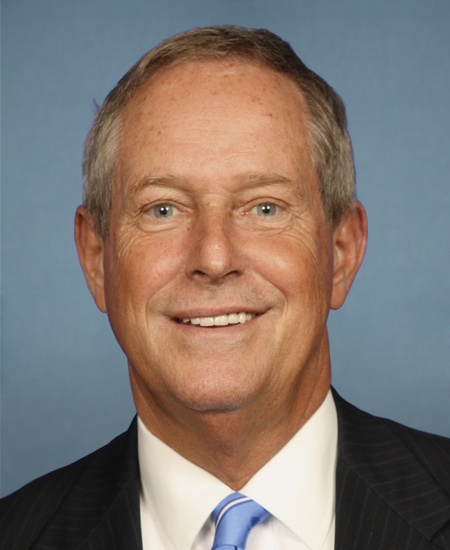
Rep. Joe Wilson
Sponsored bills
Maddy summaryHRES 843 is a symbolic resolution supporting the designation of October 30 as an "International Day of Political Prisoners" in the United States. It expresses the House's solidarity with global political prisoners - estimated at 1 million - including journalists, activists, and dissidents detained for political reasons without credible charges. The resolution urges the U.S. government to continue efforts to condemn political imprisonment, secure releases through diplomacy, and raise international awareness. It does not create new laws or directly affect specific individuals, as it is a non-binding expression of support for an existing international observance.
Maddy summaryThis bill ensures that critical firearm-related government operations continue during federal shutdowns. It designates background checks (via the FBI's National Instant Criminal Background Check System), Bureau of Alcohol, Tobacco, Firearms and Explosives enforcement, and firearm export licensing (handled by Commerce and State Departments) as essential services that must remain operational. These functions would be treated as "excepted" under federal law, meaning their employees would continue working even if other government services halt. The bill affects how background checks and firearm export licenses are processed during shutdowns but does not change gun ownership laws or eligibility.
Maddy summaryHR 5835, the REPO Implementation Act of 2025, establishes a mechanism to use frozen Russian sovereign assets held abroad for Ukraine's benefit. It creates a "Ukraine Support Fund" to hold these assets without confiscation and requires the U.S. Treasury to invest them in U.S. government obligations. The bill mandates quarterly transfers of at least $250 million from the fund to Ukraine for assistance, with final amounts spent when less remains. It also requires the President to report to Congress on Russian assets held by foreign countries (including G7/EU members) and urges diplomatic efforts to secure similar asset repurposing from those nations.
Maddy summaryThe Eastern Flank Strategic Partnership Act of 2025 designates Bulgaria, Estonia, Finland, Hungary, Latvia, Lithuania, Poland, Romania, and Slovakia as "Eastern Flank strategic defense partners" due to their geographic proximity to Russia and Belarus, defense spending commitments, and role in hosting NATO forces. It requires the U.S. State and Defense Departments to prioritize these nations for security assistance, including Foreign Military Financing, defense articles transfers, and military exercises. The bill also directs the Defense Department to prioritize stockpiling defense equipment in these countries through the War Reserve Stocks for Allies program. This legislation aims to strengthen U.S. security cooperation with frontline NATO allies to deter Russian aggression and support Ukraine.
Maddy summaryHR 5791, the BLOOD Centers Act, creates a 30-day expedited approval process for blood centers seeking to add apheresis collection devices to existing biologics licenses. It directly affects blood centers operating under FDA biologics licenses that already manage multiple locations or hold accredited status. The bill requires the FDA to approve such applications within 30 days unless safety concerns exist at the specific location or the center has systemic safety failures elsewhere. This streamlines the process for expanding blood collection capabilities without compromising safety standards.
Maddy summaryHR 5242 would repeal two District of Columbia laws: the Second Chance Amendment Act of 2022 (D.C. Law 24-284) and the Incarceration Reduction Amendment Act of 2016 (D.C. Law 21-36). This bill would restore the legal provisions that existed before these acts were enacted, effectively undoing their changes to D.C. criminal justice policies. Specifically, it would reverse reforms related to reducing incarceration and expanding opportunities for individuals with criminal records. The bill directly affects the District of Columbia’s legal framework governing criminal justice, not individual residents or specific programs.
Maddy summaryHRES 795 is a non-binding resolution condemning Hamas for the October 7, 2023, attacks that killed over 1,200 people, took 251 hostages (including Americans), and involved sexual violence. It demands Hamas immediately surrender and release all remaining hostages - specifically noting 48 people still held, including two U.S. citizens. The resolution also affirms Israel’s right to self-defense, calls for humanitarian aid to reach Palestinians, and condemns global antisemitism following the attacks. As a symbolic congressional statement, it does not create new laws or alter policies.
Maddy summaryThis bill adds Medicare coverage for multi-cancer early detection screening tests (blood or biological tests analyzing cell-free DNA) starting January 1, 2028. It directly affects Medicare beneficiaries aged 68 and older (starting in 2028, with the age limit increasing by 1 year annually), requiring tests to be FDA-cleared and deemed reasonable/necessary by the Secretary for early cancer detection across multiple organ sites. Payment will initially match current stool DNA test rates before 2031, then shift to a lower rate or new payment system after 2031, with limits preventing more than one test per year. The bill explicitly states it does not alter coverage for existing cancer screenings like breast, colorectal, or prostate cancer tests.
Maddy summaryThis bill would require all states to recognize valid concealed carry permits issued by other states, allowing permit holders to carry concealed handguns (excluding machine guns) in any state that either issues such permits or doesn't prohibit concealed carry. It directly affects law-abiding gun owners with valid permits from their home state, ensuring they can carry in states with similar permit systems or no prohibitions. Key provisions include treating valid permit documents as proof of legal carry (reducing officer stops), shifting the burden of proof to prosecutors if challenged, and allowing civil lawsuits for violations with attorney's fee awards. The bill does not override state laws restricting firearms on private property or government land, nor does it affect federal gun restrictions like those in section 922(q).