

Maddy summaryHR 4070, the Tren de Aragua Border Security Threat Assessment Act, requires the Secretary of Homeland Security to conduct a detailed assessment of the criminal threats posed by the Venezuelan gang Tren de Aragua to U.S. borders within 180 days of the bill's enactment. The assessment must cover the group's origins, methods, funding, and specific threats to the southwest, northern, and maritime borders, followed by a strategic plan within one year outlining how federal, state, and local agencies will counter these threats through information sharing, interdiction, and preventing the group's expansion in the U.S. The bill directly affects DHS, intelligence agencies, and border law enforcement partners by mandating these reports and planning processes.
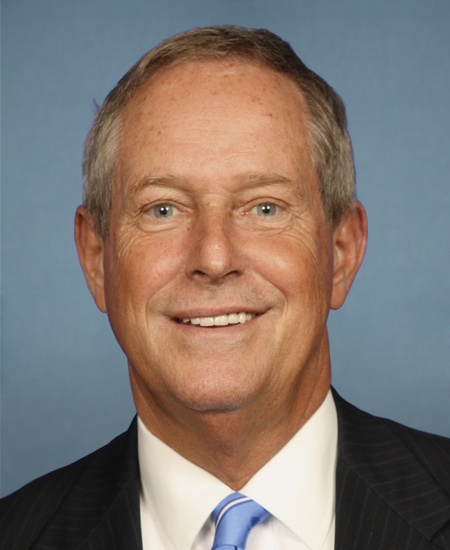
Rep. Joe Wilson
Sponsored bills
Maddy summaryThis bill changes how Medicare pays doctors and healthcare providers after 2025. It replaces the current two-part payment system with a single annual update based on the Medicare Economic Index (MEI), which tracks costs providers face. Starting in 2026, the payment rate for physician services will automatically adjust each year using the MEI, rather than separate calculations. This directly affects doctors, clinics, and other Medicare providers who receive payments under the physician fee schedule.
Maddy summaryHRES 891 is a ceremonial House resolution supporting the designation of National Rural Health Day, observed annually on the third Thursday of November (November 20, 2025, this year). It recognizes rural health care providers and the challenges rural communities face in accessing care, citing issues like hospital closures and workforce shortages. The resolution does not create new policies, funding, or requirements; it solely expresses the House's support for the day's goals and commitment to improving rural health accessibility. This is a non-binding acknowledgment, not a legislative action with concrete policy changes.
Maddy summaryHRES 882 is a symbolic House resolution expressing support for Kazakhstan's planned accession to the Abraham Accords, making it the first Central Asian country to join the agreement. The resolution welcomes Kazakhstan's announcement of joining the Accords (noted as occurring November 6, 2025), calls for stronger people-to-people ties between Israel and Kazakhstan, and urges other nations to deepen relations with Israel. It does not create new laws or policies but formally endorses this diplomatic development through congressional support. The resolution directly affects Kazakhstan-Israel relations by affirming U.S. backing for their expanding partnership.
Maddy summaryHRES 880 is a symbolic House resolution recognizing the strategic U.S.-India partnership, not a bill with new policy or funding. It reaffirms longstanding cooperation on defense, counterterrorism, technology, and people-to-people ties, citing historical milestones like the 2008 nuclear agreement and recent Quad collaboration. The resolution has no binding effect but formally supports continued partnership through existing mechanisms like the U.S.-India Transforming Relationship Utilizing Strategic Technology initiative. It highlights shared priorities including Indo-Pacific stability and counterterrorism efforts, with no new legislative requirements or changes to law.
Maddy summaryHR 6002, the Veterans Earned Education Act, amends eligibility rules for transferring Post-9/11 GI Bill educational benefits to dependents. It requires veterans to have completed at least 17 years of service (up from 6 years) and be retired under Chapter 61 of Title 10 to qualify for transferring benefits. The bill directly affects active-duty and retired veterans seeking to share their education benefits with family members. These changes tighten the service requirements for beneficiaries who wish to transfer their benefits, without altering the core education benefits themselves.
Maddy summaryHRES 864 is a ceremonial resolution honoring U.S. veterans on Veterans Day 2025. It does not create new laws or policies but formally recognizes veterans' service and sacrifice, calling on all Americans to observe Veterans Day. The resolution references historical context about Veterans Day's origins (from Armistice Day to honoring all veterans) but contains no concrete policy changes. It directly addresses the general public, urging them to participate in the observance. As a non-binding resolution, it affects no specific individuals or groups through legislative action.
Maddy summaryHR 5934, the Major Thomas D. Howie Congressional Gold Medal Act, authorizes the posthumous award of a Congressional Gold Medal to Major Thomas D. Howie for his bravery and service during the Battle of Normandy in World War II. The medal, to be struck by the U.S. Mint, will be presented to his nephew, Tom Howie, or his next of kin, and then displayed at The Citadel Museum. This bill is purely commemorative and does not create new legal requirements or funding obligations. It honors Major Howie’s leadership in capturing St. Lo, France - a pivotal moment in liberating Western Europe from Nazi occupation - based on his documented sacrifice during the 1944 campaign.
Maddy summaryThis bill authorizes the U.S. Department of Justice and Department of State to provide Ukraine with law enforcement technical assistance, training, and advisory support focused on recovering forcibly transferred Ukrainian children and addressing related abductions. Key provisions include training in biometric identification, open-source intelligence, and secure communications; medical and psychological rehabilitation services for affected children; and coordination with NGOs and Ukrainian authorities to investigate and prosecute cases. The assistance directly supports Ukraine’s government, child protection services, and the children themselves who were abducted or forcibly transferred by Russia. Reports to Congress detail funding, assistance types, and efforts to align international sanctions.
Maddy summaryHRES 858 is a resolution by the U.S. House of Representatives to impeach Chief Judge James E. Boasberg of the U.S. District Court for the District of Columbia. It alleges he abused his authority by issuing "frivolous" nondisclosure orders that prevented Members of Congress from being notified of legal process and covered conservative organizations and individuals. These orders, the resolution claims, violated constitutional protections for Congress and a federal law (2 U.S.C. § 6628) safeguarding Senate communications. The resolution would send the impeachment charge to the U.S. Senate for trial, seeking removal from office.