

Maddy summaryThis bill requires the Department of Veterans Affairs (VA) to study how cannabis affects veterans with chronic pain or PTSD. It mandates an observational study using VA health records and interviews with enrolled veterans (those using VA healthcare) to measure outcomes like pain levels, opioid use, mental health symptoms, and hospital visits. If the study shows promise, the VA may later conduct clinical trials on cannabis for these conditions. The bill does not change veterans' access to cannabis or VA benefits - it only authorizes research to understand potential effects.
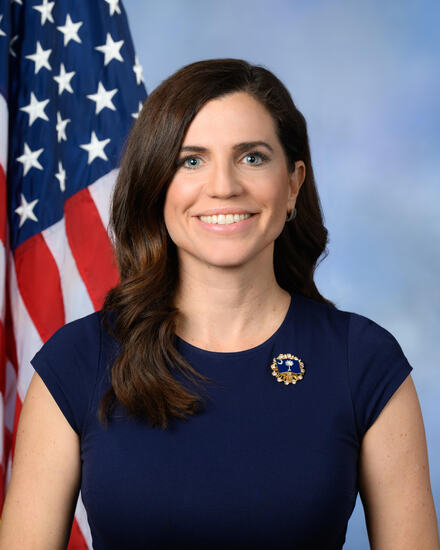
Rep. Nancy Mace
Sponsored bills
Mental Health in International Development and Humanitarian Settings Act or the MINDS Act This bill authorizes and requires certain actions by the U.S. Agency for International Development (USAID) to integrate mental health and psychosocial support (MHPSS) activities across U.S. development and humanitarian assistance programs. The bill authorizes USAID to designate an MHPSS coordinator. The coordinator's duties include (1) guiding, overseeing, and directing MHPSS programming and integration across U.S. development and humanitarian assistance programs; and (2) promoting best practices, coordination, and reporting in MHPSS across such programs. Focus populations for the coordinator include adult caretakers, children separated from a family unit, and displaced populations. In addition, the bill establishes a working group comprised of representatives from relevant USAID bureaus, the Department of State, and other federal agencies. The purpose of the working group is to ensure continuity and integration of MHPSS across U.S. development and humanitarian assistance programs. The provisions of the bill expire five years after enactment.
Maddy summaryHR 1210, the "Stop Fentanyl Border Crossings Act," amends the Public Health Service Act to give the Secretary of Health and Human Services new authority to block border entries. It directly affects countries with substantial fentanyl smuggling, allowing the Secretary to suspend the introduction of people and property from those nations if they determine it poses a serious public health danger. The key provision permits the Secretary to prohibit border crossings for a set period when fentanyl smuggling creates an increased risk of drugs entering the U.S., based on regulations they establish. This is a procedural change to existing public health law, not a new program.
Maddy summaryHRES 215 is a symbolic resolution recognizing Nowruz, the ancient Persian New Year celebrated by over 300 million people worldwide, including Iranian Americans. It acknowledges Nowruz’s 3,000-year cultural history, its themes of renewal and human rights, and expresses appreciation for Iranian Americans’ contributions to U.S. society. The resolution has no binding policy impact but formally supports the holiday’s observance and the values of freedom and tolerance it embodies.
Maddy summaryThis bill expands the use of 529 college savings accounts to cover career training and credentialing costs. It allows funds to pay for tuition, fees, books, and testing expenses related to recognized postsecondary credential programs (like vocational certifications) that meet specific standards under the Workforce Innovation and Opportunity Act. The change directly affects workers seeking industry-recognized credentials - such as nursing certifications or IT certifications - instead of traditional degrees. It treats these expenses the same as traditional college costs for 529 account withdrawals, making it easier to save for career-focused training. The provision applies to expenses paid after the bill's enactment date.
Maddy summaryHR 1434, the "Stop Our Sexual Assault in the Military Act," requires active-duty members of the U.S. Armed Forces to receive monthly self-defense training focused on preventing sexual assault as part of their regular physical training. This training replaces one day of existing monthly physical training, without increasing the total required training days. The bill directly affects all active-duty military personnel by integrating this specific self-defense component into their standard monthly training schedule. It mandates this change through a new provision (Section 2018) added to Title 10 of the U.S. Code. The law focuses solely on implementing this training requirement, with no other substantive policy changes described.
Maddy summaryHR 1475, the Hospital Adoption Education Act of 2023, requires the Secretary of Health and Human Services to develop and distribute educational resources for hospital staff about adoption sensitivities and best practices for interacting with prospective birth mothers and adoptive families. The bill mandates creation of digital and print materials, a dedicated webpage for healthcare workers, and a committee including adoption experts, maternal health professionals, and social workers to guide development. It also directs HHS to provide hospital staff with adoption-focused training and consultation services through grants to eligible health education organizations (excluding child-placing agencies or abortion providers), with a $5 million authorization for 2023-2026. The law includes an evaluation to track hospitals adopting the training and staff receiving education, reporting results to Congress within three years.
Maddy summaryHRES 198 is a non-binding House resolution recognizing the Girl Scouts of the United States of America on its 111th anniversary. It celebrates the organization’s role in providing girls with safe, inclusive spaces for leadership development, skill-building, and community engagement through programs like STEM education, outdoor activities, and civic initiatives. The resolution specifically acknowledges Girl Scouts’ 111-year legacy, congratulates Gold Award recipients, and encourages continued support for their mission. As a ceremonial resolution, it does not create new policies, allocate funds, or directly affect any individuals or organizations.
American Safety And Fairness through Expedited Removal Act of 2023 or the American SAFER Act of 202 3 This bill expands the classes of non-U.S. nationals ( aliens under federal law) who are subject to expedited removal (i.e., removal from the United States without further hearing or review). Specifically, the bill nullifies a 2004 Department of Homeland Security (DHS) rule that generally limits expedited removal to certain situations, such as for non-U.S. nationals encountered within 14 days of entry into the United States without inspection and within 100 miles of a U.S. international land border. The bill also (1) prohibits DHS from implementing a rule that limits expedited removal based on how far a non-U.S. national was from the border when encountered or apprehended, and (2) modifies the relevant statute to state that expedited removal authority applies regardless of where the non-U.S. national was encountered or apprehended.
Maddy summaryHR 1390 requires federal agencies to annually identify and eliminate unnecessary programs or activities that are redundant, defunct, duplicative, or could be managed more effectively by another agency. Agencies must compile these lists within 20 days after the President submits the annual budget and publish them in specific government program inventories. The lists are then submitted to relevant congressional committees, including the House and Senate Appropriations Committees. This process aims to increase transparency and streamline government operations through mandatory annual reviews of agency programs.