

Maddy summaryThe Abbey Gate Gold Star Families Dignified Transport Act changes how the government covers transportation costs for the remains of fallen service members. It requires the government to pay directly for transporting remains to two locations (with the second being a national cemetery), eliminating the need for families to pay upfront and seek reimbursement. This policy directly affects Gold Star Families - those who have lost a service member in the line of duty - by reducing financial and administrative burdens during funeral arrangements. The bill amends U.S. Code Section 1482 to replace reimbursement with direct payment for these specific transportation needs.
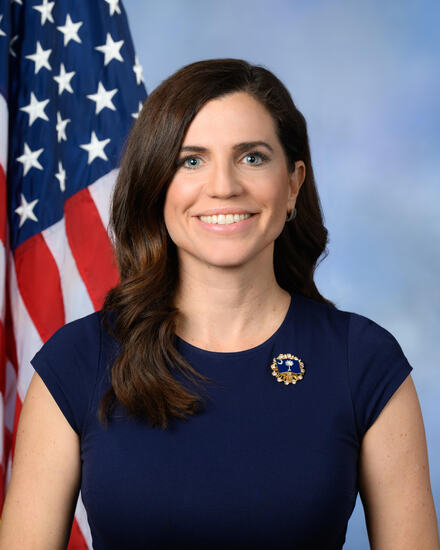
Rep. Nancy Mace
Sponsored bills
Pay Our Border Patrol and Customs Agents Act This bill provides FY2024 appropriations for the salaries and expenses of certain U.S. Customs and Border Protection (CBP) employees who are required to work during a lapse in appropriations (i.e., government shutdown) in FY2024. Specifically, the bill provides appropriations to CBP for the salaries and expenses of agents of the U.S. Border Patrol and officers of the Office of Field Operations who are excepted from furlough (i.e., required to work) during a lapse in discretionary appropriations in FY2024.
Maddy summaryHRES 715 is a non-binding resolution calling on U.S. foreign aid agencies to prioritize children and youth in development and humanitarian programs. It requires agencies like the State Department and USAID to standardize data tracking of youth-focused funding, engage young people directly as stakeholders, and improve inter-agency coordination. The resolution specifically urges better data collection on age, gender, and disability to measure impact and ensure programs address youth needs holistically. These changes would apply to all U.S. foreign assistance programs worldwide, affecting how aid is structured and monitored.
Maddy summaryHRES 720 designates the week of September 24-30, 2023 (and annually thereafter) as "Gold Star Families Remembrance Week" to honor families who have lost loved ones in military service. It specifically recognizes the sacrifices of families of fallen service members and veterans, and encourages Americans to observe the week through community service and celebrating the lives of those who died protecting the nation. This resolution is procedural and symbolic, with no new funding, regulations, or policy changes - only a formal designation to honor these families. It directly affects Gold Star families (those with members who died in military service) and the broader public through its call for observance.
Community Assistance for Recovery and Empowerment Act or the CARE Act This bill allows inpatient psychiatric treatment facilities and chemical dependence treatment facilities to qualify for Federal Housing Authority mortgage insurance. The bill establishes the Office of Psychiatric and Addition Treatment Facilities to oversee mortgage insurance provided to these facilities. The bill also specifies that a federally insured loan for improvements to a multifamily housing project or health facility may be used to protect against floods, hurricanes, earthquakes, and other natural disasters. The bill also expands loan insurance for certain energy conservation improvements to include health facility projects.
Maddy summaryHR 5590, the "No More Hard Stops Act," requires federal officials testifying before congressional committees to remain at the hearing until every committee member present has had the opportunity to ask a question. It prevents officials from leaving early ("hard stops") before all members can question them, ensuring all members receive equal questioning time. This procedural rule applies to officials mandated by law to regularly testify before committees and takes effect after the bill's enactment. The bill focuses solely on the process of committee hearings, not on substantive policy changes.
Maddy summaryThis bill raises the mandatory minimum prison sentence for trafficking minors under 18 from the previous term to **not less than 25 years or life imprisonment** under federal law (18 U.S.C. § 1591). It directly affects individuals convicted of trafficking children, increasing penalties for this specific offense. The key mechanism is amending the existing sentencing provision to eliminate lower minimums and mandate these severe penalties. The bill focuses solely on strengthening criminal penalties for child trafficking, with no new funding or program requirements.
Maddy summaryThe CURE Act prohibits federal agencies from denying security clearances or federal employment based on past or present marijuana use. It requires agencies to review all denials made since 2008 for this reason and reconsider applications within 90 days of a request. Affected individuals can appeal denied reconsiderations to the Merit Systems Protection Board, which must resolve appeals within 120 days. The bill specifically excludes marijuana use from disqualification criteria under existing security clearance rules, applying to all federal job applicants and current employees.
Maddy summaryThe Better CARE for Animals Act of 2023 amends the Animal Welfare Act to strengthen enforcement of animal welfare standards. It gives the Attorney General authority to bring civil cases for violations, including seeking penalties up to $10,000 per day per violation and injunctions to remove or relocate animals. The bill also requires the Secretary of Agriculture and Attorney General to coordinate through a new Memorandum of Understanding, focusing on repeat violators. These changes directly affect dealers, exhibitors, and enforcement agencies by expanding civil enforcement tools and clarifying jurisdiction over rule violations.
Maddy summaryHJRES 90 proposes a constitutional amendment requiring the federal government to balance its budget annually, meaning total spending in any year cannot exceed the average revenue from the previous three years (adjusted for population and inflation). It allows Congress to temporarily exceed this limit by a three-quarters vote during a declared emergency, but only for specific needs and for up to one year. The amendment would take effect after ratification, with a gradual 9-year phase-in period to reduce any excess spending from prior years. This proposal directly affects all federal budget decisions and would require constitutional ratification by 38 states to become law.