

Maddy summaryThe SEAfood Act requires the National Oceanic and Atmospheric Administration to commission a National Academies study on offshore aquaculture's environmental impacts, regulatory needs, and potential benefits. It establishes an assessment program for demonstration projects that must use native species, avoid salmon, follow strict environmental safeguards, and prioritize projects owned by veterans or benefiting communities with environmental justice concerns. The bill creates Aquaculture Centers of Excellence at minority-serving institutions, historically Black colleges, and Tribal Colleges to develop aquaculture curricula focused on business skills, research, and community engagement. It mandates regular reporting on project impacts, includes provisions to protect coastal communities and marine ecosystems, and requires consultation with Tribal and Indigenous communities. The legislation aims to establish science-based regulatory standards while promoting equitable opportunities in the growing aquaculture industry.
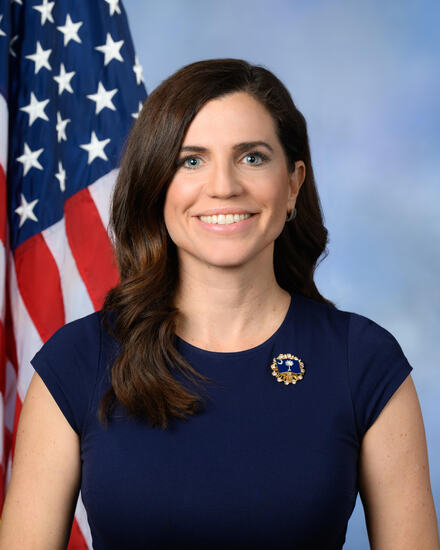
Rep. Nancy Mace
Sponsored bills
Maddy summaryThis bill requires Medicaid to cover non-invasive prenatal genetic screening for all pregnant women, regardless of age, expanding current coverage. It mandates that providers give specific, detailed informed consent before offering the screening, including disclosure of test limitations, potential interferences, predictive values based on individual risk factors, and the need for follow-up diagnostic testing. Medicaid payments will not be made for screenings conducted without this required consent. The law directly affects pregnant Medicaid beneficiaries and healthcare providers offering prenatal genetic screening services.
Maddy summaryHR 5110, the Protecting Hunting Heritage and Education Act, amends the Elementary and Secondary Education Act of 1965 to clarify that federal education funds cannot be used for certain weapons - but this restriction does not apply to archery, hunting, or other shooting sports training programs. The bill directly affects schools and educational programs seeking to use federal funds for these specific activities, such as archery clubs or hunting safety education. It adds an explicit exception to the existing prohibition, allowing funds to support "educational instruction or enrichment activities" in these sports under authorized programs. This change removes ambiguity about funding eligibility for such educational initiatives in K-12 schools.
Maddy summaryThis bill changes how federal agencies set education requirements for cybersecurity jobs. It restricts agencies from requiring specific degrees unless that education is legally required in the location where the work is performed, and limits education consideration to only what directly matches job competencies. The bill defines covered positions as those in the competitive service under the GS-2210 IT series or designated as "cybersecurity" under the NICE Framework. The Office of Personnel Management must publish annual data on educational attainment for these roles to increase transparency. It directly affects federal agencies hiring cybersecurity staff and aims to make hiring more flexible and competency-focused.
Maddy summaryThis resolution designates the week of September 25-29, 2023, as "National Clean Energy Week" to recognize the growing role of clean energy in the U.S. economy. It expresses support for clean energy jobs and innovation, noting the sector employed about 8.1 million people in 2022. The resolution encourages federal, state, and local investment in affordable clean energy technologies and promotes "commonsense solutions" for energy needs. As a symbolic gesture, it has no legal force or funding implications - it simply urges recognition of clean energy's economic and environmental contributions.
Maddy summaryHR 5857, the "No IDs for Illegals Act," prohibits federal funding for the U.S. Immigration and Customs Enforcement (ICE) Secure Docket Card Program and similar Department of Homeland Security initiatives. This bill directly affects ICE and DHS by blocking all federal financial support for these specific immigration enforcement programs. The key provision is a funding ban, preventing the use of taxpayer dollars to establish, implement, or support the Secure Docket Card Program. It does not change immigration laws or requirements for individuals, only restricting federal financial backing for this particular program.
Maddy summaryThe CEDS Act requires state and local governments receiving federal economic development funds to include affordable, quality care services - such as child care, early education, disability care, and elder care - in their economic development plans. It directs the Commerce Secretary to issue implementation guidance within one year, explaining how to integrate these care services into existing development strategies. Existing approved plans will only need updates during scheduled reviews, not immediately upon the law's enactment. This change directly affects communities and organizations using federal grants under the Public Works and Economic Development Act of 1965.
Maddy summaryHJRES 11 proposes a constitutional amendment that would limit Members of Congress to serving a maximum of three terms in the House of Representatives and two terms in the Senate. If passed and ratified, it would prevent any member who has already served the maximum terms from running for re-election, including time spent filling vacancies (for more than one year in the House or three years in the Senate). This amendment directly affects current and future members of Congress by changing eligibility rules for re-election. The proposal is currently a joint resolution in the House, requiring ratification by three-fourths of state legislatures to become part of the Constitution.
Maddy summaryHR 5641, the Pay Our Troops Act, ensures military personnel and their support staff continue receiving pay during fiscal year 2024 if Congress fails to pass regular budget appropriations. It appropriates existing Treasury funds to cover pay and allowances for active-duty troops, reserve components, and civilian employees or contractors supporting military operations. The bill automatically terminates on January 1, 2025, or earlier if Congress enacts a regular budget or continuing resolution. This provision directly affects service members, Department of Defense staff, and Coast Guard personnel (when not under the Navy) during budget implementation gaps.
Maddy summaryThis bill amends the Water Resources Development Act of 2020 to create a new provision allowing the Secretary of the Army Corps of Engineers to partner with water and irrigation districts in designated areas. Specifically, it authorizes the Secretary to enter agreements with these districts for the use or sale of new technologies developed through a demonstration program, aimed at speeding up the removal of harmful algal blooms. The key mechanism focuses on facilitating the deployment of innovative solutions to address algal blooms in targeted regions. This directly affects water management districts operating in areas identified as high-priority for bloom mitigation under the existing law.