

Maddy summaryTyler’s Law requires hospitals and medical examiners or coroners to report incidents involving a child’s death or serious injury linked to children’s products (like toys) or durable infant/toddler products (like cribs) to the Consumer Product Safety Commission. Hospitals must submit detailed reports within 7 days, including the child’s age and injury details, product information, and incident circumstances. Medical examiners and coroners must report child deaths associated with such products within 7 days, and failure to comply could make their offices ineligible for certain federal grants. The law applies to incidents occurring 180 days after enactment and uses existing definitions for "children’s product" from consumer safety laws.
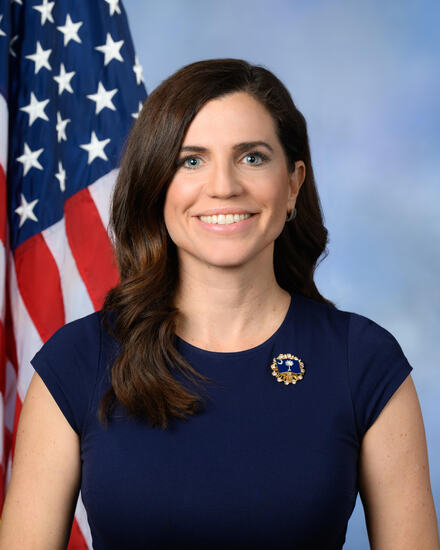
Rep. Nancy Mace
Sponsored bills
Maddy summaryThis bill prohibits federal criminal prosecution for performing "gender-related medical treatment" on minors under specific circumstances, defined as medical procedures or medications intended to change a minor's gender presentation (e.g., puberty blockers, surgeries like hysterectomy or phalloplasty). Exceptions apply for medically necessary treatments for disorders of sex development, ambiguous biological characteristics, or injuries from prior treatments. It also bans Medicare coverage for such treatments (except for the medical exceptions) and prohibits federal funding for any gender-related medical care for minors. The bill directly affects minors seeking gender-affirming care, healthcare providers offering these treatments, and federal health programs like Medicare.
Maddy summaryThis bill requires heads of Executive agencies who serve on the National Security Council (like the Secretary of Defense or Homeland Security) to notify key government officials within 24 hours if they become unable to perform their duties due to illness. If they fail to meet this deadline, they must submit a detailed report within 30 days explaining the delay, listing acting officials and resources used, and documenting the incapacity period. It directly affects top national security agency leaders and ensures transparency during leadership gaps. The law aims to prevent confusion about who is temporarily in charge during medical emergencies involving critical national security roles.
Maddy summaryThis bill adds audiology services to Medicare's covered benefits under Section 1861(s)(2)(KK), effective January 1, 2025. It allows qualified audiologists to provide hearing and balance assessments and diagnostic/treatment services without requiring a physician referral or supervision, directly affecting Medicare beneficiaries seeking these services and audiologists practicing under state law. Payment will be 80% of the lower of actual charge or the Medicare fee schedule. The bill does not expand the types of audiology services covered but changes how they are accessed and paid for under Medicare.
Maddy summary# Summary of the Proposed "States Reform Act" This comprehensive federal legislation proposes to comprehensively reform U.S. cannabis policy by: 1. **Decriminalizing and regulating cannabis**: Removing cannabis from Schedule I of the Controlled Substances Act and establishing a federal regulatory framework similar to alcohol regulation. 2. **Creating a regulatory structure**: - Establishing a federal excise tax of 3% on cannabis products - Creating categories for different cannabis products (flower, pre-rolls, extracts, etc.) - Implementing packaging, labeling, and safety requirements - Establishing a certification process for designated State medical cannabis products 3. **Medical cannabis provisions**: - Creating a process for FDA to certify medical cannabis products - Allowing for specific medical indications (arthritis, nausea, pain, PTSD, etc.) - Permitting State medical cannabis programs to operate under federal framework - Creating a "Law Enforcement Retraining and Successful Second Chances Fund" (30% of tax revenue) 4. **Business and economic provisions**: - Removing barriers for cannabis-related businesses to access SBA loans - Establishing "cannabis-related legitimate business" definitions - Creating new reporting requirements for the cannabis industry - Mandating demographic data collection on cannabis industry workers 5. **Veterans' access**: - Prohibiting federal employment discrimination against veterans who use medical cannabis - Allowing VA health providers to discuss State-approved medical cannabis programs with veterans 6. **Other key provisions**: - Establishing a "cannabis" term to replace "marijuana" or "marihuana" in all federal law - Allowing veterans to have security clearances reconsidered if denied for cannabis use - Creating international trade policy for cannabis - Mandating continued federal drug testing for employees in certain positions - Establishing a 10-year moratorium on increasing cannabis excise tax The bill would establish a comprehensive federal framework for legal cannabis that would operate alongside existing State programs, with detailed tax, regulatory, and reporting requirements. It would also include significant provisions to address social equity, veterans' access, and economic opportunities in the emerging cannabis industry.
Maddy summaryHR 5581, the Child Care Assistance for Maternal Health Act, authorizes competitive grants to states, tribes, and community organizations to fund short-term child care (like crisis nurseries) during pregnancy, childbirth, and the postpartum period. The program prioritizes serving vulnerable families - including low-income households, those experiencing homelessness, and areas with high maternal mortality rates - and requires grantees to provide outreach, assess community needs, and report on maternal/child health outcomes. Grants must support projects lasting at least three years, with at least 10 grants awarded annually (subject to funding), and $5 million per year allocated for fiscal years 2024-2026. The bill mandates evaluation of the program’s effectiveness and reports to Congress on outcomes related to maternal and child health.
Maddy summaryHR 5107, the Pandemic Unemployment Fraud Recoupment Act, extends the statute of limitations for enforcing fraud related to pandemic unemployment benefits from 3 years to 10 years across multiple programs, including Pandemic Unemployment Assistance, Federal Pandemic Unemployment Compensation, and Lost Wages Assistance. It requires states to recover overpayments from individuals who knowingly received benefits they weren’t entitled to, through deductions from future unemployment benefits, while maintaining existing due process protections like hearings before repayment. States may waive repayment if the overpayment wasn’t the individual’s fault or if repayment would be unfair. The bill applies directly to individuals who received pandemic-era unemployment benefits through fraudulent means, ensuring states have a longer timeframe to address these cases under established fraud procedures.
Maddy summaryThis bill adds free PFAS blood testing to Medicare Part B coverage for seniors. It requires Medicare to cover physician-ordered blood tests for perfluoroalkyl and polyfluoroalkyl substances (PFAS) with no out-of-pocket costs starting January 1, 2024. The policy directly affects Medicare beneficiaries (primarily seniors) who receive a doctor's order for PFAS testing. Key provisions amend Medicare rules to include PFAS testing under preventive services with 100% coverage, defining it as a blood test to measure PFAS concentration. This change eliminates cost-sharing for eligible seniors seeking this specific type of screening.
Maddy summaryThis bill expands Health Savings Account (HSA) eligibility to cover more health plans and health care sharing ministries, allowing individuals with these plans to contribute to HSAs. It significantly increases annual HSA contribution limits to $10,800 for individuals and $29,500 for families (up from $3,850/$7,750), effective 2024. The bill also permits HSA funds to pay for periodic provider fees and health care sharing ministry costs (including administrative fees), and reduces penalties for non-qualified distributions to 10%. These changes directly affect HSA account holders who use non-traditional health coverage or share medical expenses through ministries.
Maddy summaryThis bill prohibits Medicare from paying for certain custom-fitted or custom-fabricated orthotic and prosthetic devices delivered via "drop shipment" (direct shipping without in-person training from a qualified provider). It directly affects Medicare beneficiaries who need these devices, ensuring they receive necessary in-person fitting and training. The bill also expands which healthcare professionals (including physical therapists, occupational therapists, orthotists, and prosthetists) can prescribe these devices and updates definitions to clarify terms like "orthoses" and "prostheses." Final regulations implementing these changes must be issued within one year of the bill's enactment.