

Maddy summaryThis bill requires all non-profit organizations receiving federal funds to certify they comply with federal laws against human trafficking, alien smuggling, fraud, and bribery. Non-profits must submit this certification within 60-120 days of the law's enactment or risk repayment of funds and loss of tax-exempt status. The Department of Homeland Security must create compliance guides for non-profits and publish violation data online. Annual reports to Congress will track non-profit compliance failures related to these requirements.
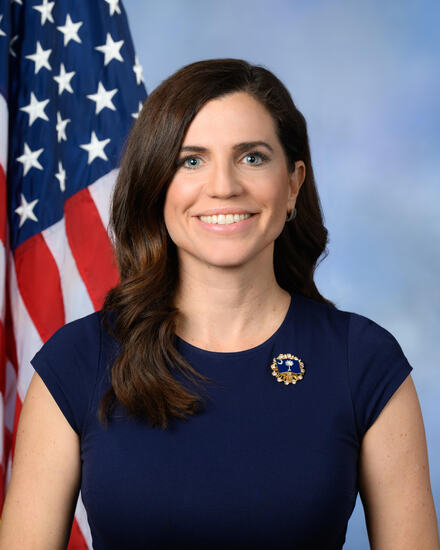
Rep. Nancy Mace
Sponsored bills
Maddy summaryThe Laken Riley Act expands mandatory detention for immigrants convicted of certain property crimes like burglary, theft, or shoplifting by adding these offenses to existing immigration detention criteria. It requires the federal government to issue detainers for such individuals and take custody if not detained by local authorities. The bill also grants state attorneys general standing to sue federal officials in federal court if they believe immigration enforcement actions (like releasing detained immigrants) cause the state financial harm exceeding $100. This creates new legal pathways for states to challenge federal immigration decisions through expedited lawsuits.
Maddy summaryThis bill would abolish the Fogarty International Center for Advanced Study in the Health Sciences. If enacted, it would end the center's operations and funding, directly affecting its staff and ongoing international health research programs. The legislation specifically targets the elimination of this National Institutes of Health division without altering broader health research policies.
Maddy summaryThis bill expands 529 college savings account flexibility by allowing funds to cover costs for industry-recognized postsecondary credentials, not just traditional degrees. It defines "qualified expenses" to include tuition/fees for recognized credential programs (like certifications or apprenticeships), required testing fees, and continuing education needed to maintain credentials. To qualify, programs must meet specific criteria, such as appearing on state lists under the Workforce Innovation and Opportunity Act or being listed in VA or Defense directories. The change applies to 529 distributions made after the law's enactment, giving families more options to use these accounts for job-focused training.
Maddy summaryThe CARGO Act of 2025 prohibits the National Institutes of Health (NIH) from funding any research involving live animals conducted outside the United States. It directly affects foreign organizations and researchers who previously received NIH grants for animal research abroad, including projects funded under the $2.2 billion in grants from 2011-2021. The key provision amends the Public Health Service Act to ban NIH support for such overseas research, requiring all animal research funded by the NIH to occur within the U.S. (including territories and the District of Columbia). This change aims to address concerns about inadequate oversight of animal welfare in foreign labs where self-reported data may be inaccurate.
Maddy summaryHR 992, the PATROL Act, prohibits the federal Attorney General from suing states that build border barriers (like walls or fences) to prevent illegal entry or protect state territory. It specifically blocks civil lawsuits under existing border laws (33 U.S.C. 401/403) against states for such barrier projects. The bill defines key terms like "barrier" (including walls or fences) and "immigration laws" to clarify its scope. This directly affects states constructing border infrastructure and limits federal legal actions against those efforts. The bill does not create new border policies but changes the legal landscape for state-led border security measures.
Maddy summaryThis bill prohibits access to single-sex facilities (like restrooms, locker rooms, and changing rooms) on federal property unless the individual's biological sex matches the facility's designated sex. It directly affects anyone using federal buildings, military bases, or postal facilities, requiring them to use spaces corresponding to their biological sex as defined in the bill. Key provisions define "biological sex" based on reproductive systems (male/female) and allow exceptions only for emergency medical personnel or active law enforcement during investigations. The bill does not apply to private or non-federal spaces, focusing solely on facilities owned or operated by the U.S. government.
Maddy summaryHR 1017 prohibits federal funding to private entities, state/local governments, or non-Federal agencies that allow individuals to access single-sex facilities (like restrooms, locker rooms, or changing rooms) based on gender identity rather than biological sex. The bill defines "biological sex" as male or female based on reproductive anatomy, and "single-sex facility" as spaces intended for one biological sex. Exceptions apply for emergency medical personnel responding to medical emergencies or law enforcement officers actively pursuing suspects or conducting investigations. This law directly affects organizations receiving federal funds that operate such facilities, requiring them to restrict access based on biological sex to maintain funding.
Maddy summaryThis bill, titled "Prison Rape Prevention Act of 2025" (HR 1015), actually establishes rules for housing and medical care in federal prisons, not rape prevention. It requires the Bureau of Prisons to house and transport inmates only with others of the same biological sex (defined by reproductive anatomy) and prohibits providing gender-related medical treatments. This includes banning treatments like hormone therapy, surgeries (e.g., hysterectomy, phalloplasty), or puberty blockers for transgender inmates, except for specific medical conditions like disorders of sex development or injuries from prior treatments. The bill directly affects all federal prison inmates and applies only to the Bureau of Prisons.
Maddy summaryHR 925, the "Dismantle DEI Act of 2025," would eliminate diversity, equity, and inclusion (DEI) programs across federal government operations. The bill requires federal agencies to close DEI offices, rescind related executive orders, and prohibit the use of federal funds for DEI training, offices, or initiatives. It defines "prohibited diversity, equity, or inclusion practice" as any activity that discriminates based on race, ethnicity, religion, biological sex, or national origin, or requires employees to complete training asserting that certain groups are inherently superior or inferior. The legislation also prohibits requiring employees to sign statements about race, ethnicity, or gender, and establishes private lawsuits for violations with potential damages of $1,000 per violation per day. This bill would directly affect federal agencies, contractors, grantees, and advisory committees receiving federal funding.