

This concurrent resolution declares that Congress should not impose any new performance fee, tax, royalty, or other charge relating to the public performance of sound recordings on a local radio station for broadcasting sound recordings over the air, or on any business for such public performance of sound recordings.
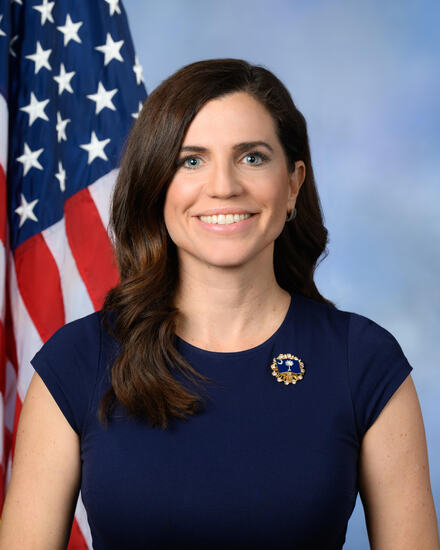
Rep. Nancy Mace
Sponsored bills
Maddy summaryHRES 132 is a House resolution censuring Representative Robert Garcia (CA) for remarks made during a February 12, 2025, hearing and on CNN. The resolution states Garcia referred to Elon Musk - a figure described as a "special government employee" working with the DOGE Service - as a "dick" and urged Democrats to "bring actual weapons" against him, which the resolution claims incited violence. If passed, it would formally reprimand Garcia, require him to appear in the House chamber for the censure to be read, and publicly state the reprimand. This is a procedural disciplinary action, not a policy change affecting the public or government operations.
Maddy summaryHR 1301, the Death Tax Repeal Act, would eliminate the federal estate tax and generation-skipping transfer tax for estates of individuals dying on or after its enactment date. It directly affects individuals inheriting significant assets, as it removes taxes on estates exceeding $10 million (adjusted for inflation) and repeals taxes on large transfers between generations. The bill modifies the gift tax by establishing a $10 million lifetime exemption with annual inflation adjustments, replacing previous tax brackets. It applies to estates, gifts, and transfers occurring on or after the bill's effective date.
No Asylum for Criminals Act of 2025 This bill bars an individual who has been convicted of a felony or misdemeanor from receiving asylum, with limited exceptions. Specifically, the Department of Homeland Security may designate political offenses committed outside of the United States that shall not be considered a crime for this purpose. Currently, an individual shall be barred from receiving asylum for only certain types of criminal convictions, such as if the individual is convicted for (1) an aggravated felony, or (2) a particularly serious crime and as a result deemed a danger to the United States.
Maddy summaryHR 1232, the National Right-to-Work Act, would make union membership voluntary for workers in most private-sector jobs by removing legal requirements for employees to join a union or pay dues as a condition of employment. It directly affects workers in unionized workplaces covered by the National Labor Relations Act (including most private employers) and railroad workers covered by the Railway Labor Act. The key change eliminates provisions that allowed "union security agreements" (requiring dues or membership), meaning workers could no longer be forced to pay union fees to keep their jobs. This bill does not change other labor rights or create new programs - it only modifies existing laws to allow workers to opt out of union membership and financial obligations.
Security And Fairness Enhancement for America Act of 2025 or SAFE for America Act of 2025 This bill eliminates the diversity visa program. This program provides up to 55,000 visas annually to individuals from countries with low rates of immigration to the United States.
Maddy summaryThe Safe Shelters Act of 2025 requires sex offenders mandated to register on the National Sex Offender Registry (under the Adam Walsh Act) to notify shelter staff if they enter a regular emergency shelter during a disaster. It prohibits these offenders from using undesignated shelters without immediate notification, with penalties including fines or up to 5 years in prison for noncompliance. The bill directs FEMA to designate specific federal buildings or prisons as shelters *only* for these offenders during disasters, requiring agencies to share lists of designated shelters with all shelter operators. This directly affects registered sex offenders and emergency shelter managers, creating a new system to separate shelter access during crises. The law takes effect 180 days after enactment.
Maddy summaryThis bill prohibits non-consensual distribution of intimate images (like photos showing genitals or sexual activity) created in private settings without the subject's consent, if the distribution causes psychological, financial, or reputational harm. It specifically bans sharing nude images of minors with abusive intent. Exceptions cover law enforcement, journalism, medical use, and legal proceedings. Violations carry up to 2 years in prison for non-consensual adult images or 3 years for minor-related offenses.
Maddy summaryThis bill creates a civil lawsuit right for individuals whose intimate images or videos are secretly recorded without consent in situations where privacy was expected (like in a bathroom or bedroom). Victims can seek $150,000 per image plus legal fees and court orders to stop the sharing or removal of the content. It covers images of private body areas (genitals, buttocks, or female nipples), sexual fluids, or sexual conduct, but only when the victim had a reasonable expectation of privacy. The law excludes law enforcement actions conducted under a valid warrant.
Maddy summaryHR 1203, the Stop VOYEURS Act of 2025, strengthens federal criminal penalties for secret recording of people in private settings without consent. It increases maximum prison sentences for video voyeurism from one year to five years and expands federal jurisdiction by defining specific circumstances where such acts become federal crimes. These include using interstate commerce for payments, transmitting recordings via computer/email, using equipment that crossed state lines, or conducting the act in federal territories. The law directly affects individuals who secretly record others without consent in private situations, making these acts federal offenses when connected to interstate activity. This change aims to address the growing prevalence of non-consensual recordings by broadening enforcement scope.