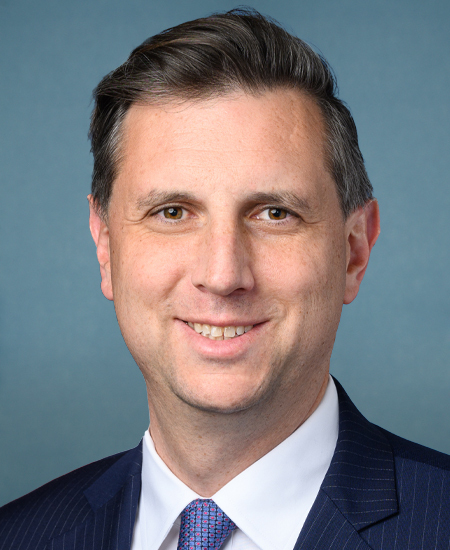
Photo of Seth Magaziner
D United States House · District 2 · Rhode Island On the 2026 ballot

Rep. Seth Magaziner

Compare
Total votes
1,879
all sessions
Attendance
93%
137 missed
Near the chamber average
With party
96%
of cast votes
Near the chamber average
Bipartisan score
2%
crosses aisle rarely
Near the chamber average
Sponsored
1,148
bills & resolutions
Higher than 88% of chamber peers
Committees
6
assignments
1,148 bills and resolutions

Sponsored bills

Total
1,148
Primary
47
Co-sponsor
1,101
This page
1,148
matching current filters
Co-sponsor HR 7127
In committee · Indiana House · Co-sponsor
FAIR Act

Maddy summaryHR 7127, the FAIR Act, establishes pay adjustments for federal employees in 2025. It increases base pay by 4% for most federal workers under statutory pay systems and for "prevailing rate" employees (like those in specific geographic areas), while raising locality pay rates by 3.4%. The bill directly affects all federal employees receiving pay under these systems, as it modifies their 2025 salary calculations. These changes are based on statutory formulas under Title 5 of the U.S. Code, with no new policy mechanisms beyond the specified percentage increases. The adjustments apply to pay rates in effect as of the end of fiscal year 2024.

In committee Jan 30, 2024 1 co-sponsor
Co-sponsor HR 7059
In committee · Indiana House · Co-sponsor
ACCESS Act of 2024

Maddy summaryThe ACCESS Act of 2024 creates a federal grant program to help clinics and health care providers expand abortion and reproductive health services in states where abortion is legal (outside of life or health exceptions). It authorizes $200 million annually for fiscal years 2024-2028 to fund specific capacity-building activities, including facility expansions, hiring clinical staff, telehealth services, and culturally appropriate patient resources. Priority is given to providers in states experiencing the highest increases in out-of-state patients seeking abortion care. The bill directly supports health care entities serving patients who travel across state lines for services, aiming to reduce wait times and improve access for vulnerable communities.

In committee Jan 26, 2024 1 co-sponsor
Co-sponsor HR 7087
In committee · Indiana House · Co-sponsor
Maintaining our Obligation to Moms who Serve Act

Maddy summaryHR 7087, the MOMS Act, establishes a pilot program to provide evidence-based mental health support for pregnant and postpartum members of the U.S. Armed Forces and their beneficiaries (including family members). It requires the Defense Health Agency to integrate these prevention programs into existing maternal or pediatric care at military medical facilities, prioritizing diverse locations and removing barriers like childcare access. The bill mandates an advisory committee with military members, experts, and service organizations to guide implementation, along with annual reports tracking participation by demographics and a study on the program’s effectiveness. Funded at $5 million annually from 2025-2029, the pilot aims to reduce perinatal mental health conditions and improve military readiness.

In committee Jan 25, 2024 1 co-sponsor
Co-sponsor HR 7056
In committee · Indiana House · Co-sponsor
Access to Family Building Act

Maddy summaryHR 7056, the Access to Family Building Act, establishes federal rights for individuals to access assisted reproductive technology (ART) like IVF without unreasonable restrictions, directly affecting patients seeking fertility treatments and health care providers offering ART services. The bill prohibits states from imposing limitations on ART that are more burdensome than those for comparable medical procedures, fail to advance safety, or unduly restrict access, while allowing health and safety regulations that are necessary and least restrictive. It creates federal enforcement mechanisms, including lawsuits by the Attorney General or affected individuals to challenge violating state laws, and preempts conflicting state regulations. The bill explicitly preserves state authority over health/safety regulations and does not alter existing state insurance coverage laws for ART.

In committee Jan 19, 2024 1 co-sponsor
Co-sponsor HR 7039
In committee · Indiana House · Co-sponsor
Stronger Communities through Better Transit Act

Maddy summaryThe Stronger Communities through Better Transit Act establishes a new federal grant program to improve public transportation service. It provides funding to urban areas, states, and Indian tribes to cover up to 50% of public transit operating costs (up to 80% in persistent poverty areas and 100% for Indian tribes), with requirements to report on service frequency, access to jobs, and conduct community surveys. The program mandates that a majority of funds must benefit underserved communities and areas of persistent poverty, defined as census tracts with high poverty rates or minority populations. Recipients must maintain their transit funding levels and report on improvements in access to essential services. The bill authorizes $20 billion annually for fiscal years 2024-2027.

In committee Jan 18, 2024 1 co-sponsor
Co-sponsor HR 6053
In committee · Indiana House · Co-sponsor
Break Free From Plastic Pollution Act of 2023

Maddy summary# Summary of "Protecting Communities from Plastics Act" (Title II) This comprehensive legislation addresses the environmental, health, and environmental justice impacts of plastics production and use. Key provisions include: ## Environmental Justice Protections - Requires environmental justice assessments for permits of "covered facilities" (plastics manufacturing facilities) - Mandates consultation with "fenceline communities" (communities near facilities) including: * Prompt notification in multiple languages * Public hearings with translation services * Community benefit agreements - Establishes a 45-day waiting period before approving permits after public hearings ## Regulatory Requirements - Amends Clean Air Act to establish new source performance standards for plastics facilities - Requires continuous monitoring of air emissions (benzene, nitrogen oxides, etc.) - Amends Clean Water Act to prohibit discharge of plastic pellets in wastewater - Requires financial assurance for facility closure and emergency response - Prohibits new facility permits within 5 miles of community buildings (schools, hospitals, etc.) ## Research and Monitoring - Requires study of microplastics in food (including fish, meat, fruits, vegetables) - Mandates research on microplastics in human bodies (urine, breastmilk, stool) - Establishes a pilot program to test technologies for microplastic removal - Requires inventory of plastics manufacturing and distribution ## Additional Provisions - Temporary permitting moratorium on new plastics facilities (during "temporary pause period") - Requires listing of discarded polyvinyl chloride as hazardous waste - Limits National Recycling Strategy to exclude chemical recycling technologies - Creates grants to reduce single-use plastics in agricultural packaging - Requires biodegradable alternatives to plastic weed barriers The legislation aims to address the disproportionate environmental and health impacts of plastics production on vulnerable communities while establishing comprehensive regulatory frameworks for plastics manufacturing and disposal.


In committee Jan 18, 2024 1 co-sponsor
Co-sponsor HR 6935
In committee · Indiana House · Co-sponsor
Creative Workforce Investment Act

Maddy summaryHR 6935, the Creative Workforce Investment Act, authorizes $300 million in federal grants (2024-2026) to fund community-based arts programs that employ creative workers. It directly affects nonprofit organizations, local governments, and community groups that create public arts projects while hiring individuals facing employment barriers, including marginalized communities. Key provisions require grantees to avoid outsourcing jobs, maintain collective bargaining agreements, and document diverse histories through public art, performances, and storytelling. The bill mandates annual reports tracking employment outcomes and median earnings for participants after program completion, ensuring transparency in how funds create accessible cultural opportunities.

In committee Jan 10, 2024 1 co-sponsor
Co-sponsor HR 6929
In committee · Indiana House · Co-sponsor
Affordable Connectivity Program Extension Act of 2024

Maddy summaryThe Affordable Connectivity Program Extension Act of 2024 allocates $7 billion in funding for the Affordable Connectivity Program (ACP) during fiscal year 2024. The ACP provides subsidies to low-income households to help cover the cost of internet service and connected devices like laptops or tablets. This funding ensures the program can continue supporting eligible households throughout the year, with the money remaining available until fully spent. The bill extends existing program funding without changing eligibility criteria or service requirements.

In committee Jan 10, 2024 1 co-sponsor
Primary HR 6888
In committee · Indiana House · Lead sponsor
Clean Energy Workforce Act

Maddy summaryHR 6888, the Clean Energy Workforce Act, provides $100 million in federal grants to develop clean energy job training programs. It directly affects local schools, career technical education centers, colleges, and industry partners by funding: (1) new or expanded training programs in clean energy fields (like renewable energy and climate adaptation), designed to be shared with other schools and accessible to diverse students; and (2) upgrades to school facilities to use renewable energy and improve energy efficiency. Grants require partnerships between educational institutions, industry representatives, and community groups to create replicable training that prepares students for jobs in growing clean energy sectors. The bill focuses on concrete workforce development, not environmental outcomes.

In committee Dec 22, 2023 0 co-sponsors
Co-sponsor HR 6756
In committee · Indiana House · Co-sponsor
Baby Food Safety Act of 2023

Maddy summaryThe Baby Food Safety Act of 2023 requires the FDA to establish legal limits for four toxic elements - lead, cadmium, mercury, and inorganic arsenic - in foods for infants and children under two years old, including infant formula. It mandates that the FDA set these limits through administrative orders with specific deadlines (e.g., proposed limits for lead/arsenic/cadmium by December 2025), after public comment periods and scientific review. The law also adds that baby food exceeding these limits becomes "adulterated" and triggers mandatory recalls for non-formula products. This directly affects baby food manufacturers, requiring them to comply with new safety standards by 2027-2030.

In committee Dec 15, 2023 1 co-sponsor
Showing 761 to 770 of 1,148 bills
Previous 1 … 76 77 78 … 115 Next