

Maddy summaryThe FAAN Act (HR 7266) authorizes $1 billion in federal grants to schools of nursing in underserved areas to address nursing workforce shortages. It directly affects nursing schools in medically underserved communities, rural regions, and areas with health professional shortages, prioritizing institutions serving underrepresented racial/ethnic groups, rural populations, and low-income students. Key provisions include funding for faculty hiring (especially from underrepresented groups), modernizing classrooms with technology like simulation labs, expanding student support programs, and creating clinical partnerships with healthcare facilities. Schools receiving grants must report annually on student demographics, faculty diversity, and program outcomes, with a comprehensive report to Congress after five years. The bill aims to strengthen nursing education capacity and improve national readiness for public health emergencies.
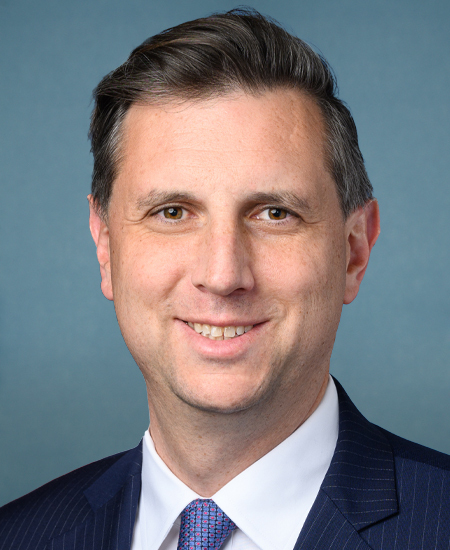
Rep. Seth Magaziner
Sponsored bills
Maddy summaryThis bill extends funding for family-to-family health information centers through 2029. It amends the Social Security Act to change the expiration date of this program from 2024 to 2029, ensuring continued support. These centers provide families with resources and guidance on navigating healthcare systems, particularly for those managing chronic conditions or disabilities. The change directly affects the centers themselves and the families they serve, without altering program requirements or creating new services.
Maddy summaryHR 7288, the Armenian Protection Act of 2024, repeals the waiver authority that allows the President to bypass restrictions on U.S. aid to Armenia. Specifically, it prevents the waiver of Section 907 of the Freedom Support Act for fiscal years 2024 and 2025, which currently blocks U.S. assistance to Armenia due to historical disputes. This bill directly affects Armenia's eligibility for certain U.S. foreign aid programs by removing the possibility of executive branch waivers for those years. The key mechanism is the permanent removal of the waiver option under the specified appropriations law, changing the policy landscape for U.S.-Armenia aid relations.
Maddy summaryHR 7272, the Shining a Spotlight on Safer Communities Act, requires the Attorney General to submit annual reports to Congress starting in 2024, detailing how the Bipartisan Safer Communities Act's provisions (specifically sections 932 and 933 of title 18) are being implemented. These reports must include data on investigations, prosecutions, demographic information of defendants, and seized firearms or assets related to gun trafficking and straw purchasing. The bill mandates these reports for fiscal years 2024 through 2027, with a funding limit of $2 million annually for this reporting. It is a procedural bill focused solely on transparency and accountability for existing gun safety measures, not creating new policies.
Maddy summaryHR 7261, the Reimagining Inclusive Arts Education Act, creates a federal grant program to improve arts education access for children with disabilities in K-12 schools. The bill authorizes $15 million over five years (2025-2029) to fund competitive grants for eligible entities like school districts, state agencies, or partnerships with colleges/nonprofits. Grant recipients must use funds to adapt arts curricula, provide professional development for arts educators, and incorporate creative arts therapies (like music or dance) to increase inclusion and accessibility for students with disabilities. Priority is given to schools receiving Title I funding, and grants last up to three years with possible renewal based on program success.
Maddy summaryHR 7112, the Stop Scams and Spam Act, requires the Federal Communications Commission (FCC) to create a tracking system for the top 100 illegal or suspected illegal robocall campaigns within one year of the law's enactment. The FCC must then publish monthly public reports on these campaigns via its website, detailing activity from the previous month. This bill directly affects consumers by increasing transparency about widespread scam call operations, as the reports will identify recurring fraudulent campaigns targeting phone users. The law defines "robocall" broadly to include automated calls or texts using dialing systems or prerecorded voices, excluding those requiring significant human involvement.
Maddy summaryHRES 993 is a non-binding congressional resolution designating February as "Career and Technical Education (CTE) Month" to celebrate CTE programs nationwide. It supports CTE as a pathway preparing students for high-demand, skilled careers in fields like infrastructure and technology, recognizing that over 12 million students currently participate in CTE programs across high schools and colleges. The resolution encourages educators, counselors, and parents to promote CTE as a respected educational option, highlighting its role in reducing high school dropout rates and aligning student skills with workforce needs. It does not create new laws or allocate funding, but symbolically affirms bipartisan support for CTE, referencing the 1917 Smith-Hughes Act as foundational to current efforts.
Maddy summaryHRES 990 is a non-binding resolution expressing the House of Representatives' support for fair treatment of paraprofessionals (like instructional assistants) and education support staff (such as clerical, custodial, and food service workers) in schools. It states these over 3 million frontline workers deserve livable wages, affordable health care, job security, paid leave, professional development, and safe working conditions. The resolution lists specific recommendations, including eligibility for family medical leave and protections against retaliation for reporting workplace issues. It does not create new laws but formally recognizes these staff as essential to school success and calls for policies addressing their current challenges.
Maddy summaryThe Credit for Caring Act of 2024 creates a new federal tax credit for family caregivers. It allows eligible caregivers to claim a credit equal to 30% of qualified caregiving expenses (like home modifications, medical supplies, or respite care) exceeding $2,000 per year, capped at $5,000 annually. To qualify, caregivers must earn over $7,500 in income and provide care for a relative (like a spouse or parent) certified by a healthcare provider as needing long-term care for at least 180 days. The credit phases out for higher earners, with a $75,000 income threshold for single filers and $150,000 for joint returns.
Maddy summaryHR 7132 creates a federal grant program to help state and local governments, tribes, and Native Hawaiian organizations develop and implement housing plans. Grants fund both planning (creating strategies) and implementation (putting strategies into action) to increase housing supply and affordability while avoiding displacement of current residents. At least 10% of funds must support rural communities, and recipients must report annually on progress and submit final evaluations after three years. The program requires comprehensive plans addressing housing needs, land use reforms, and community engagement to expand housing options.