

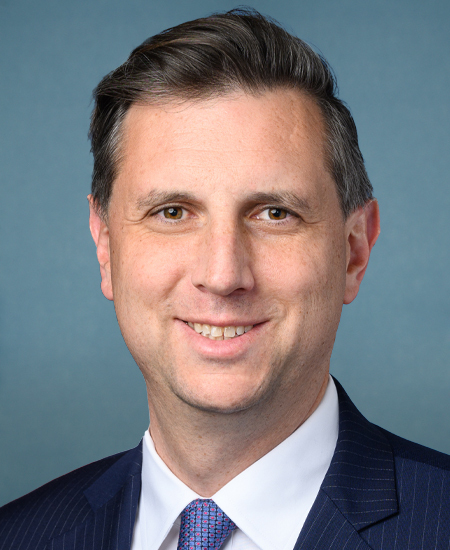
Photo of Seth Magaziner
D United States House · District 2 · Rhode Island On the 2026 ballot

Rep. Seth Magaziner

Compare
Total votes
1,879
all sessions
Attendance
93%
137 missed
Near the chamber average
With party
96%
of cast votes
Near the chamber average
Bipartisan score
2%
crosses aisle rarely
Near the chamber average
Sponsored
1,152
bills & resolutions
Higher than 88% of chamber peers
Committees
6
assignments
1,152 bills and resolutions

Sponsored bills

Total
1,152
Primary
47
Co-sponsor
1,105
This page
1,152
matching current filters
Co-sponsor HR 1517
In committee · Indiana House · Co-sponsor
Prevent Interruptions in Physical Therapy Act of 2025

Maddy summaryThis bill allows physical therapists to use temporary replacement staff (locum tenens) under Medicare, similar to how physicians currently can. It directly affects physical therapists providing outpatient services and Medicare beneficiaries relying on those services. The key change modifies Medicare rules to apply the same provisions for physical therapy services as are already used for physician services. This means physical therapists can more easily fill temporary staffing gaps without disrupting patient care. The amendment applies to services provided after the bill's enactment date.

In committee Feb 24, 2025 1 co-sponsor
Co-sponsor HR 1542
In committee · Indiana House · Co-sponsor
Pay Our Coast Guard Parity Act of 2025

Pay Our Coast Guard Parity Act of 2025 This bill provides continuing appropriations to the Coast Guard for pay and benefits when there is a Coast Guard-specific funding lapse. Under the bill, a  Coast Guard-specific funding lapse occurs when (1) a bill providing appropriations for the Coast Guard for a fiscal year has not been enacted before the beginning of that fiscal year, and no joint resolution providing continuing appropriations for the Coast Guard is in effect; and (2) a bill providing appropriations for the Department of Defense (DOD) for the fiscal year has been enacted before the beginning of the fiscal year, or a joint resolution providing continuing appropriation for DOD is in effect.  If a Coast Guard-specific funding lapse occurs, the bill provides appropriations to the Coast Guard for pay and allowances for military members of the Coast Guard who perform active service or inactive-duty training; pay and benefits for certain civilian employees and contract employees; the payment of a death gratuity; payments for travel related to funerals, the dignified transfer of remains, and unit memorial services; and the temporary continuation of the basic allowance for housing for dependents of members of the Coast Guard dying on active duty. The bill generally provides the appropriations to the Coast Guard until the earlier of the enactment of specified Coast Guard appropriations legislation, the termination of the availability of appropriations for DOD, or two weeks after the beginning of the Coast Guard-specific funding lapse.

In committee Feb 24, 2025 1 co-sponsor
Co-sponsor HR 1544
In committee · Indiana House · Co-sponsor
LEASH DOGE Act

Maddy summaryHR 1544, the LEASH DOGE Act, requires the Department of Government Efficiency (DOGE) to report detailed information about its employees and operations to Congress. Specifically, it mandates a report listing all DOGE employees with their roles, background check results, security clearances, and conflict of interest disclosures; appearances before congressional committees; and a public website updated weekly with employee data, funding reductions, and contact information for public inquiries. The bill sets a March 31, 2025, deadline for compliance, with penalties including restrictions on using federal funds for DOGE activities or new DOGE Agency Teams until requirements are met. It directly affects DOGE leadership, its employees, and congressional oversight committees. The law focuses on transparency about DOGE’s staffing and budget decisions, not policy outcomes.

In committee Feb 24, 2025 1 co-sponsor
Co-sponsor HR 1456
In committee · Indiana House · Co-sponsor
Gun Trafficker Detection Act

Maddy summaryHR 1456, the Gun Trafficker Detection Act, requires private firearm owners (non-licensed individuals) to report lost or stolen firearms to the Attorney General within 48 hours via a new web portal. It imposes civil penalties of up to $1,000 for first violations and $5,000 for repeat violations, and prohibits individuals with two or three penalty assessments from receiving firearms for 1 year or 5 years, respectively. The bill mandates law enforcement agencies to use 5% of crime grant funds to study lost/stolen firearm data collection and updates the National Instant Background Check System to include these new restrictions. It directly affects private gun owners and law enforcement agencies, focusing on reporting compliance and background check adjustments.

In committee Feb 21, 2025 1 co-sponsor
Co-sponsor HR 1464
In committee · Indiana House · Co-sponsor
MODERN WIC Act of 2025

More Options to Develop and Enhance Remote Nutrition in WIC Act of 2025 or the MODERN WIC Act of 2025 This bill permanently allows individuals to remotely certify their eligibility for, and receive benefits through, the Special Supplemental Nutrition Program for Women, Infants, and Children (WIC). Specifically, the bill requires that a state agency allow an individual seeking a WIC certification, recertification, or a nutritional risk evaluation to do so by phone or through video teleconference, in addition to the in-person option. A state agency has 90 days to collect data for a nutritional risk evaluation for a remotely certified individual. Further, a state agency may consider an applicant who meets the income eligibility standards to be temporarily eligible on an interim basis to participate in the program and may certify the individual for immediate participation without waiting for a nutritional risk evaluation. The bill also allows states to provide benefits on WIC electronic benefit transfer cards through mail or remote issuance instead of requiring participants to pick up or reload benefits in person at a WIC office. Further, the Department of Agriculture must report to Congress about the use of remote technologies and other digital tools in the WIC program. Currently, individuals are generally required to be physically present to certify their WIC eligibility and receive benefits, with exceptions. The Food and Nutrition Service  has temporarily waived these requirements and allowed remote certification and benefits using authorities that were provided by laws that were enacted to address COVID-19.

In committee Feb 21, 2025 1 co-sponsor
Co-sponsor HR 1505
In committee · Indiana House · Co-sponsor
Public Safety Employer-Employee Cooperation Act

Maddy summaryHR 1505, the Public Safety Employer-Employee Cooperation Act, establishes federal standards for collective bargaining rights for public safety officers (including police, firefighters, and emergency medical personnel) in states that do not meet minimum requirements. The Federal Labor Relations Authority (FLRA) will determine after 180 days whether a state law "substantially provides" key rights, such as forming unions, negotiating wages/hours, and using binding arbitration to resolve disputes. If a state fails this assessment, federal bargaining rules apply within two years, but existing state laws with stronger protections remain valid. The bill explicitly respects state laws that exceed its standards and exempts small jurisdictions (under 5,000 population or 25 full-time employees).

In committee Feb 21, 2025 1 co-sponsor
Co-sponsor HR 1477
In committee · Indiana House · Co-sponsor
Animal Cruelty Enforcement Act of 2025

Maddy summaryHR 1477 creates a new Animal Cruelty Crimes Section within the Justice Department's Environment and Natural Resources Division to enforce federal animal cruelty laws. This unit will coordinate with agencies like the FBI, USDA, and U.S. Marshals to investigate and prosecute cases, addressing current gaps in enforcement. The bill requires the unit to submit annual reports to Congress detailing prosecutions, convictions, and investigations where charges weren't filed. It does not change existing animal cruelty laws but establishes a dedicated federal unit to improve enforcement of current statutes.

In committee Feb 21, 2025 1 co-sponsor
Co-sponsor HR 1509
In committee · Indiana House · Co-sponsor
Accelerating Kids’ Access to Care Act of 2025

Maddy summaryThis bill would require states to create a simplified process for out-of-state healthcare providers to join Medicaid and CHIP programs. Qualified providers (those already enrolled in Medicare or another state's program with low fraud risk) could enroll without excessive screening and would be approved for five years. It directly affects children under 21 enrolled in Medicaid or CHIP by expanding access to providers outside their state, particularly in underserved areas. The change applies to all states' Medicaid programs but takes effect three years after enactment.

In committee Feb 21, 2025 1 co-sponsor
Co-sponsor HR 1433
In committee · Indiana House · Co-sponsor
Kids’ Access to Primary Care Act of 2025

Maddy summaryHR 1433, the Kids’ Access to Primary Care Act of 2025, sets a minimum Medicaid payment rate of 100% of Medicare’s rate for primary care services provided to children. It directly affects Medicaid-covered children and expands eligibility for providers to include pediatricians, family medicine physicians, nurse practitioners, physician assistants, certified nurse-midwives, and rural health clinics or Federally-qualified health centers (FQHCs) under specific conditions. Key provisions require Medicaid managed care plans to pay these providers at the minimum rate, with documentation requirements to verify compliance, and exclude emergency department services from the definition of primary care. The bill also mandates a study to track enrollment and payment rate changes across states after implementation.

In committee Feb 18, 2025 1 co-sponsor
Co-sponsor HR 1428
In committee · Indiana House · Co-sponsor
Poverty Line Act of 2025

Maddy summaryThe Poverty Line Act of 2025 updates how the federal poverty line is calculated to better reflect current costs of basic needs. It requires annual revisions using a 5-year average of household spending on food, housing, childcare, and healthcare (adjusted for inflation), with regional variations based on state or county data. This change directly affects households applying for federal assistance programs like SNAP or Medicaid, as eligibility will now align with more accurate, location-specific costs. The bill also mandates a public online tool to help determine poverty line thresholds and includes safeguards to prevent sudden eligibility changes during relocations.

In committee Feb 18, 2025 1 co-sponsor
Showing 511 to 520 of 1,152 bills
Previous 1 … 51 52 53 … 116 Next