

Maddy summaryThis bill establishes a $1 billion Marine Energy Acceleration Fund to advance marine energy technologies like tidal and wave power. It allocates $600 million for 20+ pilot projects that connect to local grids, prioritizing rural, tribal, and low-income communities, while $230 million funds research to cut costs and improve efficiency. The bill also dedicates $50 million to assess 50 coastal sites for energy potential, $85 million for workforce programs near project sites, and $15 million to streamline federal permitting. These provisions directly affect marine energy developers, coastal communities, and federal agencies like the Department of Energy, aiming to accelerate deployment through targeted funding and regulatory support.
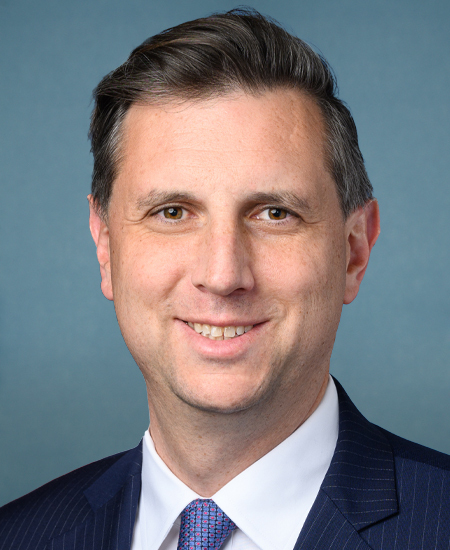
Rep. Seth Magaziner
Sponsored bills
Maddy summaryThe Keep the Heat On Act of 2025 ensures low-income households continue receiving home energy assistance during a federal government shutdown in fiscal year 2026. It directs the use of unused Treasury funds to maintain the same payment rates for the home energy assistance program as in fiscal year 2025, preventing service interruptions. This applies specifically to any shutdown period during the 2026 fiscal year, guaranteeing consistent support for vulnerable families. The bill addresses a funding gap without altering existing program eligibility or requirements.
Maddy summaryThis bill adds Medicare coverage for multi-cancer early detection screening tests (blood or biological tests analyzing cell-free DNA) starting January 1, 2028. It directly affects Medicare beneficiaries aged 68 and older (starting in 2028, with the age limit increasing by 1 year annually), requiring tests to be FDA-cleared and deemed reasonable/necessary by the Secretary for early cancer detection across multiple organ sites. Payment will initially match current stool DNA test rates before 2031, then shift to a lower rate or new payment system after 2031, with limits preventing more than one test per year. The bill explicitly states it does not alter coverage for existing cancer screenings like breast, colorectal, or prostate cancer tests.
Fair Pay for Federal Contractors Act of 2025 This bill provides back pay to employees of federal contractors who lost pay due to a lapse in appropriations (i.e., government shutdown) in FY2026. Specifically, the bill provides appropriations for federal agencies that are subject to a lapse in appropriations in FY2026 to adjust the price of contracts to compensate federal contractors for providing back pay to employees who were affected by the lapse in appropriations. The agencies must adjust the price of any contract for which the contractor stopped, suspended, delayed, or interrupted all or part of the work under the contract due to the lapse in appropriations. The price adjustment must compensate the contractor for reasonable costs incurred to (1) compensate employees who were furloughed or laid off, were not working, or experienced a reduction of hours or compensation due to the lapse in appropriations; or (2) restore paid leave taken by employees during the lapse in appropriations if the contractor required or permitted employees to use paid leave as a result of the lapse in appropriations. The maximum amount of weekly compensation of an employee for which an adjustment may be made under this bill may not exceed the lesser of (1) the employee's actual weekly compensation, or (2) $1,442 (or a lesser amount pro-rated for an employee who works less than 40 hours per week). The bill also requires the Office of Federal Procurement Policy to submit a report to Congress on the adjustments made under this bill.
Maddy summaryHR 5660, the Pay Our Military Act, ensures military personnel and support staff receive pay during a government funding gap in fiscal year 2026. It appropriates funds from the Treasury to cover pay and allowances for active-duty troops, reservists, Department of Defense civilian employees, and contractors supporting military operations, if Congress hasn’t passed regular funding by then. The funding remains available until either regular appropriations are enacted or January 1, 2027, whichever comes first. This is a temporary measure to prevent disruptions in military pay during budget negotiations.
Maddy summaryThis concurrent resolution designates the week of September 22-28, 2025, as "National Falls Prevention Awareness Week" to raise public awareness about falls among older adults (65+). It directly affects older adults and organizations working on fall prevention, such as healthcare providers and community groups. The resolution cites CDC data showing falls cause 41,000 annual deaths and $80 billion in medical costs, while encouraging existing evidence-based strategies like home safety modifications and balance exercises. It does not create new laws or funding but supports awareness efforts and collaboration among federal agencies, the Aging Network, and healthcare providers.
Maddy summaryThe FASTER Act (HR 5575) provides federal grants through FEMA to fire departments for programs that prevent falls among older adults (65+). It directly affects fire departments (career, combination, and volunteer) and seniors by funding home safety modifications like handrails, removing tripping hazards, and installing emergency access devices. Key provisions include 3-year grants covering up to 75% of costs in the first two years (35% in year three), requiring fire departments to use funds for specific fall prevention activities like home assessments and community paramedicine staffing - not to replace local funding. The bill mandates performance evaluations and a congressional report on effectiveness within two years of enactment.
Maddy summaryThe Stand Strong for Medicare Act of 2025 would expand Medicare coverage to include specific fall prevention items like grab bars, non-slip mats, shower chairs, and bed rails. It removes the requirement that these items must be provided under a physician's order, making them easier for beneficiaries to access. The bill also ensures payments for these items are exempt from automatic budget cuts under current law. This change directly benefits Medicare beneficiaries, particularly older adults at risk of falls, by improving access to essential safety equipment.
Maddy summaryThe Improving Child Care for Working Families Act of 2025 increases the tax exclusion limit for dependent care assistance from $7,500 to $10,500 annually for most taxpayers. This change directly benefits working families who receive employer-provided child care benefits by allowing them to exclude more of that assistance from their taxable income. Married couples filing separately would see their exclusion limit rise from $3,750 to $5,250. The amendment applies to amounts paid or incurred in calendar years starting after the bill's enactment.
Maddy summaryThe Mental Health Services for Students Act of 2025 would establish a federal grant program to fund school-based mental health services for students in grades K-12, particularly those experiencing trauma, grief, suicide risk, or violence. It directly affects schools (including Bureau of Indian Education schools), students, and community mental health providers through partnerships that must include school districts and local mental health entities. Key provisions require services to be culturally appropriate, trauma-informed, and integrated with positive behavioral supports, with grants capped at $2 million per award for 5 years (renewable) and funded at $300 million annually for 2027-2028. Recipients must report annually on program outcomes, ensure equitable access across urban and rural areas, and comply with privacy laws like HIPAA and FERPA.