

Maddy summaryThis bill requires states to allow eligible voters to register or update their registration at polling places on election day for federal elections, including during early voting periods. It applies to all states except those with existing laws eliminating voter registration requirements for federal elections. The key mechanism mandates that voters can both register and cast their ballot on the same day at designated polling locations. The requirement takes effect for the November 2026 general election and all subsequent federal elections.
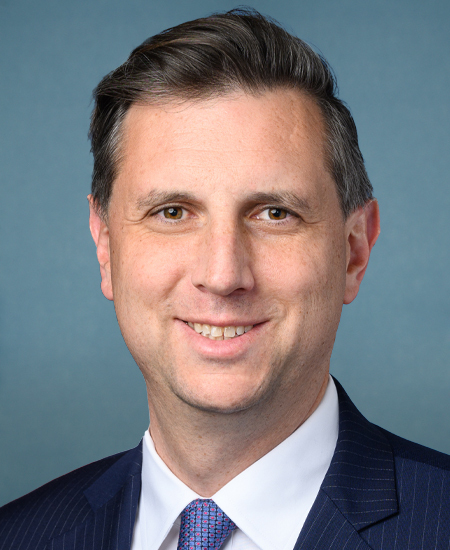
Rep. Seth Magaziner
Sponsored bills
Maddy summaryThis joint resolution designates October 2025 as Head Start Awareness Month to symbolically recognize the program's 60-year impact. It highlights Head Start's service to over 40 million children and families nationwide, emphasizing its role in early childhood development, health screenings, and educational support. The resolution serves as a ceremonial acknowledgment of the program's legacy and achievements, not as a policy change or funding measure. It was introduced by multiple representatives to honor Head Start's contributions to child well-being and educational outcomes.
Maddy summaryThis bill changes how Social Security cost-of-living adjustments (COLAs) are calculated for seniors. It requires using either the standard CPI-W index or a new CPI-E index (measuring inflation specifically for seniors' spending patterns), whichever results in a higher payment increase. The change applies to COLAs determined for cost-of-living computation quarters ending on or after September 2026. It directly affects Social Security beneficiaries aged 62 and older, potentially increasing their monthly payments based on the more senior-focused CPI-E index.
Maddy summaryThe American Energy Independence and Affordability Act extends multiple clean energy tax credits that were set to expire between 2025 and 2026. It specifically extends residential clean energy credits through 2034, clean electricity investment credits for wind and solar through 2032, and clean vehicle credits for electric vehicles through 2032. The bill also reinstates special rates for sustainable aviation fuel and modifies requirements for energy-efficient home improvements. These provisions directly affect homeowners installing solar panels, businesses investing in clean energy infrastructure, and manufacturers producing clean energy equipment.
Keep Air Travel Safe Act This bill provides continuing appropriations for the Transportation Security Administration (TSA) during any period in which there is a lapse in appropriations for TSA. It also requires the continuing appropriations to be funded using certain unobligated funds that were provided to U.S. Immigration and Customs Enforcement by the One Big Beautiful Bill Act. The bill provides the appropriations for TSA to continue all programs, projects, or activities (including the costs of direct loans and loan guarantees) that were funded in the preceding fiscal year. The appropriations provided by this bill are available from the first day of a lapse in appropriations for TSA until the earlier of the date on which the applicable regular appropriations bill for the fiscal year becomes law or a joint resolution making continuing appropriations becomes law, or the date that is 180 days after the first day of a lapse in appropriations.
Maddy summaryThis bill makes federal funding for the WIC program mandatory by requiring Congress to appropriate necessary funds annually for fiscal year 2026 and each subsequent year. It removes discretionary language from WIC funding requirements and clarifies that eligible participants must be served without participation limits. The bill directly affects low-income pregnant women, new mothers, and young children who rely on WIC for nutrition assistance, ensuring continued access to critical food, health, and education services.
Maddy summaryHRES 795 is a non-binding resolution condemning Hamas for the October 7, 2023, attacks that killed over 1,200 people, took 251 hostages (including Americans), and involved sexual violence. It demands Hamas immediately surrender and release all remaining hostages - specifically noting 48 people still held, including two U.S. citizens. The resolution also affirms Israel’s right to self-defense, calls for humanitarian aid to reach Palestinians, and condemns global antisemitism following the attacks. As a symbolic congressional statement, it does not create new laws or alter policies.
Maddy summaryHR 5705 requires the federal government to reimburse state agencies for funds they use to maintain participation in the WIC program during a government shutdown. It directly affects states that cover WIC costs using their own money when federal funding lapses. The bill establishes a process where states can seek reimbursement from the federal government after the shutdown ends. This ensures states aren’t burdened with costs for a federal funding gap that impacts nutrition assistance for women, infants, and children.
Maddy summaryHR 5715, the October 7 Gold Medal Act, authorizes Congress to award a gold medal to American hostages and victims of the October 7, 2023 Hamas attack in Israel. The medal, designed by the Treasury Secretary, will be presented to recognize their suffering and sacrifice, with the medal displayed at the Weitzman National Museum of American Jewish History in Philadelphia. The bill also permits the sale of bronze duplicates to cover costs, but does not create new legal obligations or policy changes. This is a ceremonial recognition, not a substantive legislative measure.
Maddy summaryHR 5714, the October 7 Remembrance Education Act, directs the U.S. Holocaust Memorial Museum to create a curriculum for secondary schools within 180 days of enactment. The curriculum will cover Hamas’ October 7, 2023 attacks on Israel, the history of antisemitism, the spread of anti-Israel rhetoric on campuses and social media following the attacks, and how denial or distortion of antisemitism occurs. It specifically requires schools to address the attacks' brutality, historical context of antisemitism, and contemporary manifestations of hate speech. The Museum must submit a report on the curriculum to Congress within 180 days of completion or by 3 years after the bill’s enactment. This bill affects secondary schools using the curriculum and focuses on educational content about the attacks and related antisemitism.