

Maddy summaryHR 6769 establishes a federal grant program to fund the complete destruction of firearms by state, tribal, and local governments. Eligible entities must submit applications detailing how they will fully destroy all firearm parts (including frames, barrels, and accessories) and maintain records, with grants covering equipment, contracted services, and staff training. The program allocates $15 million annually from 2026-2031, requiring grantees to use no more than 10% of funds for administration and reserving one-third of funding for small urban or rural areas. All grant recipients must provide documented proof of destruction through written policies and verified records. This is a direct funding mechanism for firearm disposal, not a crime-reduction measure.
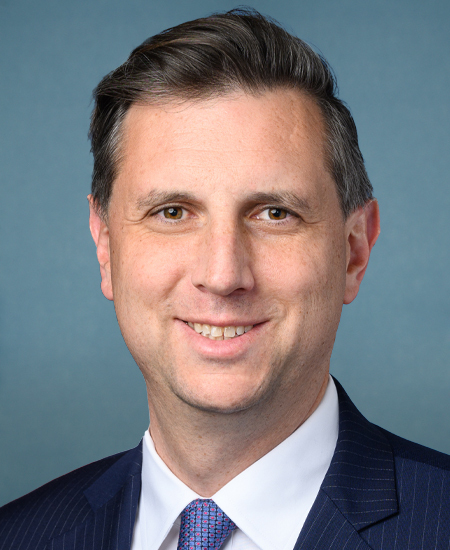
Rep. Seth Magaziner
Sponsored bills
Maddy summaryHR 6731, the "Restore Trust in Government Act," requires Members of Congress, the President/Vice President, and their spouses or dependent children to divest certain financial investments during federal service. It defines "covered investments" broadly (including stocks, commodities, and derivatives) but excludes Treasury bonds, municipal bonds, family farm interests, and some Alaska Native Settlement stock. Covered individuals must sell holdings within 90-180 days of taking office or enacting the law, with limited exceptions for qualified blind trusts or spouses’ occupational trading. Violations incur a 10% fee on the investment value and require returning profits, paid to the Treasury. Ethics offices enforce these rules, publish penalty details, and issue divestiture certificates.
Maddy summaryThe ARMAS Act of 2025 transfers control of certain firearms export regulations from the Department of Commerce to the Department of State to better regulate exports to Mexico, Central America, and the Caribbean. It designates specific countries (including Mexico, Guatemala, Honduras, and El Salvador) as "covered countries" requiring stricter export oversight, including mandatory annual reports on firearms exports and end-use monitoring to prevent diversion to criminal groups. The bill requires the Department of State to develop a strategy to disrupt illegal firearm trafficking, including increased participation in the eTrace program for tracking U.S.-sourced firearms and improved data sharing with foreign governments. Based on findings that U.S.-sourced firearms are commonly used in crimes in these regions, the act aims to reduce the flow of weapons that fuel violence and crime.
Maddy summaryThe Protect America's Workforce Act cancels an executive order issued on March 27, 2025, that excluded certain groups from federal labor-management relations programs, making it legally unenforceable. It also ensures that all collective bargaining agreements between federal agencies and labor unions, which were active as of March 26, 2025, remain fully effective until their agreed terms expire. This directly affects federal agencies, labor unions, and the employees covered by these agreements. The bill prevents federal funds from being used to implement the canceled executive order while preserving existing labor agreements.
Maddy summaryThe RISE from Trauma Act establishes new federal grant programs to support community-based approaches for preventing and mitigating trauma, particularly for children and youth who have experienced or are at risk of experiencing trauma. It authorizes $600 million annually (2026-2033) for local coordinating bodies that bring together representatives from health, education, criminal justice, and community organizations to develop trauma-informed strategies. The bill also creates hospital-based intervention programs to reduce readmissions for trauma survivors, reauthorizes school-based trauma support services, and funds training for front-line providers to better identify and respond to trauma. The legislation focuses on evidence-based approaches to build resilience and address trauma in communities facing high rates of violence, substance use, and other trauma-inducing conditions.
Maddy summaryHR 6678, the Senior Legal Hotline Act of 2025, authorizes $10 million annually (2027-2031) to fund competitive grants for nonprofits or government partnerships to establish or operate statewide legal hotlines serving older adults. The hotlines must provide free, phone-based legal counseling, referrals, and advocacy on civil issues to seniors with the greatest economic or social need, coordinating with existing legal aid providers across each state. Grantees must contribute 25% of costs from non-Federal funds and ensure staff/volunteers have no conflicts of interest. This bill directly affects older individuals facing legal barriers they cannot afford to resolve, expanding access to free legal assistance through a coordinated state network.
Maddy summaryThis concurrent resolution (HCONRES 65) is a symbolic congressional commendment of state and local governments that have affirmed reproductive rights as human rights. It recognizes efforts by jurisdictions like Carrboro, North Carolina; Austin, Texas; and Fulton County, Georgia, which passed resolutions or proclamations declaring abortion access a human right and condemning criminalization of pregnancy outcomes. The resolution urges states to repeal restrictive abortion laws and protect access to reproductive care, but it does not create new legal requirements or fund programs. As a procedural resolution, it has no binding effect on federal or state law.
Maddy summaryThis bill increases federal student loan limits for graduate and professional students. Starting July 1, 2026, it sets a $50,000 annual limit and a $200,000 total aggregate limit (beyond undergraduate borrowing) for unsubsidized Federal Direct Stafford loans. These changes directly affect graduate and professional students pursuing advanced degrees who rely on federal loans for education costs. The provisions aim to provide higher borrowing capacity for these students' educational expenses under the Higher Education Act.
Maddy summaryHR 6597, the LET’S Protect Workers Act, increases civil penalties for employers violating key labor laws to strengthen worker protections. It raises fines for child labor violations to up to $700,000 per incident causing death or serious injury, and doubles penalties for repeated wage/hour violations (up to $50,000 per violation). The bill also significantly boosts OSHA penalties (e.g., up to $800,000 for serious violations), adds new retaliation penalties for mine safety violations (up to $200,000 for repeat offenses), and clarifies that recordkeeping violations continue until corrected. These changes apply to employers across sectors, including manufacturing, agriculture, and mining, under the Fair Labor Standards Act, Occupational Safety and Health Act, and Mine Safety Act.
ePermit Act This bill establishes requirements related to digitizing environmental reviews conducted under the National Environmental Policy Act of 1969 (NEPA). The Council on Environmental Quality (CEQ) must develop, publish, and iteratively update data standards for the collection and curation of certain data related to environmental reviews. CEQ must also design, test, and build prototype tools for environmental reviews. Additionally, CEQ must publish guidance to assist relevant agencies in implementing such standards as well as certain minimum functional requirements, such as data sharing that enables automated transfer of relevant data among federal agencies. Federal agencies responsible for environmental reviews or authorizations must implement the data standards and such minimum functional requirements. To the maximum extent practicable, CEQ and such agencies must iteratively develop and maintain a unified interagency data system consisting of interconnected federal agency systems and shared services for environmental reviews and authorizations, including a common interactive, digital, cloud-based authorization portal. Within a year, CEQ must oversee a pilot of shared services for environmental reviews and authorizations, including the portal. To the maximum extent practicable, CEQ must develop and implement the unified interagency data system by December 1, 2027.