Permanent Tax Cuts for American Families Act of 2023 This bill permanently increases the standard tax deduction for nonitemizing taxpayers. It also requires an inflation adjustment to the increased deduction amounts.
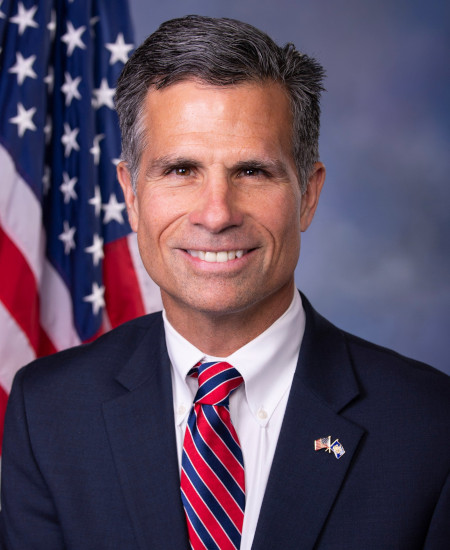
Rep. Daniel Meuser
Sponsored bills
Maddy summaryHR 3238, the Affordable Housing Credit Improvement Act of 2023, updates the Low-Income Housing Tax Credit (LIHTC) program to increase the availability of affordable housing across the United States. The bill makes several key changes including increasing state funding formulas, modifying tenant eligibility rules to better serve vulnerable populations (such as domestic violence victims and students), and expanding credit eligibility for projects in rural and Native American communities. Specific provisions raise the credit for properties serving extremely low-income households, clarify rules around tenant income increases, and require housing providers to protect victims of domestic violence. The bill also updates terminology from "low-income" to "affordable" throughout the tax code and enhances program transparency through data sharing requirements. These changes aim to make the LIHTC program more effective at creating and preserving affordable housing units for low-income households nationwide.
Maddy summaryThe Pay Our Correctional Officers Fairly Act adjusts pay for Bureau of Prisons employees currently assigned to the "Rest of U.S." pay locality. It directs that if an employee's worksite is within 200 miles of another pay locality, they will be paid according to the nearest locality with the highest pay rate - replacing the lower "Rest of U.S." rate. This applies to correctional officers and other Bureau of Prisons staff, but excludes employees whose worksite is more than 200 miles from any other locality. The change takes effect 180 days after the bill is enacted.
Maddy summaryThe Invest to Protect Act of 2023 establishes a federal grant program for local law enforcement agencies with fewer than 200 officers (including counties, municipalities, and tribal governments) to fund training and support services. Grants cover de-escalation training, mental health resources, evidence-based safety training (such as handling domestic violence or mental health crises), and recruitment/retention incentives like signing bonuses, retention bonuses (up to 20% of salary), and stipends for graduate education in mental health or social work. The bill requires a streamlined grant application process (under two hours), public disclosure of bonus amounts, and annual audits to prevent misuse of funds.
Maddy summaryThe HELPER Act of 2023 creates a new FHA mortgage insurance program specifically for first responders and K-12 teachers. It allows eligible first-time homebuyers in these professions to secure mortgages with 100% financing (no down payment required) for purchasing or repairing a primary residence. To qualify, applicants must be employed as law enforcement, firefighters, paramedics, or K-12 teachers, have completed housing counseling, and meet specific employment history requirements (e.g., 4 years in the role or disability-related release). The program authorizes $660,000 for fiscal year 2024 and $160,000 annually through 2030, with authority expiring after 5 years.
Maddy summaryHRES 339 is a non-binding House resolution expressing that an "all-of-the-above" energy strategy - including oil, gas, nuclear, coal, hydropower, and renewables - is the most viable approach to U.S. energy policy. It states this strategy would strengthen national security, lower consumer energy prices, and reduce reliance on foreign energy sources. The resolution highlights that domestic energy production supports infrastructure funding, job creation, and energy independence, while noting U.S. energy sources like Gulf of Mexico oil and nuclear power provide clean, reliable electricity. As a statement of congressional opinion, it does not create new laws or policy changes.

Maddy summaryThis bill creates new federal crimes for killing or assaulting law enforcement officers and public safety personnel while they're on duty or because of their status as officers. It establishes mandatory minimum sentences of 10 years for murder of officers, with higher penalties for assaults causing serious injury or using deadly weapons. The bill also creates a new offense for fleeing to avoid prosecution for killing officers and limits federal habeas corpus relief for those convicted of killing officers. Additionally, it expands law enforcement officers' authority to carry firearms in certain locations. The bill directly affects law enforcement officers, public safety personnel, and individuals who commit violent acts against them.
Maddy summaryThis bill removes a restriction that previously barred people in jail or prison while awaiting trial from receiving Medicaid health benefits. It directly affects individuals in custody pending legal proceedings by allowing states to provide Medicaid coverage for their medical care during this time. The bill also allocates $50 million in planning grants to help states develop systems to enroll these individuals, recruit healthcare providers who can serve them, and establish electronic billing for services provided in correctional facilities or through outpatient care. Key provisions require states to assess healthcare needs, eliminate policy barriers, and create plans to increase provider participation in Medicaid for this population.
Maddy summaryThe SAFE Banking Act of 2023 would protect banks and financial institutions that provide services to state-legal marijuana businesses and hemp-related businesses by preventing federal regulators from taking adverse actions against them solely for serving these businesses. It clarifies that income from state-legal marijuana businesses can be considered for mortgage applications, and requires regulators to update guidance on suspicious activity reports related to these businesses. The bill does not require financial institutions to serve these businesses, but ensures they won't face penalties for doing so. It extends similar protections to hemp-related businesses, which have faced banking challenges despite being federally legal under the 2018 Farm Bill.
Maddy summaryThis bill protects living organ donors from insurance discrimination by prohibiting life, disability, and long-term care insurers from denying coverage, raising premiums, or altering policy terms solely because someone donated an organ while alive. It also updates the Family and Medical Leave Act to include recovery from organ donation surgery as a qualifying health condition, allowing donors to take protected leave for this purpose. Additionally, the bill requires the Health and Human Services Secretary to update public educational materials about living donation benefits, risks, and insurance protections within six months of enactment. These changes directly affect living organ donors, insurers, employers, and healthcare systems by ensuring fair access to insurance and workplace leave.