

Maddy summaryThe CERTS Tax Exemption Act (HR 3510) exempts certain grants received by transportation service providers from federal taxation under the Coronavirus Economic Relief for Transportation Services Act. It directly affects eligible transportation providers who receive these specific grants by excluding the grant amounts from their gross income and preventing related tax deductions or basis adjustments from being denied. Key provisions ensure that for partnerships and S corporations, excluded grant amounts are treated as tax-exempt income, and partner basis increases align with grant-funded costs. This creates a clear tax treatment for these grants without altering the underlying grant program.
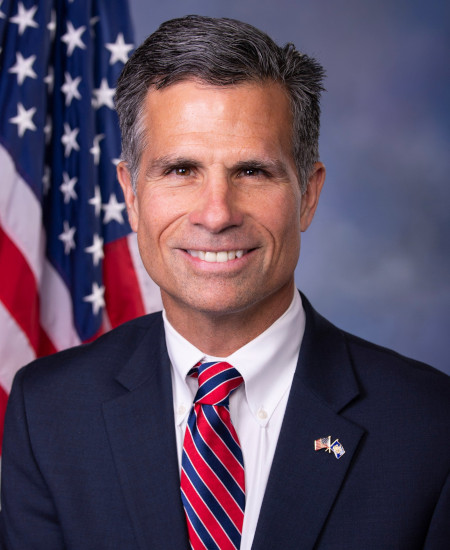
Rep. Daniel Meuser
Sponsored bills
Maddy summaryThe POLICE Act of 2023 would amend the Immigration and Nationality Act to make it a grounds for deportation if a non-citizen assaults a law enforcement officer. This provision directly affects non-citizens (aliens) who commit such assaults, requiring mandatory deportation proceedings under immigration law. The bill adds a specific clause to the list of deportable offenses without changing criminal penalties for the assault itself. As a result, non-citizens who physically attack police officers or other law enforcement personnel would automatically face deportation as a consequence of their actions.
Maddy summaryThe Higher Education Mental Health Act of 2023 establishes an Advisory Commission to study mental health challenges faced by students in higher education. The Commission, composed of 20 members including students with mental health disabilities, campus leaders, advocates, and government representatives, will analyze current services, policies, and data over a two-year period. It will develop recommendations to improve mental health support, retention, and graduation rates for students with mental health disabilities. The bill directly affects all institutions of higher education by requiring them to consider the Commission’s findings and recommendations.
Safe Access to Cash Act of 2023 This bill establishes a new federal statutory framework to govern robbery offenses involving ATMs and related conduct. Currently, the federal bank robbery statute makes it a federal crime to take or attempt to take by force and violence or by intimidation, money or other property from any bank, credit union, or savings and loan association. A violation is punishable by a statutory maximum prison term of 20 years (or 25 years, if the offense includes assault or use of a dangerous weapon). However, federal circuit courts have split on whether forcing someone to withdraw money from an ATM qualifies as an offense under the federal bank robbery statute. In United States v. Chavez, the Fifth Circuit Court of Appeals held that the bank customer, rather than the bank, had possession of the funds when the robbery occurred, so a necessary element of the federal bank robbery statute--that the money belonged to the bank--was not satisfied. In contrast, the Tenth, Seventh, and Fourth Circuits have held that directly forcing a bank customer to withdraw money from an ATM constitutes a federal bank robbery because the funds belonged to the bank when the withdrawal occurred. This bill establishes new statutory criminal offenses for ATM robbery and related offenses such as ATM theft. A violation is subject to the same criminal penalties as an offense under the federal bank robbery statute--a statutory maximum prison term of 20 years (or 25 years, if the offense includes assault or use of a dangerous weapon).
Maddy summaryThe Employee Equity Investment Act of 2023 creates a new facility to provide financial support for employee-owned businesses by establishing new rules for "employee equity investment companies." These companies must invest at least 75% of their capital in employee ownership transitions, requiring independent trustees and fairness opinions for transactions to protect employee interests. The bill also modifies government procurement rules to help employee stock ownership plans and worker-owned cooperatives access set-aside contracts. The facility will expire 20 years after the first license is issued, with detailed reporting requirements for all investments.
National Law Enforcement Officers Remembrance, Support and Community Outreach Act This bill directs the Department of Justice (DOJ) to establish a National Law Enforcement Officers Remembrance, Support, and Community Outreach Program. The bill further directs DOJ to award a grant under the program to the National Law Enforcement Officers Memorial Fund for the expenses associated with community outreach, public education, and officer safety and wellness programs operated by the of the National Law Enforcement Officers Memorial Fund and National Law Enforcement Museum.
Maddy summaryHRES 399 is a symbolic resolution expressing the U.S. House of Representatives' support for designating the week of May 7-13, 2023, as "National Correctional Officers Week." It honors correctional officers for their service in maintaining safety and dignity within correctional facilities, recognizing their role in protecting public safety and managing inmate care. The resolution does not create new laws or policies but formally acknowledges the contributions of correctional officers across the United States. It directly affects correctional officers by providing a nationally recognized day of appreciation for their work.
Maddy summaryThe FIGHT Act (HR 2742) amends the Animal Welfare Act to specifically target animal fighting events, such as cockfighting, by defining "rooster" as any male chicken over six months old and banning the live broadcasting (simulcasting) of such events. It prohibits using the postal service or interstate transport to move roosters for animal fighting purposes and adds civil enforcement tools allowing citizens to sue violators after a 60-day notice period. Fines up to $5,000 per violation may be imposed, and property used in animal fighting ventures can be seized. These changes strengthen enforcement against animal fighting by expanding legal remedies for the public and authorities.
Maddy summaryThe PAST Act of 2023 amends the Horse Protection Act to ban specific devices used to cause pain (soring) in horses at shows, particularly affecting Tennessee Walking Horses, Racking Horses, and Spotted Saddle Horses. It defines prohibited "action devices" (like boots or chains causing friction) and requires licensed, conflict-free inspectors at events to enforce rules. The bill increases penalties for violations to up to $5,000 fines or 3 years in jail, and mandates longer disqualifications for repeat offenses (180 days → 1 year → 3 years). Horse show organizers, exhibitors, and participants must comply with these new inspection and penalty requirements.
Small Business Stability Act This bill allows the Federal Deposit Insurance Corporation (FDIC) to guarantee an insured depository institution's uninsured deposits in noninterest-bearing transaction accounts for a single period not to exceed 60 days without complying with requirements to minimize cost to the Deposit Insurance Fund. This authority requires (1) written recommendations from the FDIC board and the Board of Governors of the Federal Reserve System, and (2) a determination from the Department of the Treasury that this step would avoid or mitigate adverse effects on the stability of the banking system.