

Federal Firearms Licensee Protection Act of 2025 This bill modifies criminal penalties for an offense involving the theft of a firearm from a licensed importer, manufacturer, or dealer, or from their business premises. Specifically, the bill does the following: increases from 10 to 20 years the maximum prison term, and creates a 3- or 5-year mandatory minimum prison term for an offense that occurs during the commission of a burglary or robbery. An attempt to commit an offense is subject to the same penalties as a substantive offense.
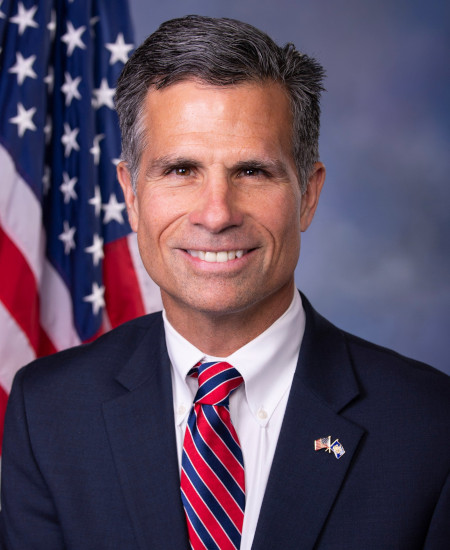
Rep. Daniel Meuser
Sponsored bills
Maddy summaryThe PLUS for Veterans Act of 2025 regulates how agents and attorneys can represent veterans in claims for benefits with the Department of Veterans Affairs. It establishes new requirements for these representatives, including application processes, conditional recognition periods while verification occurs, and caps on fees (limiting them to $12,500 or 5 times the monthly benefit increase). The bill reinstates penalties for unauthorized fee charging, including fines up to $50,000 and bars from representation for repeat violations. This legislation directly affects veterans seeking benefits, their representatives, and the Department of Veterans Affairs in handling claims. The bill also preempts state laws that conflict with these new federal regulations.
Maddy summaryHCONRES 16 is a concurrent resolution scheduling a joint session of Congress in Philadelphia, Pennsylvania, on July 2, 2026. The session will commemorate the 250th anniversary (semiquincentennial) of the Declaration of Independence, which was approved in Philadelphia on July 4, 1776. This ceremonial gathering at Independence National Historical Park follows past congressional meetings held outside Washington, D.C., for historical milestones, such as the 1987 Constitution bicentennial event. The bill does not create new laws or alter policies - it solely directs the timing and location of a commemorative event.
Maddy summaryHJRES 64 is a joint resolution disapproving a rule issued by the Bureau of Consumer Financial Protection (CFPB) that defined "larger participants" in the market for general-use digital payment applications. The resolution directs Congress to reject the rule (published in the Federal Register on December 10, 2024), stating it shall have no force or effect. This action directly affects the CFPB’s regulatory authority over digital payment platforms, specifically targeting how the agency classifies major companies in this sector. The resolution does not create new policy but formally overturns the CFPB’s existing rule on this matter.
Maddy summaryThis bill extends the exclusivity period for certain advanced drugs from 7 to 11 years. It defines "advanced drug product" as a drug using genetically targeted technology to modulate gene function (e.g., suppress or activate genes). This change directly affects pharmaceutical companies developing these specific advanced therapies by granting them longer market exclusivity. The policy change modifies the Social Security Act to provide extended protection for these innovative drugs, allowing companies more time to recoup research and development costs.
Rebuild America’s Health Care Schools Act of 2025 This bill allows hospitals to receive reimbursement under Medicare for certain costs associated with training nursing and allied health students in settings other than the hospital itself. Currently, hospitals may receive reimbursement under Medicare for the reasonable costs associated with training nursing and allied health students if certain conditions are met; the criteria vary depending on whether the students are enrolled in an educational program that is operated by the hospital or another entity. If the students are part of a program that is operated by another entity, the training must occur at the hospital itself or in areas immediately surrounding the hospital in order to qualify for reimbursement (among other requirements). The bill allows hospitals to receive reimbursement for these costs if the training is conducted at an entity that is related to the hospital (i.e., common ownership or control). The bill requires the Centers for Medicare & Medicaid Services (CMS) to update regulations to reflect these changes. Additionally, the CMS may not recoup or reduce payments to hospitals with respect to costs that are allowed under the bill and must refund any such recoupments or reductions that occurred during the six-year period prior to the bill's enactment.
Maddy summaryThis bill designates the U.S. Postal Service facility at 28 East Airy Street in Norristown, Pennsylvania, as the "Charles L. Blockson Post Office Building." It updates all official federal references - such as laws, maps, and documents - to use this new name for the facility. The bill directly affects the postal service location and federal records referencing it. This is a ceremonial naming bill with no substantive policy changes.
Maddy summaryThis bill, HR 1761, would require the U.S. Treasury to print $250 Federal Reserve notes featuring a portrait of Donald J. Trump within one year of enactment, primarily to commemorate the 250th anniversary of the United States. It amends the Federal Reserve Act (Section 3) to mandate this specific currency denomination and attempts to modify existing law (Section 4) to allow living presidents on currency. The bill directly affects the U.S. Treasury's currency printing authority and would override current practices, as $250 bills do not exist in circulation and the Constitution prohibits denominations above $100. This is a symbolic procedural measure with no practical implementation under current U.S. currency law.
Maddy summaryHR 1657, the Humane Cosmetics Act of 2025, prohibits cosmetic companies from conducting or contracting animal testing for products sold in the U.S. beginning one year after the law takes effect. It also bans the sale or transport of cosmetics developed using such testing after that date, with limited exemptions (e.g., for foreign regulatory requirements or when no non-animal safety alternatives exist). The bill directly affects cosmetic manufacturers, retailers, and distributors by requiring them to shift to non-animal testing methods. The Food and Drug Administration (FDA) will enforce the law, including reviewing records and imposing civil penalties for violations.
Maddy summaryHR 1652, the "Rectifying UDAAP Act," refines how the Consumer Financial Protection Bureau (CFPB) enforces rules against "unfair, deceptive, or abusive acts or practices" (UDAAP) in consumer financial products. It requires the CFPB to define "abusive" practices within 180 days, clarifying that such acts must either intentionally interfere with consumer understanding or take unreasonable advantage of consumer confusion or reliance. The bill also mandates a 180-day "cure period" when companies self-identify violations and adds a "good-faith effort" defense for covered entities facing penalties. Additionally, it limits the CFPB’s ability to seek civil penalties for conduct predating the most recent compliance rating. This bill directly affects financial institutions subject to CFPB oversight by altering enforcement procedures and standards.