

Maddy summaryThis bill requires the General Services Administration to review and improve the federal subaward reporting system within 180 days, focusing on accuracy, consistency, and public access. It mandates a standardized reporting plan within one year to reduce administrative burden on recipients while expanding data collection to include second-tier subawards (beyond the first tier currently reported). Federal agencies must implement these changes by year two, with annual progress reports to Congress. The law directly affects federal agencies managing grants and their recipients, aiming to make subaward data more complete, transparent, and easier to access for the public.
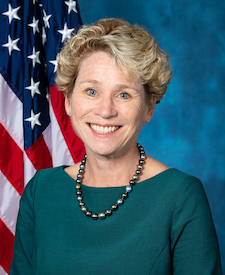
Rep. Chrissy Houlahan
Sponsored bills
Maddy summaryThis bill designates the U.S. Postal Service facility at 28 East Airy Street in Norristown, Pennsylvania, as the "Charles L. Blockson Post Office Building." It directly affects the specific post office location and all official references to it. The key provision requires that all future government documents, maps, and records referencing this facility must use the new name. The bill makes no changes to postal services, operations, or affected individuals - only updating the facility's official designation. (Procedural naming bill; summary limited to 2 sentences as specified.)
Maddy summaryThe CHILD Act of 2024 increases the maximum annual tax benefit for dependent care expenses from $5,000 to $10,000 (and doubles the spousal limit from $2,500 to $5,000) under Section 129 of the Internal Revenue Code. It also adds automatic annual cost-of-living adjustments to these limits, calculated using the standard inflation formula, rounded to the nearest $50. This directly affects working parents who claim dependent care expenses on their federal taxes, expanding their tax savings for childcare costs. The changes apply to calendar years beginning after December 31, 2023, and remove an outdated provision (subparagraph D) from the existing tax code.
Maddy summaryHR 7434, the BEST for Vets Act of 2024, requires that only licensed health care professionals conduct medical disability examinations for veterans' benefits under certain VA pilot programs. The bill amends existing law to prohibit non-licensed personnel from performing these evaluations, ensuring only qualified professionals (as defined in the law) handle disability assessments. It also mandates annual reports to Congress detailing the pilot program's implementation and the VA's compliance actions. This directly affects veterans receiving disability benefits and VA contractors administering medical exams. The law aims to standardize exam quality and transparency in the disability evaluation process.
This bill excludes from gross income, for income tax purposes, any amount received by an individual as a qualified clinical trial payment. Such payments include amounts paid to an individual or a dependent of the individual as compensation for participation in an approved clinical trial (i.e., a trial conducted in relation to the prevention, detection, or treatment of cancer or other disease or condition) or as reimbursement or payment of reasonable and necessary expenses incurred in connection with the individual's participation in an approved clinical trial.
Maddy summaryHR 7384, the Creating Hope Reauthorization Act of 2024, extends the deadline for issuing priority review vouchers to pharmaceutical companies developing treatments for rare pediatric diseases. The bill amends the Federal Food, Drug, and Cosmetic Act to push the program’s expiration from 2024 to 2028 and adjusts another related deadline to 2030. This directly affects drug manufacturers seeking faster FDA review for new treatments targeting rare childhood illnesses. The extension ensures continued incentives for developing these critical therapies without altering the core voucher mechanism.
Maddy summaryHR 7378, the Frederick Douglass Congressional Gold Medal Act, authorizes Congress to posthumously award a gold medal to honor Frederick Douglass's legacy as a pivotal abolitionist, writer, and advocate for civil rights. The medal, designed by the Treasury Secretary, will be presented to the National Museum of African American History and Culture for display, with bronze duplicates available for sale to cover costs. This ceremonial bill does not create new laws or affect current policies - it solely commemorates Douglass's historical contributions to ending slavery and advancing equality.
Maddy summaryHRES 966 is a symbolic resolution condemning alleged sexual violence committed by Hamas during its October 7, 2023, attack on Israel. It specifically references eyewitness accounts, forensic evidence, and Hamas fighters' admissions of ordering gang rape, sexual mutilation, and assault against Israeli civilians. The resolution calls for international condemnation of such acts as weapons of war, urges nations to criminalize sexual violence, and supports investigations into Hamas' actions. As a non-binding resolution, it does not create new laws or directly affect any individuals but formally expresses the House's position on the issue.
Maddy summaryThis bill amends existing law to shift administrative responsibility for funding river basin commissions from the Secretary of the Army to the Administrator of the Environmental Protection Agency (EPA). It specifically updates provisions related to the Susquehanna, Delaware, and Potomac River Basin Commissions, changing references from "Secretary" to "Administrator" in funding-related sections. The bill does not create new funding but clarifies that the EPA Administrator (or their designee) will oversee existing funding mechanisms for these commissions. It directly affects the operations of the three river basin commissions by changing their primary federal point of contact for funding administration.
Maddy summaryThe Credit for Caring Act of 2024 creates a new federal tax credit for family caregivers. It allows eligible caregivers to claim a credit equal to 30% of qualified caregiving expenses (like home modifications, medical supplies, or respite care) exceeding $2,000 per year, capped at $5,000 annually. To qualify, caregivers must earn over $7,500 in income and provide care for a relative (like a spouse or parent) certified by a healthcare provider as needing long-term care for at least 180 days. The credit phases out for higher earners, with a $75,000 income threshold for single filers and $150,000 for joint returns.