

Maddy summaryThis bill changes how Medicare pays for certain outpatient services provided by off-campus hospital departments. It allows these services to be paid under the hospital outpatient payment system (instead of physician fees) if the previous year's total Medicare payments for that physician specialty were under $2 million. It directly affects hospitals with off-campus outpatient departments offering services in specialties with low physician payment volumes. The change applies to services furnished starting in 2024, aiming to stabilize payments for these specific outpatient services.
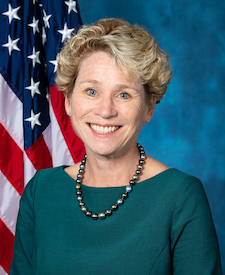
Rep. Chrissy Houlahan
Sponsored bills
Maddy summary# Summary of Proposed Election Reform Legislation This document outlines a comprehensive federal election reform bill with multiple titles addressing various aspects of voting rights, election administration, and election integrity. ## Key Provisions: ### 1. Democracy Restoration (Title I) - Restores voting rights to citizens with felony convictions who are not serving a felony sentence in a correctional institution - Requires states to notify individuals of restored voting rights upon release from prison, completion of probation, or sentencing - Prohibits states from conditioning voting rights on payment of fines or fees - Requires states to provide notification of voting rights to citizens with criminal convictions ### 2. Voter Identification Requirements (Title II) - Establishes a broad definition of acceptable identification documents (including utility bills, bank statements, student IDs, etc.) - Requires states to provide free identification to voters who lack one - Authorizes $5 million annually for 5 years to cover costs of providing identification - Sets procedures for provisional voting when identification is not presented ### 3. Voter List Maintenance (Title III) - Prohibits "voter caging" (using undeliverable mail to challenge voter registration) - Bans use of unverified match lists to remove voters from registration lists - Sets strict conditions for removing voters from registration lists - Requires states to provide notice to voters removed from registration lists ### 4. Election Integrity Measures (Title V) - Prohibits hindering or interfering with voter registration (Section 2001) - Restricts removal of local election administrators (Section 3001) - Prohibits harassment of election workers (Section 3101) - Bans deceptive practices in elections (Section 3201), including false statements about voting locations, eligibility, or endorsements ### 5. Additional Provisions - Requires states to provide notice of voting rights restoration to citizens - Establishes private rights of action for violations of the law - Sets criminal penalties for violations (up to $100,000 fines and 5 years imprisonment) - Includes provisions for federal funding to be contingent on compliance with voting rights restoration This legislation represents a significant overhaul of voting rights and election administration procedures across the United States, with a focus on expanding voting access, protecting voter rights, and ensuring fair election administration.
Maddy summaryHR 549, the Metastatic Breast Cancer Access to Care Act, removes waiting periods for disability and Medicare coverage for people diagnosed with metastatic breast cancer. Specifically, it amends Social Security Act sections to allow immediate eligibility for disability insurance benefits (eliminating the standard waiting period) and immediate Medicare coverage (waiving the 24-month waiting period) for these patients. The bill directly affects individuals with metastatic breast cancer who would otherwise face delays in accessing critical benefits. These changes apply to applications filed or benefits beginning after the bill's enactment date. The law makes no other policy changes beyond these specific eligibility adjustments.
Maddy summaryThis bill extends a temporary COVID-19 emergency waiver that allows nurse aides in training to count hours worked during the pandemic toward their certification requirements at nursing facilities. It specifically permits these hours to satisfy the 75-hour minimum training requirement and allows facilities to conduct competency evaluations on-site if states don’t offer them weekly. The waiver remains in effect for at least 24 months after enactment, with a requirement for the Secretary to study its continued appropriateness within one year. The policy directly affects nurse aides working in skilled nursing facilities and nursing facilities under federal Medicare/Medicaid rules. It does not create new training programs but maintains pandemic-era flexibility for staffing.
Maddy summaryHR 7438 directs the U.S. Treasury to mint commemorative coins for the 2026 FIFA World Cup, including 100,000 $5 gold coins, 500,000 $1 silver coins, and 750,000 half-dollar coins. The coins will be sold to the public at face value plus surcharges ($35, $10, and $5 per coin, respectively), with all surcharge revenue paid to FWC2026 US, Inc. for U.S. soccer programs. These funds must support soccer initiatives, particularly in underserved communities and youth development, as specified in the bill. The coins are legal tender but will only be issued during 2026, with no net cost to the U.S. government.
Maddy summaryThis bill extends funding for the existing Public Health Service Act program focused on raising public awareness about Alzheimer's disease and related dementias. It authorizes $33 million annually for fiscal years 2025 through 2029 to support public health education and outreach initiatives. The program directly affects public health organizations and community groups that develop and distribute educational materials about Alzheimer's prevention, diagnosis, and care. The key provision is the multi-year funding extension, ensuring continued support for nationwide awareness efforts without altering the program's core structure.
Maddy summaryThis bill reauthorizes federal conservation funding for the Delaware River Basin through 2030, extending the program's expiration date from 2023. It adds Maryland as a basin state (making it a 5-State basin) and modifies cost-sharing rules to provide 90% federal funding for projects serving small, rural, or disadvantaged communities, with a possible 100% federal share if financial hardship is proven. The bill directly affects the five basin states (Pennsylvania, New Jersey, Delaware, Maryland, and New York) and communities within them, particularly those facing economic challenges. The key change is ensuring greater federal financial support for conservation projects in underserved areas while maintaining program continuity through 2030.
Maddy summaryHR 10307, the TOTAL Care Act, creates a 5-year pilot program to improve access to obstetrical and gynecological (OB/GYN) care for female TRICARE Prime beneficiaries. The bill removes the standard referral requirement for OB/GYN care under TRICARE Prime, allowing beneficiaries to directly access these specialists without a referral. It also permits eligible female beneficiaries to designate an OB/GYN provider as their primary care manager within the TRICARE program. The pilot aims to assess impacts on enrollment, costs, and care access, with a report due to Congress after four years.
Maddy summaryHR 6751 authorizes the U.S. Mint to produce commemorative coins honoring Roberto Clemente, a Hall of Fame baseball player and humanitarian, including 50,000 $5 gold coins, 400,000 $1 silver coins, and 750,000 half-dollar coins. The coins must feature Clemente's image and inscriptions like "Roberto Clemente" and "2027," with all sales including a surcharge ($5-$35 per coin) paid to the Roberto Clemente Foundation. The foundation, which supports youth sports, education, and disaster relief programs, will use these funds for its mission, while the U.S. Treasury must recover all production costs. The coins will be sold exclusively in 2027, with no net cost to the government.
Maddy summary# Summary of "Inspire to Serve Act of 2024" This comprehensive legislation focuses on strengthening the Federal workforce and national service systems through several key initiatives: ## Federal Workforce Development - **Federal Fellowship and Scholarship Center**: Establishes a centralized platform to administer and promote fellowship/scholarship programs for attracting talent to Federal service. - **Public Service Corps**: Creates a scholarship program where students receive financial support in exchange for a 4-year civil service commitment after graduation. - **Public Service Academy Grants**: Provides grants to up to 50 institutions of higher education to develop leadership programs preparing students for public service careers. - **Pathways Program**: Establishes an Internship Program and Recent Graduates Program to provide noncompetitive hiring opportunities for students and recent graduates. ## Critical Skills and Workforce Planning - **Critical Skills List**: Requires the Department of Defense to maintain an annual list of critical skills needed (including cyber, medical, language, and STEM skills). - **Individual Ready Reserve for Critical Skills**: Creates a reserve component for personnel with critical skills who can be activated without consent. - **Cyber Talent Management**: Expands the Cyber Talent Management System to address cybersecurity workforce needs. ## Compensation and Recruitment - **Federal Interns**: Requires agencies to pay interns at least minimum wage (with exceptions for academic credit). - **Enhanced Hiring Targets**: Sets aggregate hiring targets of 30,000 by 2029 and 50,000 by 2034 for recent graduates and post-secondary students. - **Noncompetitive Appointments**: Creates pathways for noncompetitive appointments for those completing fellowships, scholarships, or internships. ## National Mobilization Modernization - **Selective Service System**: Modernizes the draft system to ensure it can mobilize personnel during national emergencies. - **National Mobilization**: Designates a lead official for national mobilization and establishes an Executive Agent for National Mobilization within the Department of Defense. - **Mobilization Exercises**: Requires regular exercises incorporating the Selective Service System into national mobilization planning. The legislation aims to build a more effective Federal workforce by creating clear pathways for students and recent graduates to enter government service, addressing critical skills gaps, and modernizing national mobilization systems to better meet current and future national security challenges.