

Maddy summaryThis bill amends the Elementary and Secondary Education Act to explicitly include accounting education as part of a well-rounded K-12 curriculum. It requires schools to develop and strengthen programs teaching accounting, including increasing access to high-quality accounting courses for students from groups historically underrepresented in accounting careers. The key provision inserts specific language into existing law, directing schools to promote accounting career awareness and expand course availability through grade 12. This directly affects K-12 students, particularly those from underrepresented backgrounds, by making accounting education a recognized component of career-focused learning.
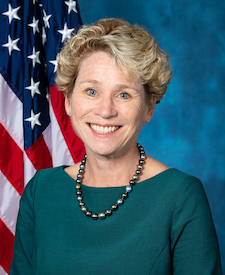
Rep. Chrissy Houlahan
Sponsored bills
Maddy summaryThe DRIVE Act of 2025 requires the Department of Veterans Affairs (VA) to set mileage reimbursement rates for veterans at the federal government's current standard rate for employees using personal vehicles on official business, replacing the previous fixed rate of 41.5 cents per mile. It also mandates that the VA process and pay these reimbursements within 90 days of a veteran's valid request. This directly affects veterans who travel for VA medical appointments or services using their personal vehicles. The bill aligns veteran travel reimbursements with federal employee standards and ensures timely payments.
Maddy summaryThe Neighborhood Homes Investment Act creates a new tax credit for developers who build or rehabilitate affordable homes in distressed communities. The credit is calculated as the lesser of (1) the difference between development costs and sale price, (2) 40% of development costs, or (3) 32% of the national median home price. It applies only to homes sold to qualified homeowners with income up to 140% of area median income in designated "qualified census tracts" (areas with high poverty rates, low median home values, and low median family income). Developers must meet quality standards and repay the credit if the home is sold within 5 years of the affordable sale. This credit aims to address the "value gap" that prevents housing development in distressed communities by incentivizing affordable home construction and rehabilitation.
Maddy summaryThis bill repeals a restriction that previously prevented individuals from rolling over funds directly from their Individual Retirement Accounts (IRAs) to donor-advised funds (DAFs) for charitable giving. It directly affects IRA account holders who wish to make tax-advantaged charitable contributions through DAFs. The key provision amends the Internal Revenue Code to remove the specific language barring such rollovers, allowing these transfers to occur without triggering taxable distributions. The change becomes effective after the bill's enactment, streamlining a pathway for donors to support charities via DAFs using IRA assets.
Maddy summaryHR 2872 (the RESILIENCE Act of 2025) amends the tax code to change how public utilities can deduct repair and maintenance costs for certain infrastructure. It requires utilities to reduce their taxable income by the same amount they deduct for these repairs on their financial statements, specifically for property owned by the utility and accounted for as depreciation. This applies to utilities owning infrastructure covered under Section 168(i)(10) of the tax code, aligning their tax deductions with financial reporting. The change takes effect for taxable years starting after December 31, 2024.
Maddy summaryHR 2831, the Small Business Energy Loan Enhancement Act, doubles the maximum loan amounts for certain small business energy projects under the Small Business Investment Act of 1958, raising the cap from $5.5 million to $10 million for two specific loan categories. This directly affects small businesses seeking financing for energy-related investments, such as efficiency upgrades or renewable energy installations. The bill requires the Small Business Administration (SBA) to annually report to Congress on which industries and geographic areas receive these loans. These changes aim to increase access to capital for qualifying energy projects without altering eligibility criteria.
Supplemental Oxygen Access Reform Act of 2025 or the SOAR Act of 2025 This bill establishes certain requirements with respect to the payment and provision of supplemental oxygen and related services under Medicare. For example, the bill provides for separate payments, indexed to inflation, of oxygen and related equipment, supplies, and services under Medicare (rather than under the competitive acquisition program). It also specifically covers services that are provided by respiratory therapists under Medicare and provides for an additional payment adjustment for these services. Additionally, the bill (1) requires the Centers for Medicare & Medicaid Services to develop an electronic template for providers to use when prescribing oxygen and related equipment, supplies, and services; and (2) establishes certain rights for beneficiaries receiving these items and services, such as the right to choose their suppliers and to receive clear communications and be informed about the services provided.
Maddy summaryThe GOSAFE Act prohibits the sale, manufacture, transfer, and possession of gas-operated semi-automatic firearms and large capacity ammunition feeding devices (those holding more than 10 rounds). It defines gas-operated firearms as those that use gas from fired cartridges to cycle the action, requiring the Attorney General to publish a list of prohibited firearms within 180 days. The bill establishes a process for manufacturers to seek approval for new firearm designs before selling to civilians and creates a "Firearm Safety Trust Fund" to cover related costs. Certain firearms are exempt, including single-shot, muzzle-loading, and firearms with permanently fixed magazines holding 10 or fewer rounds. Violations could result in fines up to $5,000 or up to 12 months in prison.
Maddy summaryThe National Biotechnology Initiative Act of 2025 establishes a coordinated federal strategy for biotechnology across 14 participating departments and agencies, including Agriculture, Defense, and Health and Human Services. It creates a National Biotechnology Coordination Office and an Interagency Committee to oversee activities related to research, regulatory streamlining, workforce development, and international partnerships. The bill authorizes $22 million in fiscal year 2026, increasing to $35 million by 2027, and requires annual reports and a national strategy every five years. Key provisions include developing a centralized website for biotechnology information, standardizing regulatory pathways for biotechnology products, and improving workforce development programs. This legislation aims to reduce duplication, improve coordination across government departments, and enhance U.S. competitiveness in biotechnology.
Maddy summaryThe American Family Act (HR 2763) establishes a new refundable child tax credit that provides monthly payments to eligible families with children. It would pay $300 per month for each child under age 6 and $360 per month (120% of $300) for each child age 6 or older, with income limits of $150,000 for joint filers and $112,500 for other filers. The bill creates a "period of presumptive eligibility" to determine eligibility for monthly payments, allowing families to receive advance payments based on information from previous tax returns. This would directly affect millions of families with children who meet the income requirements, providing more consistent financial support throughout the year rather than an annual tax credit.