Maddy summaryHR 3045, the West Bank Violence Prevention Act of 2025, imposes U.S. sanctions on foreign individuals and entities responsible for violence, displacement, or property destruction in the West Bank. It targets those directly involved in attacks on civilians, forced displacement, or property seizures, including settler leaders or officials of groups engaged in such activities. Key provisions require freezing assets of sanctioned individuals within U.S. jurisdiction and blocking their entry into the United States via visa restrictions. The law applies to foreign nationals meeting specific criteria outlined in the bill, not U.S. citizens or entities.
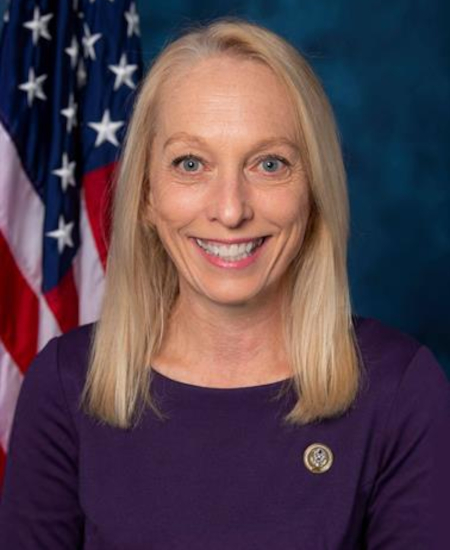
Rep. Mary Gay Scanlon
Sponsored bills
Maddy summaryThis bill limits how much Social Security can withhold from monthly benefits to recover overpayments. It sets a 10% cap on withholdings for cases without fraud (unless the recipient requests a higher rate), affecting Social Security beneficiaries who received more than they were entitled to. The key provision prevents excessive deductions from monthly payments, ensuring recipients retain at least 90% of their benefit for non-fraudulent overpayments. The law applies to overpayments existing after the bill's effective date.
Maddy summaryHRES 341 is a symbolic House resolution expressing support for Earth Day, not a substantive bill. It urges the President to issue an Earth Day proclamation, encourages Americans to address environmental challenges (like climate change and litter), and calls for rejoining the Paris Agreement - though these are non-binding recommendations with no legal force. The resolution references historical environmental legislation (like the Clean Air Act) but does not create new policies, allocate funds, or change regulations. It directly affects no specific group, as it solely serves to affirm environmental values through symbolic recognition. (Note: The document header incorrectly lists "Federal Water Pollution Control Act" as the bill text, but this is a formatting error; the actual resolution is about Earth Day.)
Maddy summaryThe Hunger-Free Future Act of 2025 amends the SNAP program to require that any update to the thrifty food plan must not increase food insecurity. It mandates that adjustments to the diet cost must continue following existing rules while explicitly ensuring updates do not worsen food insecurity, defined as households lacking adequate food due to insufficient money or resources. This directly affects SNAP beneficiaries by setting a new standard for how the program's cost calculations are reviewed. The bill changes the procedural requirement for SNAP re-evaluations without altering benefit amounts or eligibility rules.
Hot Foods Act of 2025 This bill expands the Supplemental Nutrition Assistance Program (SNAP) to permit the use of SNAP benefits to purchase hot foods or hot food products ready for immediate consumption.
Maddy summaryHR 2922, "Hammers' Law," amends federal law to expand legal limitations on certain claims from commercial aviation accidents to include cruise ship voyages. The bill defines a "cruise ship" as a passenger vessel carrying at least 250 passengers with sleeping facilities, embarking or disembarking in the U.S., and not on a coastwise voyage. It also clarifies that "nonpecuniary damages" cover losses like care, comfort, and companionship. This directly affects passengers involved in cruise ship incidents within U.S. waters by extending the scope of existing legal limitations that previously applied only to commercial aviation. The key change is adding cruise ship voyages to the list of covered transportation modes under Section 30307 of Title 46, U.S. Code.
Maddy summaryHRES 332 is a resolution designating April 11-17, 2025, as "Black Maternal Health Week" to raise awareness about maternal health disparities affecting Black women and birthing people in the U.S. It references CDC data showing Black women are 2-3 times more likely to die from pregnancy-related causes than White women and that the U.S. has the highest maternal mortality rate among developed nations. The resolution emphasizes the need to address systemic inequities contributing to these outcomes without creating new laws or funding. It serves as a symbolic recognition to amplify community-led efforts, such as those by the Black Mamas Matter Alliance, rather than implementing policy changes.
Maddy summaryHRES 328 is a non-binding House resolution expressing support for library staff and the essential services libraries provide to communities across the United States. It recognizes libraries as critical infrastructure for community access to information, internet, social services, and safe spaces - especially for underserved groups - and calls for full federal, state, and local funding to sustain these services. The resolution reaffirms the public’s right to free access to information, supports library workers’ rights to unionize and collectively bargain, and defends staff from threats like book bans or intimidation for upholding library missions. It specifically endorses National Library Week and urges protection of civil rights for library workers. (Note: As a procedural resolution, it does not create new law but formally expresses congressional support.)
Working for Immigrant Safety and Empowerment Act or the WISE Act This bill expands eligibility for U nonimmigrant visas (victims of criminal activity) and prohibits immigration enforcement activities in specified areas. Generally, U visas are for victims of specified crimes (e.g., rape, trafficking, or domestic violence) who assist with the investigation or prosecution of the crime. The bill adds hate crimes, child abuse, and elder abuse as crimes that may qualify a victim for a U visa and removes criteria related to the victim's assistance with the investigation or prosecution of the crime. Furthermore, the Department of Homeland Security (DHS) must provide work authorization to U visa applicants, whereas currently DHS may grant work authorization but is not required to do so. The bill also eliminates the annual numerical cap on U visas. The bill establishes a rebuttable presumption that certain individuals, including U visa applicants and T visa (victims of human trafficking) applicants, shall not be detained while the application is pending. Additionally, the bill provides immigration-related protections, such as by extending the admission period and providing work authorization, to the spouse or child of a nonimmigrant visa holder who subjected that spouse or child to battery or extreme cruelty. Further, the bill prohibits, with some exceptions for exigent circumstances, U.S. Immigration and Customs Enforcement or U.S. Customs and Border Protection from conducting immigration enforcement actions within 1,000 feet of a school, health care facility, place of worship, or other location specified in the bill.

Maddy summaryThe Pursuing Equity in Mental Health Act (HR 2904) aims to reduce mental health disparities affecting racial and ethnic minority groups by modifying federal grant programs, requiring research on disparities, and funding targeted initiatives. It directs the Health and Human Services Secretary to prioritize grants for community health organizations serving minority populations, mandates a National Institutes of Health study on mental health research gaps in these groups, and establishes training programs for health professionals to address cultural competency in mental health care. The bill also requires a public outreach strategy developed with community input to reduce stigma and improve access to culturally appropriate care, alongside $20 million annually (2026-2031) for this effort. Additional funding includes $150 million yearly for NIH mental health research and $750 million yearly for the National Institute on Minority Health.