

Maddy summaryHR 4694, the Fighting Fibers Act of 2025, requires all new washing machines sold in the U.S. to include a microfiber filtration system by January 1, 2030. This system must capture fibers smaller than 100 micrometers (or meet an equivalent standard) and be labeled clearly with maintenance instructions for consumers. The bill also mandates a federal study on microfiber presence in humans and the environment, including health effects and impacts on environmental justice communities, with a report due to Congress within one year of enactment. Manufacturers and sellers must comply with these requirements or face civil penalties up to $30,000 per violation.
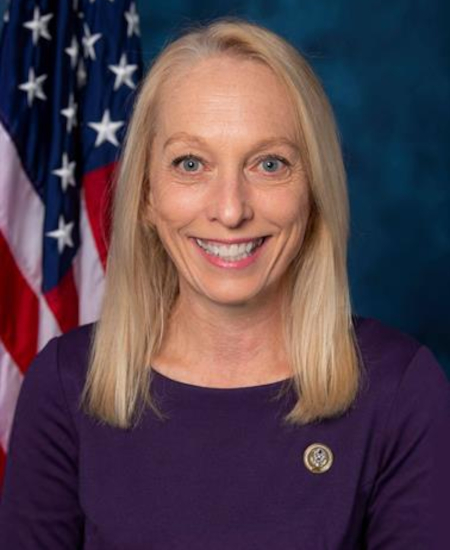
Rep. Mary Gay Scanlon
Sponsored bills
Maddy summaryThe Corporate Crime Database Act of 2025 requires the Bureau of Justice Statistics to create a public database tracking federal enforcement actions related to corporate crimes. Federal agencies must submit data on corporate offenses - such as violations committed by businesses or employees acting in their job roles - and include details like the business involved, the offense type, relevant laws, enforcement agency, and outcome. The database will be searchable online, updated annually, and include historical and future enforcement actions. This affects federal agencies that handle enforcement and makes corporate crime data accessible to the public for transparency.
Maddy summaryThis bill adds "spotted lanternfly control" as a priority research area under federal agricultural funding, authorizing grants to develop and share tools for combating the invasive spotted lanternfly pest (Lycorma delicatula). It directly affects farmers, agricultural communities, and state departments of agriculture in states like Pennsylvania where the pest causes significant crop damage. The key provision amends existing law to allow research grants focused on creating effective treatments and management strategies for the pest. The bill also extends the funding period for all high-priority research initiatives through 2030.
Resident Physician Shortage Reduction Act of 2025 This bill increases the number of residency positions eligible for graduate medical education payments under Medicare for qualifying hospitals, including hospitals in rural areas and health professional shortage areas. The bill provides for an additional increase of 2,000 positions per fiscal year from FY2026-FY2032; during this period, each hospital may receive up to 75 additional positions in total under the bill and current law. Additionally, one-third of the positions that are made available under the bill must be allocated to hospitals that are already operating above applicable resident limits. The bill also requires the Government Accountability Office to report on strategies to increase the diversity of the health professional workforce, including with respect to representation from rural, low-income, and minority communities.
Maddy summaryThe End Polluter Welfare Act of 2025 eliminates federal subsidies for fossil fuel production by repealing tax incentives, increasing royalty rates, and prohibiting federal funding for fossil fuel projects. It directly affects oil, gas, and coal companies by terminating tax credits like the enhanced oil recovery credit (Section 43), ending special tax treatments for fossil fuel activities, and increasing offshore royalty rates to 18 3/4 percent. The bill prohibits U.S. International Development Finance Corporation and Export-Import Bank funding for fossil fuel projects, ends interest payments on royalty overpayments, and terminates tax provisions allowing accelerated depreciation for fossil fuel infrastructure. These changes apply to taxable years beginning after the bill's enactment date, with specific provisions targeting coal, petroleum, and natural gas production.
Maddy summaryHR 4734, the "Hands Off Our Social Security Act," prohibits federal actions that would alter Social Security benefits, data handling, workforce levels, office locations, or communication systems without explicit congressional approval. It directly protects Social Security beneficiaries and the Social Security Administration (SSA) by banning unauthorized changes to benefits, data mining, privatization, staff cuts, office closures, or reduced phone/in-person services. Key provisions require Congress to approve any modifications to benefits, workforce reductions, or office closures, and mandate the SSA to maintain existing communication channels. The bill also mandates annual GAO audits to ensure compliance with these restrictions. This legislation focuses on preserving current Social Security operations and access, not creating new benefits or altering eligibility.
Maddy summaryH.J. Res. 108 proposes a constitutional amendment to remove legal immunity for federal officials, including the President, from criminal prosecution for actions taken while performing official duties. It would prohibit the President from granting pardons to themselves and eliminate the defense that "official authority" excuses violations of federal or state law (with limited exceptions for certain congressional actions). If ratified, this amendment would require Congress to pass implementing laws to enforce these changes. The proposal is currently in the House Judiciary Committee and requires approval by three-fourths of state legislatures to become part of the Constitution.
Maddy summaryThis bill prohibits life, disability, and long-term care insurers from denying coverage, canceling policies, or increasing premiums based solely on a person's status as a living organ donor. It directly protects living organ donors by preventing insurance discrimination unrelated to actual health risks. The bill also requires the Health and Human Services Secretary to update public educational materials about organ donation benefits, risks, and insurance impacts within six months of enactment. These materials will include information on the new insurance protections established by the bill. The law relies on state insurance regulators for enforcement of the insurance provisions.
Maddy summaryThis bill amends the Family and Medical Leave Act (FMLA) and federal employee leave rules to clarify that recovery from organ donation surgery qualifies as a "serious health condition." It directly affects private-sector workers covered by the FMLA and federal civil service employees. The key change adds "including recovery from surgery related to organ donation" to the definitions of serious health conditions in both the FMLA and federal leave statutes. This ensures eligible employees can use their existing family and medical leave benefits to recover after donating an organ, without requiring new leave entitlements.
Maddy summaryHR 1522, the Federal Retirement Fairness Act, changes federal retirement rules to include temporary employees' service after January 1, 1988, in retirement benefit calculations. It directly affects temporary federal employees (including U.S. Postal Service workers) and Members of Congress who served after that date. The bill removes a previous cutoff date in retirement law, allowing their temporary service to count toward retirement eligibility. This means eligible temporary workers can now have their full service period considered when calculating retirement benefits.