

Maddy summaryHRES 1432 designates September 10, 2024, as "National Firearm Suicide Prevention Day" to raise public awareness about firearm suicides and promote safe storage practices. The resolution encourages healthcare professionals to discuss safe firearm storage with patients and supports the day's goals of reducing firearm suicides through education. It directly affects the general public and healthcare providers by highlighting evidence that safe storage lowers suicide risk, referencing statistics like 54.6% of U.S. suicides in 2022 involving firearms. The bill is symbolic, with no new legal requirements, and aligns with existing awareness efforts like Firearm Suicide Prevention Day.
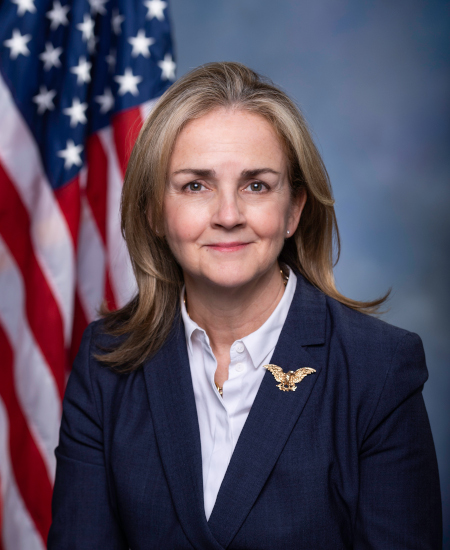
Rep. Madeleine Dean
Sponsored bills
Maddy summaryHRES 1436 is a symbolic resolution (not a law) introduced in the U.S. House of Representatives. It recognizes suicide as a preventable public health crisis by citing statistics from the CDC, VA, and SAMHSA showing rising suicide rates across age groups, including veterans and adolescents. The resolution formally supports designating September as "National Suicide Prevention Month" and September 10, 2024, as "World Suicide Prevention Day." It does not create new policies, allocate funding, or directly affect any individuals - its purpose is solely to express congressional support for suicide prevention awareness and efforts.
Maddy summaryHR 9523, the Renewed Hope Act of 2024, directs the Department of Homeland Security to hire 200 additional personnel (including 40 forensics analysts and 30 child exploitation investigators for the Victim Identification Laboratory, plus 130 more staff) to support identifying and rescuing victims of child sexual exploitation. It also authorizes temporary hiring of experts for image/audio forensic analysis at specified rates and requires DHS to establish joint procedures for coordinating child exploitation investigations across agencies. The bill mandates a new Victim Identification Training Program at the Cyber Crimes Center, providing annual training on advanced victim identification technology to DHS personnel and external law enforcement agencies (federal, state, local, tribal, military, and foreign) upon request. These provisions directly affect DHS investigative units and law enforcement agencies actively working on child exploitation cases nationwide.
Maddy summaryHR 8169, the Lead Free Forests Act of 2024, requires the Forest Service to prohibit the use of lead ammunition on National Forest lands within one year of enactment, mandating instead certified non-lead ammunition. This directly affects hunters using firearms on Forest Service-managed lands, with exceptions for government officials, law enforcement, and military personnel during official duties. The bill establishes a process for the Forest Service to maintain and publish an annual list of certified non-lead ammunition and imposes fines up to $5,000 for violations. It aims to reduce lead contamination in the environment and protect wildlife, particularly scavenging birds, from lead exposure through spent ammunition.
Maddy summaryHR 9437, the Partners in Diplomacy Act, authorizes the U.S. Secretary of State to modify or provide U.S.-owned or leased space at overseas diplomatic facilities for use by specific allied governments. It directly affects U.S. embassies and consulates, and the covered foreign countries - defined as NATO members or major non-NATO allies under U.S. law. The bill allows the Secretary to arrange this space sharing on terms including cost reimbursement, with funds credited to existing appropriations. This creates a formal mechanism for U.S. diplomatic posts to share physical space with key allies, streamlining coordination without requiring new funding.
This resolution supports the designation of National FFA Week. It also (1) recognizes the important role of the National FFA Organization (Future Farmers of America) in developing the next generation of globally conscious leaders who will change the world; and (2) celebrates the 10th anniversary of the Give the Gift of Blue program, which has donated more than 17,000 FFA blue jackets to FFA members in need.
Maddy summaryThe Equal Pay for Equal Work Act establishes a National Equal Pay Enforcement Task Force to strengthen enforcement of existing equal pay laws. The task force, made up of representatives from the Equal Employment Opportunity Commission, Department of Justice, Department of Labor, and Office of Personnel Management, will coordinate efforts to investigate pay disparities and develop solutions. It will create action plans to address enforcement gaps and improve public education about pay equity. This bill directly affects federal agencies and workers facing wage discrimination by enhancing how equal pay laws are enforced across government.
Maddy summaryThe Active Shooter Alert Act of 2024 establishes a national coordination system for active shooter alerts by designating a Department of Justice Coordinator. The Coordinator will work with federal agencies (FEMA, FCC, Transportation) and state/local governments to develop voluntary best practices for alert systems, including geotargeted notifications, multilingual messaging, and training for transportation authorities. The bill requires annual reports to Congress on state adoption of protocols and mandates a Comptroller General study on state response times to active shooter alerts, funded by $2 million for the Department of Justice. It does not mandate state adoption but encourages coordination to improve alert effectiveness.
Maddy summaryHR 9221, the RESTORE Patent Rights Act of 2024, would restore a traditional legal presumption that courts must grant permanent injunctions to stop ongoing patent infringement. The bill directly affects patent owners, particularly smaller entities like individual inventors, universities, startups, and small businesses, which currently struggle to obtain injunctions against large companies. It amends patent law to create a "rebuttable presumption" that an injunction is warranted after a court finds infringement, shifting the burden to defendants to prove why an injunction should not be issued. This change aims to reverse recent court practices that have made it harder for patent holders to stop ongoing or willful infringement.
Maddy summaryThis bill reauthorizes the Debbie Smith DNA Backlog Grant Program, which provides federal funding to state and local law enforcement agencies to reduce backlogs in processing DNA evidence from crime scenes. It extends the program's funding period from fiscal years 2024 through 2029 (previously ending in 2024). The bill also updates audit requirements to ensure grant funds are used properly through 2029. This directly affects law enforcement agencies that receive these grants to accelerate DNA analysis for criminal investigations.