

Maddy summaryHRES 1473 is a non-binding resolution passed by the U.S. House of Representatives that condemns racism, bigotry, and misinformation targeting Haitian people and their descendants. It celebrates the historical contributions of Haitian Americans to U.S. society, including founding cities (like Chicago via Jean Baptiste Point du Sable), advancing civil rights (W.E.B. Du Bois), and enriching healthcare, education, and culture. The resolution specifically calls on all Americans to reject racist tropes and misinformation, and urges elected officials to promote inclusivity and responsible communication. It was introduced in response to recent false claims that fueled threats against Haitian communities, such as the bomb threats in Springfield, Ohio.
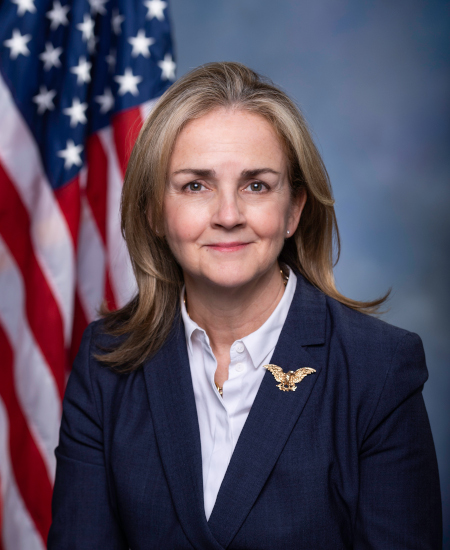
Rep. Madeleine Dean
Sponsored bills
Maddy summaryThe Judiciary Accountability Act of 2024 establishes new protections for employees in the federal judiciary by extending workplace rights under existing civil rights laws (Title VII, ADA, ADEA, Rehabilitation Act, GINA) to all judicial branch employees. It creates an Office of Judicial Integrity with a Board of Directors to handle complaints about discrimination, harassment, and workplace misconduct through a process of preliminary review, mediation, and hearings. The bill also establishes an Office of Employee Advocacy to provide confidential legal assistance to employees, and requires judges who commit misconduct to reimburse the Office for certain settlements or awards. The law applies to all employees of federal courts, judges' offices, and judicial branch agencies, with annual reporting requirements to Congress.
Maddy summaryHR 6319 (the 911 SAVES Act of 2023) requires the Office of Management and Budget to reclassify public safety telecommunicators as "Protective Service Occupations" within 30 days of enactment. This change corrects their current misclassification in the federal Standard Occupational Classification (SOC) system, which is used for statistical data on jobs. The bill directly affects how these professionals - critical in emergency calls involving missing children, active threats, and officer safety - are officially categorized in government workforce data. It does not create new benefits or funding but aims to better recognize their lifesaving role through accurate federal job classification.
Maddy summaryHRES 1468 is a non-binding resolution recognizing the significant pay disparity faced by disabled women in the U.S. workforce. It cites data showing disabled women earn, on average, 50 cents for every dollar earned by nondisabled men, with even starker gaps for disabled women of color (e.g., 44 cents for disabled Latinas). The resolution highlights systemic barriers like occupational segregation, the subminimum wage, and lack of support services contributing to these inequities. It does not create new laws or affect any group directly, but formally acknowledges these disparities and reaffirms the House’s commitment to addressing wage gaps. This is a symbolic recognition, not a policy change.
Maddy summaryThis bill directs the U.S. government to immediately restore funding to the United Nations Relief and Works Agency for Palestine Refugees (UNRWA), reversing a temporary funding pause. It repeals two appropriations acts that halted payments and requires the Secretary of State to resume UNRWA funding under existing authorities. The legislation specifically aims to support UNRWA’s critical humanitarian work - providing shelter, education, healthcare, and aid to Palestinian refugees across Gaza, the West Bank, Syria, Lebanon, and Jordan - during an acute famine risk in Gaza. It also mandates quarterly reports to Congress on UNRWA’s implementation of reforms from an independent review, ensuring accountability for its humanitarian mission.
Maddy summaryHR 9660, the SEEK HELP Act, provides legal protections for individuals responding to opioid overdoses. It shields people from civil lawsuits for administering opioid reversal drugs (like naloxone) in good faith and protects those seeking medical help during overdoses from criminal prosecution or asset forfeiture related to drug possession. The bill requires the federal government to run public awareness campaigns about these protections and allows states to use grant funds for overdose response education. It also mandates a GAO report to evaluate how effectively these protections encourage overdose reporting and reduce fatalities. The law directly affects bystanders, emergency responders, and law enforcement officers handling overdose situations.
Maddy summaryThis bill directs the Joint Committee on the Library to procure a statue of Benjamin Franklin and place it in the U.S. Capitol. The committee must secure the statue within two years of the bill's enactment and install it in a public-accessible location by January 1, 2026, for viewing during Capitol Visitor Center guided tours. It is a procedural measure with no policy changes or direct impact on constituents or legislation.
Maddy summaryHRES 1448 is a non-binding House resolution stating that the House believes every person has the right to emergency health care, including abortion care, during medical emergencies. It specifically addresses concerns that abortion restrictions force medical providers to choose between treating patients in life-threatening situations or risking criminal charges. The resolution highlights that such restrictions disproportionately harm Black, Indigenous, people of color, immigrants, low-income individuals, and LGBTQI+ patients. It does not change existing laws but expresses congressional support for ensuring access to emergency care without legal barriers. The resolution was introduced by multiple House members and referred to the Energy and Commerce Committee.
Maddy summaryThe Polluters Pay Climate Fund Act of 2024 would require major fossil fuel companies that emitted more than 1 billion metric tons of carbon dioxide between 2000 and 2022 to pay a tax based on their historical emissions. The tax revenue would fund a new Climate Fund that would provide $15 billion annually for disaster response and resilience programs through FEMA, $6 billion for clean air initiatives, and mandate 40% of funds support environmental justice communities. The fund would finance climate resilience projects including climate-resilient infrastructure, ecosystem restoration, and support for vulnerable communities affected by climate change. Companies could pay the tax over nine years, and the bill explicitly states it does not affect existing legal claims against polluters for climate-related damages.
Maddy summaryThe NO FAKES Act of 2024 establishes legal rights for individuals (living or deceased) to control how their voice and visual likeness are used in digital replicas (highly realistic computer-generated representations that are readily identifiable as the individual). It requires authorization from the individual or their designated right holder for any digital replica, with specific rules for licenses (including 10-year limits for living individuals, 5-year limits for minors, and post-mortem rights for 10 years with possible 5-year renewals). The bill creates civil liability for unauthorized production or distribution of digital replicas, with exceptions for news, documentaries, commentary, and other protected uses. Online services are provided safe harbors if they follow notice-and-takedown procedures for unauthorized digital replicas after receiving proper notifications. The law preempts some state laws but leaves others in place, and applies to conduct occurring after the bill's enactment date.