

Maddy summaryHR 4611 (EACH Act of 2025) requires all federally funded health programs - including Medicaid, Medicare, military health plans, and the Indian Health Service - to cover abortion services without restrictions, repealing the Hyde Amendment's long-standing ban on federal funding for most abortions. This directly affects millions of people enrolled in these programs, particularly low-income women, women of color (including 25% of Black women and 22% of Hispanic women on Medicaid), and young people. The bill mandates coverage in all federally administered health plans and prohibits state or private insurers from restricting abortion coverage in health insurance. It aims to eliminate current federal and state barriers that deny abortion access to people who rely on government health programs.
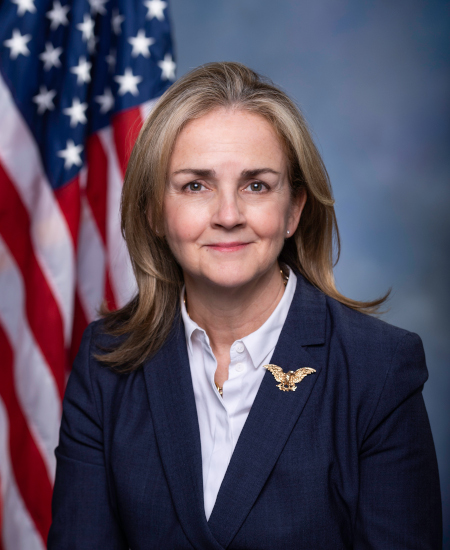
Rep. Madeleine Dean
Sponsored bills
Maddy summaryHRES 963 is a non-binding House resolution condemning antisemitism amplified by AI platforms and urging tech companies to implement safeguards. It directly affects AI developers and social media companies by requiring them to adopt transparent safety measures, prevent algorithmic amplification of antisemitic content, and publicly report on antisemitic content prevalence and removal efforts. Key provisions include promoting "safety-by-design" standards, enabling researcher access to study antisemitic content dynamics, and supporting digital literacy programs to counter AI-generated hate. The resolution emphasizes aligning these efforts with constitutional protections while recognizing stakeholders working to combat antisemitism online.
Maddy summaryHR 6902, the Youth Substance Use Prevention and Awareness Act, expands a federal grant program to fund research-based public service announcement (PSA) campaigns targeting youth substance use prevention. It authorizes grants for campaigns using age-appropriate materials across TV, radio, print, outdoor, and digital media, including youth-submitted PSA contests. The bill requires the Attorney General to publish annual reports detailing each campaign's research basis, regional messaging, alignment with other prevention efforts, and evaluation of its effectiveness in reducing youth drug use. This directly affects federal grant recipients and aims to standardize and measure the impact of youth-focused prevention messaging.
Maddy summaryThe RESTRICT Act (HR 6879) requires U.S. companies to obtain a license before exporting advanced computer chips to countries listed in a specific export control group (as of January 2025) and to regions like Hong Kong and Macau. It also blocks licenses for exports to entities primarily located in countries of concern (including those same nations plus Hong Kong and Macau). U.S. companies may avoid the license requirement if they meet strict conditions, such as limiting foreign ownership to 10% and implementing security measures to prevent misuse. The law expires five years after enactment.
Maddy summaryThe Antisemitism Response and Prevention Act of 2025 aims to combat rising antisemitism through evidence-based policies rather than political weaponization. It requires universities to designate Title VI coordinators to handle civil rights complaints, establishes a National Coordinator to Counter Antisemitism within the Department of Justice, and creates a Hate Crime Reporting Center at the FBI to improve data collection on hate crimes. The bill prohibits using antisemitism accusations to restrict diversity programs, political advocacy, or immigration policies, and ensures nonprofit security grants for Jewish community centers cannot be tied to unrelated political conditions. The legislation authorizes $280 million annually for the Department of Education's Office for Civil Rights and $50 million for the Hate Crime Reporting Center from 2027-2032.
Maddy summaryHCONRES 64 is a congressional resolution directing the President to withdraw U.S. military forces from any hostilities against Venezuela that lack explicit congressional authorization. It applies to ongoing military operations in Venezuela not approved by Congress through a declaration of war or specific law authorizing force. The resolution invokes the War Powers Resolution (50 U.S.C. 1544(c)), requiring the removal of troops within the timeframe specified by that law. This bill does not affect military actions already authorized by Congress but mandates the end of unapproved operations.
Maddy summaryHCONRES 61 directs the President to withdraw U.S. military forces from hostilities against any terrorist organization designated by the president in the Western Hemisphere. This bill specifically applies to military operations involving U.S. armed forces in the region targeting such groups. The key provision requires the withdrawal unless Congress has passed a formal declaration of war or specific authorization for that military action. The resolution invokes Section 5(c) of the War Powers Resolution to compel this change in military deployment.
Maddy summaryThis bill amends a section of federal law to change the reference from "the White House" to "the People's White House" in a specific legal citation (Section 307104 of Title 54, U.S. Code). It is a purely procedural change to the text of the law, not a substantive policy shift. The bill does not alter historic preservation standards, protections, or funding for the White House grounds. It simply updates the formal name used within the legal code.
Maddy summaryThe ARMAS Act of 2025 transfers control of certain firearms export regulations from the Department of Commerce to the Department of State to better regulate exports to Mexico, Central America, and the Caribbean. It designates specific countries (including Mexico, Guatemala, Honduras, and El Salvador) as "covered countries" requiring stricter export oversight, including mandatory annual reports on firearms exports and end-use monitoring to prevent diversion to criminal groups. The bill requires the Department of State to develop a strategy to disrupt illegal firearm trafficking, including increased participation in the eTrace program for tracking U.S.-sourced firearms and improved data sharing with foreign governments. Based on findings that U.S.-sourced firearms are commonly used in crimes in these regions, the act aims to reduce the flow of weapons that fuel violence and crime.
Maddy summaryThis bill establishes a Diversity and Inclusion Administrator at the Department of Labor to increase African American participation in apprenticeships. It requires all new and renewing registered apprenticeship programs to submit plans boosting African American enrollment and creates competitive grants for programs targeting underserved communities in fields like construction, healthcare, and tech. The grants fund outreach, mentoring, and support services to help African American youth access and complete apprenticeships. The bill directly affects African American young people and apprenticeship programs nationwide, with $2 million authorized for fiscal year 2026.