

Maddy summaryThis bill would increase the base pay for Federal Bureau of Prisons correctional officers by 35 percent, replacing their current base rate for all pay calculations (including retirement and locality adjustments). It applies to officers whose duties involve inmate custody, control, or direct custodial contact, including certain supervisory staff and lower-grade Bureau of Prisons employees with similar duties. The pay increase is capped at the Executive Schedule level V rate and would expire after five years unless a Department of Justice Inspector General review finds progress in reducing non-custodial staff use for custodial duties and excessive overtime. The review, required 180 days before expiration, would assess impacts on recruitment, retention, and institutional safety.
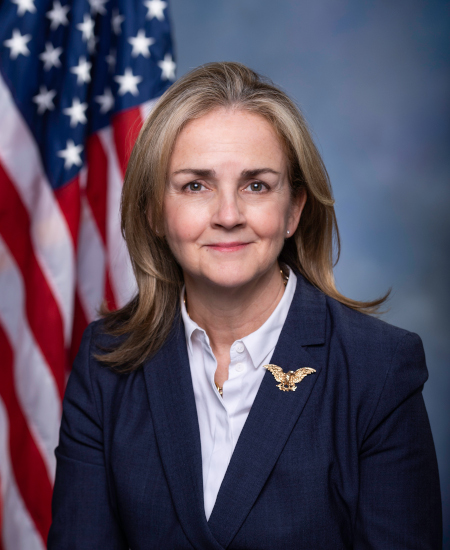
Rep. Madeleine Dean
Sponsored bills
Maddy summaryThe Renewed Hope Act (HR 6998) requires the Department of Homeland Security to hire 200 new staff, including 40 forensics analysts and 30 child exploitation investigators for the Victim Identification Laboratory, plus 130 additional personnel for the Child Exploitation Investigations Unit, to improve identification and rescue efforts for victims of child sexual exploitation. It establishes a mandatory training program for law enforcement and related organizations to use updated victim identification techniques and mandates coordination between DHS and the National Center for Missing and Exploited Children to streamline investigations. The bill also includes strict privacy rules to secure victim information and allows temporary hiring of experts for forensic analysis at specified rates.
Maddy summaryThis bill prohibits the interstate trade and possession of captive mink raised for fur production, directly affecting fur farmers and businesses involved in the mink fur supply chain. It includes an exception for entities covered under existing Lacey Act provisions and authorizes the Secretary to buy out mink farms at a price based on the farmer's recent mink population and farm infrastructure value. The law aims to end commercial mink farming for fur by banning related commerce while offering a voluntary transition option for affected farms. It does not apply to wild mink or non-fur-related mink uses.
Maddy summaryHR 6088, the *Restoring Food Security for American Families and Farmers Act of 2025*, repeals specific sections (10101-10108) from a prior reconciliation law. This action revives previous provisions related to food security programs that were modified by those repealed sections. The bill directly affects federal food assistance and agricultural support programs by restoring their prior legal framework. It does not create new policies but reverses recent changes to existing food security measures.
Maddy summaryHR 909, the Crime Victims Fund Stabilization Act of 2025, modifies how funds from the False Claims Act are deposited into the Crime Victims Fund. It specifies that from 2025 through 2029, certain False Claims Act proceeds (specifically those for qui tam plaintiff payments and government damage reimbursements) cannot be deposited into the fund. This change directly affects the composition of the Crime Victims Fund by excluding these specific revenue streams during the specified period. The bill does not create new benefits or alter victim services; it only adjusts fund allocation rules for existing False Claims Act revenues.
Maddy summaryHR 7016, the "No Funds for NATO Invasion Act," blocks federal funding for any U.S. military invasion of a North Atlantic Treaty Organization (NATO) member country or territory covered by NATO's Article 5 mutual defense clause. The bill prohibits using any federal funds for such invasions and bans U.S. officials from executing these actions. It directly affects U.S. military operations and funding decisions involving NATO members. The law applies to all federal spending, preventing the use of existing budgets for this specific purpose.
Maddy summaryHR 6997, the Community Passport Services Access Act, allows qualified public libraries to become official passport acceptance facilities and collect the standard execution fee for passport applications. It directly affects non-profit public libraries meeting U.S. State Department regulations, enabling them to serve as passport application sites - expanding access beyond current locations like post offices. Key provisions authorize new libraries to apply for this role and automatically authorize existing libraries that previously accepted passports. The bill also updates the Passport Act to formally include public libraries in the list of authorized acceptance locations. This creates a concrete policy change in where passport services are available to the public.
Maddy summaryThis concurrent resolution (HCONRES 69) commemorates the 15th anniversary of the January 8, 2011, Tucson shooting that killed six people and injured 13, including former Congresswoman Gabby Giffords. It honors the victims, survivors, and Giffords - now a prominent advocate for gun violence prevention - and recognizes her leadership in promoting civility and reducing gun violence. The resolution also commends Tucson residents and first responders for their resilience and reaffirms Congress’s commitment to respectful dialogue and opposing political violence. As a ceremonial resolution, it does not create new laws or policies.
Maddy summaryHR 1601, the Defending Ukraine’s Territorial Integrity Act, prohibits U.S. federal funds from being provided to any foreign government that recognizes Russian-occupied Ukrainian territories (including Crimea, Donetsk, Kherson, Luhansk, and Zaporizhzhia) or supports Russia's annexation of Ukraine. The bill requires the Secretary of State to publish a list of such countries on the State Department website and allows limited waivers for national security reasons. It directly affects foreign governments that formally acknowledge Russian control over these regions, restricting their access to U.S. aid. The law aims to uphold U.S. policy against recognizing Russia's territorial claims in Ukraine through concrete funding restrictions.
Maddy summaryHR 1600, the Crimea Annexation Non-Recognition Act, prohibits U.S. federal departments and agencies from taking any action that implies recognition of Russia's claim to Crimea, its airspace, or territorial waters. The bill states U.S. policy explicitly rejects recognizing Russia's sovereignty over Crimea and requires federal agencies to avoid any actions that could be interpreted as such recognition. This directly affects all U.S. federal agencies by restricting their activities related to Crimea, such as diplomatic engagements or aid programs that might imply acceptance of Russia's control. The bill does not impose new sanctions or funding changes but establishes a clear policy stance on diplomatic recognition.