

Maddy summaryThe People Over Long Lines Act (POLL Act) requires states to develop public plans ensuring voting wait times don't exceed 30 minutes at polling places for federal elections, particularly addressing documented disparities where voters in communities of color wait significantly longer than others. It establishes standards for minimum voting systems, poll workers, and resources based on factors like population demographics, voter turnout, and needs of disabled or limited English proficiency voters. The bill provides $500 million annually in federal funding to help states implement these changes, creates a private right of action allowing voters to sue states for violations with penalties including $50 per hour of wait time, and mandates remedial plans for states with excessive wait times. The law applies to federal elections starting in 2025, with states required to comply by January 1, 2025.
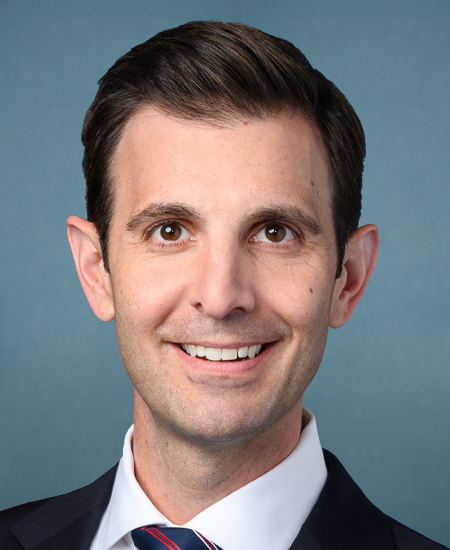
Rep. Christopher R. Deluzio
Sponsored bills
Maddy summaryHR 5293, the Youth Voting Rights Act, would improve voting access for young people aged 18-29 through several concrete changes. The bill requires public colleges and universities to serve as voter registration agencies, establishes pre-registration for 16-year-olds, mandates on-campus polling locations for all institutions of higher education, and prohibits age-based restrictions on voting by mail. It also requires states to accept student ID cards as valid voter identification and provides grants to states for youth voter engagement programs. The bill would collect data on voting trends by age to help identify barriers to youth participation. These changes aim to address systemic barriers that have led to lower youth voter turnout and higher ballot rejection rates among young voters.
Maddy summaryThe Sustaining Our Democracy Act creates a federal program to provide states with annual funding to improve election administration and increase voting access. It allocates $2 billion each year from 2024-2033 through the State Election Assistance and Innovation Trust Fund to support activities like upgrading voting equipment, training election workers, and expanding voting access for underserved communities, people with disabilities, and voters on Indian lands. States must submit detailed plans for using funds, which cannot be used for activities that restrict voting access or target election officials. The Act establishes an Office of Democracy Advancement and Innovation to administer the program, monitor fund usage, and oversee compliance with its requirements.
Maddy summaryThis bill requires the Bureau of Prisons to develop and implement a strategy for scanning all incoming mail at federal prisons to stop fentanyl and other synthetic drugs from entering facilities. It directs the Bureau to evaluate existing scanning technology within 180 days and submit a detailed plan to Congress within 90 days, including how to provide digital copies of mail to inmates within 24 hours and physical copies within 30 days (if safe). The strategy must achieve 100% mail scanning capacity at all federal prisons, prioritize high-security facilities, and include a budget proposal for fiscal years 2024-2026. This directly affects federal prisons, inmates, and Bureau employees by changing mail processing procedures to enhance safety and reduce staffing burdens from manual mail checks.
Maddy summaryThe Unhoused Voter Opportunity Through Elections Act (HR 5294) protects voting rights for people experiencing homelessness by prohibiting states from denying voting access based on living in a "nontraditional abode" like shelters, public spaces, or locations where someone is considered homeless under federal law. Key provisions require election officials to make ballot drop boxes accessible to unhoused individuals, accept written attestations of residence instead of traditional proof, allow homeless shelters to be used as voting addresses, and mandate outreach to shelters about registration deadlines and election dates. The bill also creates a grant program to fund mobile voting centers and direct outreach services specifically for unhoused individuals. These changes would directly affect homeless individuals and election officials across all states, implementing concrete policy changes to improve voting access for a population often excluded from the electoral process.
Maddy summaryHR 5295, the Expanding the VOTE Act, modifies Section 203 of the Voting Rights Act to expand language access for voters. It requires states and localities to provide voting materials (including ballots and instructions) in the language of covered language minority groups, with new provisions for American Indian and Alaska Native languages requiring tribal government consultation for unwritten languages. The bill creates $15 million in grants to help jurisdictions provide voting materials in languages that don’t currently trigger Section 203 coverage, while mandating continued provision for those groups in future elections. It also directs a study to evaluate lowering population thresholds for language protections and expanding the definition of covered languages.
Maddy summaryThis bill removes separate disciplinary processes for certain Department of Veterans Affairs (VA) employees related to removal, demotion, or suspension. It directly affects VA staff, particularly whistleblowers who might face retaliation through these disciplinary actions. The key change repeals redundant procedures in Title 38 and restores pre-2017 disciplinary rules for sections 7461, 7462, and 7463 of the VA code. This aligns disciplinary actions with existing whistleblower protections, simplifying the process without creating new rights or obligations.
Maddy summaryHR 4350, the MONARCH Act of 2023, establishes a $12.5 million annual fund (2023-2027) to support habitat restoration for western monarch butterflies, which are at risk of extinction due to a 99% population decline over 30 years. The bill authorizes grants to eligible entities like tribal governments, nonprofits, and local agencies to restore milkweed, protect overwintering sites, and conserve pollinator habitats across California, Arizona, Nevada, Washington, Oregon, Idaho, and Utah. Projects must include community consultation, avoid conflicts with food safety, and demonstrate clear conservation benefits. The Secretary of the Interior will manage the grants, require annual progress reports to Congress and the public, and coordinate with existing conservation plans.
Maddy summaryThe TREATS Act amends the Controlled Substances Act to allow healthcare providers to use telehealth for the initial evaluation when prescribing certain medications for opioid use disorder. Specifically, it replaces the requirement for an in-person medical evaluation with an option for a telehealth evaluation for medications in schedules III, IV, or V (excluding methadone) that are FDA-approved to treat opioid use disorder. The telehealth evaluation must be conducted via real-time audio or video communication meeting federal and state requirements, as defined by the bill. This change directly affects providers prescribing these medications and patients seeking treatment for opioid use disorder in these categories.
Maddy summaryHR 4249, the VET PFAS Act, provides healthcare benefits to veterans and their families exposed to PFAS chemicals at military bases. Veterans who served at contaminated bases (including through water sources) and developed specific conditions like testicular cancer, ulcerative colitis, or pregnancy-induced hypertension become eligible for VA healthcare without needing medical proof of cause. Family members who lived at these bases or were in utero during such residence also qualify for covered conditions. The bill creates a "presumption of service connection" for these illnesses, meaning the VA assumes PFAS exposure caused the condition. It requires annual VA reports tracking beneficiaries, denials, and conditions treated.