

Maddy summaryHR 4763, the PTO Act, requires most employers to provide employees with at least 1 hour of paid annual leave for every 25 hours worked, with a maximum of 80 hours per year. It applies to private-sector workers and certain government employees, protecting their right to use paid leave for any purpose without disclosing the reason. The bill mandates employers to maintain health benefits during leave, allow carryover of up to 40 hours of unused leave, and pay out unused leave upon separation. It also prohibits employers from discriminating against employees for using paid leave or requiring them to find replacements while on leave. The law includes enforcement mechanisms, allowing employees to file complaints with the Department of Labor or pursue private lawsuits.
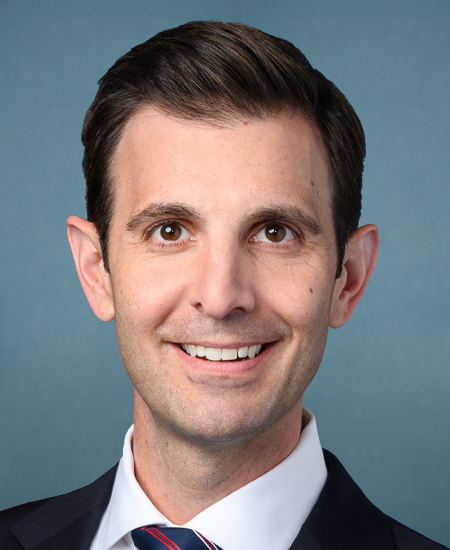
Rep. Christopher R. Deluzio
Sponsored bills
Maddy summaryThis bill updates the TRICARE Young Adult Program to make healthcare coverage more accessible for military dependents. It directly affects young adults (ages 21-26) who are children of active-duty service members, by eliminating a separate premium they previously paid for coverage. Key changes include removing an extra cost for young adults and adjusting eligibility rules to simplify enrollment. These amendments aim to reduce out-of-pocket expenses and streamline access to health insurance under the program.
Maddy summaryHR 4628, the AI Impersonation Prevention Act of 2025, prohibits using artificial intelligence to impersonate federal officials (including mimicking their voice or likeness) without a clear disclaimer, if the content is materially false or misleading. It makes knowingly creating such deceptive AI content a crime punishable by up to three years in prison or a fine, while explicitly exempting satire, parody, or protected speech that includes a clear disclosure it is not authentic. The bill directly affects individuals or entities producing AI-generated content falsely posing as federal employees or officials. It defines "artificial intelligence" broadly as systems performing human-like tasks (e.g., generating realistic audio or video) and "impersonates" as falsely representing oneself as another identifiable person.
Maddy summaryHR 4742, the GIVE MILK Act, amends the WIC program to allow participants (low-income pregnant women, infants, and children) to choose their milk type - nonfat, low-fat, reduced fat, or whole milk - instead of receiving a default type. This change directly affects WIC recipients by giving them flexibility to align milk choices with medical guidelines, such as whole milk for children 12-24 months and low-fat/skim for older children. The bill requires the USDA to implement this election process by updating regulations, ensuring participants receive the milk type they select. It aims to support children’s nutritional needs by making dairy options more accessible based on established dietary recommendations.
Maddy summaryThis bill prohibits companies from using automated systems to set prices or wages based on surveillance data about consumers or workers. It bans "surveillance-based price setting" (personalized pricing based on consumer tracking) and "surveillance-based wage setting" (using personal data to determine worker pay), with limited exceptions for standard discounts like student or senior citizen rates when properly disclosed. Companies must publish clear procedures about how their automated systems work, including how data is used and how consumers/workers can challenge inaccuracies. The Federal Trade Commission and Equal Employment Opportunity Commission will enforce the law, and individuals can file lawsuits to challenge violations. The bill also prohibits pre-dispute arbitration agreements that would prevent class action lawsuits.
Maddy summaryThis bill adds "spotted lanternfly control" as a priority research area under federal agricultural funding, authorizing grants to develop and share tools for combating the invasive spotted lanternfly pest (Lycorma delicatula). It directly affects farmers, agricultural communities, and state departments of agriculture in states like Pennsylvania where the pest causes significant crop damage. The key provision amends existing law to allow research grants focused on creating effective treatments and management strategies for the pest. The bill also extends the funding period for all high-priority research initiatives through 2030.
Resident Physician Shortage Reduction Act of 2025 This bill increases the number of residency positions eligible for graduate medical education payments under Medicare for qualifying hospitals, including hospitals in rural areas and health professional shortage areas. The bill provides for an additional increase of 2,000 positions per fiscal year from FY2026-FY2032; during this period, each hospital may receive up to 75 additional positions in total under the bill and current law. Additionally, one-third of the positions that are made available under the bill must be allocated to hospitals that are already operating above applicable resident limits. The bill also requires the Government Accountability Office to report on strategies to increase the diversity of the health professional workforce, including with respect to representation from rural, low-income, and minority communities.
Maddy summaryHR 4704, the ROTOR Act, requires the Defense Health Agency to study cancer rates among military helicopter pilots and aviation support personnel. It directly affects service members who served as rotary-wing aircrew (pilots or support staff) since 1961 and receive VA healthcare. The bill mandates a two-phase study: first, comparing cancer prevalence/mortality for 12 specific cancers (like lung, prostate, and breast cancer) between these service members and the general population; second, if increased rates are found, investigating potential causes like aircraft toxins, radiation exposure, or other service-related hazards. The study will use existing VA and cancer registry data, with findings reported to Congress within two years.
Maddy summaryH.J. Res. 108 proposes a constitutional amendment to remove legal immunity for federal officials, including the President, from criminal prosecution for actions taken while performing official duties. It would prohibit the President from granting pardons to themselves and eliminate the defense that "official authority" excuses violations of federal or state law (with limited exceptions for certain congressional actions). If ratified, this amendment would require Congress to pass implementing laws to enforce these changes. The proposal is currently in the House Judiciary Committee and requires approval by three-fourths of state legislatures to become part of the Constitution.
Maddy summaryHR 4606, the Ally’s Act, requires private health insurance plans (including employer-sponsored plans and individual coverage) to cover hearing implants and related services. It directly affects people with hearing loss who need cochlear implants, bone conduction devices, or external sound processors, as determined by a physician or audiologist. The bill mandates coverage for devices, maintenance, repairs, upgrades every 5 years, hearing assessments, surgery, and rehabilitation - without separate cost-sharing or stricter limits than other medical services. Insurers cannot deny coverage if a provider deems the service medically necessary. The law applies to all applicable health plans and takes effect for plan years beginning January 1, 2026.