

Unhoused Voter Opportunity Through Elections Act or the Unhoused VOTE Act This bill expands voter registration and voting access for unhoused individuals. The bill specifies that no state or political subdivision may deny or abridge the right of any U.S. citizen to vote because the citizen resides at or in a nontraditional abode. Additionally, the bill requires jurisdictions that allow for ballot drop boxes to ensure that these drop boxes are available for in-person use and are accessible and clearly labeled. If a state requires individuals to show proof of residence in order to vote in a federal election, then the state must accept the individual’s written attestation of residence. A state may not prohibit an individual who is residing in a homeless shelter from using the shelter as the individual’s residence for purposes of voting in a federal election. The bill requires chief state election officials to conduct outreach to unhoused individuals. The bill directs the Election Assistance Commission to (1) develop best practices for election officials regarding voter registration and voting access for unhoused individuals, and (2) make grants to eligible states and local governments for programs and activities to support access to voting for unhoused individuals. The bill also revises the National Voter Registration Act of 1993, including by (1) treating emergency shelters as voter registration agencies, and (2) allowing an unhoused individual to use an unsheltered street location as the individual's place of residence for purposes of a voter registration application.
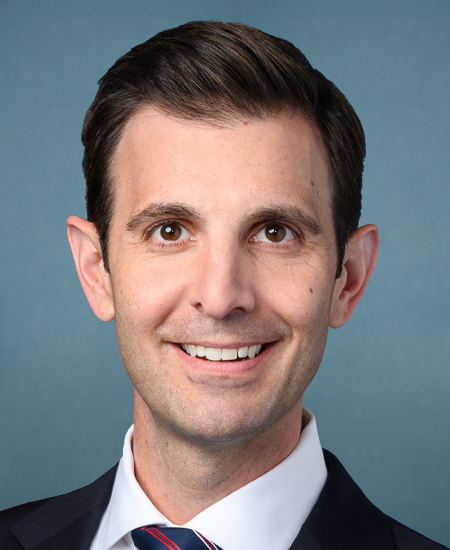
Rep. Christopher R. Deluzio
Sponsored bills
Maddy summaryThe POLL Act requires states to develop plans ensuring voting wait times don't exceed 30 minutes at any polling place during federal elections. It establishes standards for allocating voting resources (including voting systems and poll workers) based on factors like voting-age population, past turnout, and needs of disabled voters and those with limited English proficiency. The bill creates a private right of action for voters who experience excessive wait times, allowing them to seek civil penalties. Additionally, it authorizes $500 million annually in federal funds to help states implement these changes and meet the new requirements.
Maddy summaryThe Sustaining Our Democracy Act establishes a federal program providing funding to states for election administration improvements, increased voter access, and protection of election workers. States must submit detailed plans for using funds to upgrade voting equipment, expand early and mail voting options, secure election infrastructure, and address disparities in voting access for underserved communities. The bill prohibits states from using funds for activities that restrict voting access or suppress participation, and creates an Office of Democracy Advancement and Innovation to administer the program. Funded through a $2.5 billion Trust Fund for fiscal years 2026-2035, this legislation directly affects all 50 states, the District of Columbia, and U.S. territories receiving federal election funding.
Maddy summaryThis bill adjusts health insurance subsidies by modifying the premium tax credit structure under the Internal Revenue Code. It replaces previous income thresholds with a sliding-scale formula, increasing subsidies for households earning between 150% and 400% of the federal poverty level - reducing their required premium payments as income rises within these tiers. The changes apply to tax years beginning after December 31, 2025, directly affecting middle-income individuals and families purchasing coverage through health insurance marketplaces. It also repeals specific provisions from a prior reconciliation law related to health care.
Maddy summaryHR 4863, the Fairness for Khobar Act of 2025, provides lump sum catch-up payments to victims of the 1983 Beirut barracks bombing and 1996 Khobar Towers bombing who were previously denied compensation due to confusing Department of Justice guidance. The bill requires the Special Master to authorize these payments to individuals who relied on outdated guidance stating they could not apply for lump sum payments if already eligible for regular distributions. Victims can prove their reliance through documentation, sworn statements, or other methods approved by the Special Master. Payments will be made from a reserve fund or the main compensation fund, ensuring those who were wrongly excluded can now receive full compensation they were entitled to under the law.
Maddy summaryThe All Aboard Act of 2025 provides $3.5 billion annually for 5 years to fund state rail plans and infrastructure, with specific goals to achieve zero-emission locomotives by 2047 and electrify 50% of trains by 2030. It establishes a $50 billion Green Railroads Fund to support rail electrification projects, prioritizing initiatives that reduce pollution in environmental justice communities and expand high-performance rail service. The bill requires states and rail entities to develop workforce transition plans to protect rail workers during the shift to electrified rail and to engage communities affected by rail infrastructure projects. It also includes provisions for climate-resilient infrastructure and $500 million for rail workforce training programs. The legislation directly affects states, rail operators, and communities across the U.S., particularly those in environmental justice communities and rail-dependent regions.
Maddy summaryHR 4819, the Click to Cancel Act of 2025, makes the Federal Trade Commission's November 2024 "Negative Option Rule" permanent law. This rule directly affects businesses that use automatic renewal subscriptions (like streaming services or software) and their consumers, requiring clear, easy cancellation options. The bill codifies the FTC's existing rule, treating violations as unfair or deceptive practices under the FTC Act, and grants the FTC full authority to enforce it using existing powers and penalties. The key change is that businesses must now explicitly obtain consumer consent for recurring charges and provide straightforward cancellation methods, moving beyond the previous rule-based guidance.
Maddy summaryThis bill removes a barrier preventing most low-income students from accessing SNAP benefits. It amends the Food and Nutrition Act to explicitly allow students enrolled at least half-time in recognized higher education programs to qualify for SNAP, reversing a prior exclusion. The key change eliminates the previous requirement that students meet specific exceptions (now deleted) and adds a new eligibility category under Section 3(m)(5). This directly affects low-income undergraduate and graduate students at colleges and training programs who were previously ineligible. The changes take effect January 2, 2026.
Maddy summaryHR 4796, the Restoring Essential Healthcare Act, repeals a provision that blocked Medicaid payments to certain healthcare providers during a specific period. It directly affects Medicaid beneficiaries who received care from these providers between the enactment of the prior law (Public Law 119-21) and this bill's enactment. The key provision retroactively restores Medicaid payments for services already provided during that blocked period, treating the payment restriction as if it never existed. This change ensures eligible individuals and providers receive reimbursement for covered care delivered during the prohibited timeframe.
Fix Our Flooded Basements Act of 2025 This bill expands the disaster assistance provided to individuals and households for repairs to and property in flood-damaged basements. It also expands eligibility and coverage for certain group flood insurance. Under current law, the Individual Assistance (IA) program of the Federal Emergency Management Agency (FEMA) limits home repair assistance for flood-damaged basements to damage affecting the safety, sanitation, or functionality of the home (e.g., structural damage, hazardous conditions). The bill allows home repair assistance for disaster-caused mold, mildew, and moisture damage in basements regardless of whether the damage affects safety, sanitation, or functionality. Additionally, flood-damaged basements are eligible for home repair assistance even when the basement is not required for occupying the dwelling. Also, currently, IA assistance for flood-damaged personal property in basements is limited to washers, dryers, and property essential for occupying the dwelling. The bill expands IA personal property assistance to more broadly cover property damaged by disaster-caused flooding in basements. The scope of such assistance must at least equal the coverage for such damage by a standard policy under the National Flood Insurance Program (e.g., covering air conditioning units and freezers in basements). Additionally, FEMA must expand the eligibility and coverage of the group flood insurance it provides to IA recipients, including increasing the maximum coverage and expanding coverage for basements. The bill also excludes from the maximum for IA housing assistance expenses for (1) hazard mitigation measures in flood-damaged basements, and (2) premiums for group flood insurance policies.