

This bill allows for the refundability of a portion of the tax credit for increasing research activities for small businesses (gross receipts not exceeding $1 million) engaged in specified medical research. Under the Public Health Service Act, specified medical research means research with respect to qualified countermeasures (i.e., a drug, biological product, or device for preventing harm from any biological agent or from a condition that may result in adverse health consequences or death).
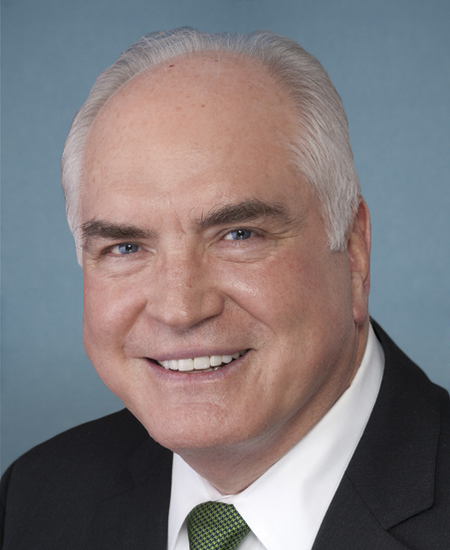
Rep. Mike Kelly
Sponsored bills
This concurrent resolution expresses the sense of Congress that the President should consider the effect on Pennsylvania when conducting domestic and international energy policy, including pipeline approvals and permits for energy and mineral development.
Public Health and Border Security Act of 2022 This bill requires the Department of Health and Human Services (HHS) to meet conditions related to notification and planning before terminating certain restrictions on imports and individuals entering the United States. Current law authorizes HHS to restrict entries and imports from foreign countries to prevent the introduction of communicable diseases. HHS exercised this authority as part of its COVID-19 response, including to allow for the expulsion of undocumented migrants at the border without any asylum processing. Under this bill, HHS may not terminate the restrictions for (1) at least 60 days after it notifies Congress of the end of the COVID-19 emergency, and (2) at least 30 days after it submits to Congress a plan for addressing the possible influx of migrants or imports resulting from lifting the restrictions.
Suspending Normal Trade Relations with Russia and Belarus Act This bill suspends normal trade relations with Russia and Belarus. It also permanently authorizes the President to impose visa- and property-blocking sanctions based on violations of human rights. Specifically, the bill authorizes the President to proclaim increases in the rates of duty applicable to products of Russia or Belarus. This authority terminates on January 1, 2024. The President may restore normal trade relations with Russia and Belarus, subject to congressional disapproval. The bill directs the U.S. Trade Representative to (1) condemn the recent aggression in Ukraine, (2) encourage other World Trade Organization (WTO) members to suspend trade concessions to Russia and Belarus, (3) consider steps to suspend Russia's participation in the WTO, and (4) seek to halt the accession process of Belarus.
Maddy summaryHR 7477, the CERTS Tax Exemption Act, ensures that grants provided under the Coronavirus Economic Relief for Transportation Services Act are tax-free for eligible transportation service providers. The bill directly affects companies and organizations providing transportation services that receive these specific federal grants. Key provisions state that grant amounts cannot be counted as taxable income, deductions related to grant-funded costs cannot be denied, and tax attributes (like basis increases) must be treated as tax-free for partnerships and S corporations. This change simplifies tax treatment for recipients by preventing unintended tax liabilities on relief funds.
Employee Access to Worksite Health Services Act This bill provides that individuals who are eligible to receive qualified items and services at a worksite health clinic may make pre-tax contributions to a health savings account The bill defines qualified items and services to include primary care items and services, physical examinations, immunizations, drugs and drug testing, tests for infectious diseases, preventive care for chronic conditions, hearing, vision, or dental screenings, and mental and behavioral health services.
Opportunity Zones Improvement, Transparency, and Extension Act This bill revises rules and reinstates reporting requirements relating to qualified opportunity zones (economically distressed communities where new investments, under specified conditions, may be eligible for preferential tax treatment). Specifically, the bill terminates the designation of zones that are disqualified due to median family income exceeding 130% of national median family income and permits states to identify and expand terminations of such zones. The bill also reinstates reporting requirements for qualified opportunity zones and imposes penalties for noncompliance with such requirements, extends the opportunity zones temporary deferral period for qualifying capital gain through 2028, and establishes a State and Community Dynamism Fund to support public and private investment in qualified opportunity zones.
American Made Medicine Act This bill allows employers tax credits for domestic medical and drug manufacturing expenses and for advanced medical manufacturing equipment. It also provides a tax credit for a percentage of the basis of qualifying medical manufacturing EPA compliance property placed in service before January 1, 2029, or during calendar year 2030. The bill defines qualifying medical manufacturing EPA compliance property as depreciable property used by a taxpayer in the trade or business of manufacturing a drug, device, biological product, or active pharmaceutical ingredient or covered countermeasure (e.g., a qualified pandemic or epidemic product, security countermeasure, or respiratory protective device). The property must meet emissions limits under the Clean Air Act or wastewater standards under the Clean Water Act.
Ensuring Lasting Smiles Act This bill requires private health insurance plans to cover diagnosis and treatment of congenital anomalies and birth defects, such as reconstructive services and items. Coverage must include services and items that functionally improve, repair, or restore any body part that is medically necessary for normal bodily functions or appearance, as determined by the treating physician. Coverage limits and cost-sharing requirements for such services and items may not be more restrictive than those applicable to all medical and surgical benefits under the plan.
Supply Chain Disruptions Relief Act This bill modifies the treatment of liquidations of new motor vehicle inventory as qualified LIFO (last in first out accounting method) inventory. It allows new motor vehicle dealers to elect to wait until the end of 2025 to replace their inventory for purposes of determining income attributable to the sale of such inventory during 2020 and 2021.