Permanent Tax Cuts for American Families Act of 2023 This bill permanently increases the standard tax deduction for nonitemizing taxpayers. It also requires an inflation adjustment to the increased deduction amounts.
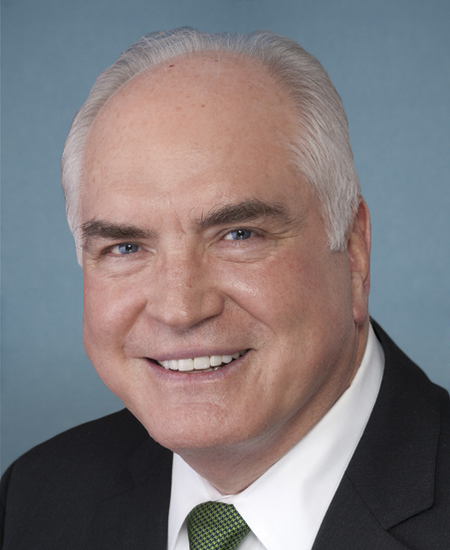
Rep. Mike Kelly
Sponsored bills
Maddy summaryHR 3238, the Affordable Housing Credit Improvement Act of 2023, updates the Low-Income Housing Tax Credit (LIHTC) program to increase the availability of affordable housing across the United States. The bill makes several key changes including increasing state funding formulas, modifying tenant eligibility rules to better serve vulnerable populations (such as domestic violence victims and students), and expanding credit eligibility for projects in rural and Native American communities. Specific provisions raise the credit for properties serving extremely low-income households, clarify rules around tenant income increases, and require housing providers to protect victims of domestic violence. The bill also updates terminology from "low-income" to "affordable" throughout the tax code and enhances program transparency through data sharing requirements. These changes aim to make the LIHTC program more effective at creating and preserving affordable housing units for low-income households nationwide.
Maddy summaryThe Protecting Taxpayers and Victims of Unemployment Fraud Act allows states to retain 25% of funds recovered from fraudulent unemployment claims (for pandemic-related benefits) to improve fraud prevention systems. States can use these retained funds to modernize unemployment systems, hire fraud investigators, reimburse administrative costs, or conduct other fraud prevention activities. The bill requires states to use specific data matching systems like the National Directory of New Hires to detect fraud more effectively. It modifies federal rules to ensure states can use recovered funds without violating deposit requirements. This legislation aims to reduce unemployment fraud while protecting taxpayers and victims of fraud.
Maddy summaryThe HELPER Act of 2023 creates a new FHA mortgage insurance program specifically for first responders and K-12 teachers. It allows eligible first-time homebuyers in these professions to secure mortgages with 100% financing (no down payment required) for purchasing or repairing a primary residence. To qualify, applicants must be employed as law enforcement, firefighters, paramedics, or K-12 teachers, have completed housing counseling, and meet specific employment history requirements (e.g., 4 years in the role or disability-related release). The program authorizes $660,000 for fiscal year 2024 and $160,000 annually through 2030, with authority expiring after 5 years.
Maddy summaryHRES 362 is a symbolic House resolution recognizing elementary and secondary school teachers' contributions to U.S. civic, cultural, and economic well-being. It specifically thanks teachers and encourages students, parents, school leaders, and officials to acknowledge National Teacher Appreciation Week (May 8-12, 2023). The resolution has no binding effect or policy changes - it solely promotes public appreciation for the teaching profession through a formal expression of gratitude. It directly affects teachers by affirming their societal value but does not alter laws, funding, or educational standards.

Maddy summaryHR 3105 amends the tax code to clarify how financial guaranty insurance companies qualify as "qualifying insurance corporations" under passive foreign investment company (PFIC) rules. It allows these companies to include unearned premium reserves in their insurance liabilities if they meet specific exposure thresholds: at least a 15-to-1 ratio of financial guaranty exposure to total assets (or 9-to-1 for state/local bonds), and they report only reserves within single-risk limits. This bill directly affects financial guaranty insurance companies whose sole business is writing or reinsuring financial guaranty insurance. The change simplifies their tax classification under existing PFIC rules without altering broader tax policy.
Maddy summaryHR 3125 raises the IRS reporting threshold for slot machine winnings from $1,200 to $5,000 per single play. This means casinos and other businesses operating slot machines no longer need to report winnings under $5,000 to the IRS for individual plays. The $5,000 threshold will automatically adjust annually for inflation starting in 2025. The bill affects casinos' reporting obligations but does not change tax liability for gamblers. It becomes effective for winnings after December 31, 2023.
Tax-Free Pell Grant Act This bill excludes from gross income, for income tax purposes, any amount received as a federal Pell Grant. It also expands the definition of qualified tuition and related expenses under the American Opportunity and Lifetime Learning tax credit to include computer or peripheral equipment (up to a maximum of $1,000), child and dependent care expenses, and course materials.
Maddy summaryThis bill protects living organ donors from insurance discrimination by prohibiting life, disability, and long-term care insurers from denying coverage, raising premiums, or altering policy terms solely because someone donated an organ while alive. It also updates the Family and Medical Leave Act to include recovery from organ donation surgery as a qualifying health condition, allowing donors to take protected leave for this purpose. Additionally, the bill requires the Health and Human Services Secretary to update public educational materials about living donation benefits, risks, and insurance protections within six months of enactment. These changes directly affect living organ donors, insurers, employers, and healthcare systems by ensuring fair access to insurance and workplace leave.
Maddy summaryThe College Transparency Act requires the National Center for Education Statistics to develop a secure, privacy-protected system that collects and organizes student-level data from colleges and universities. The system will track enrollment patterns, progression, completion rates, costs, financial aid, and post-graduation outcomes, with data disaggregated by characteristics like race, gender, program of study, and credential level. Colleges participating in federal financial aid programs must submit this data, while the system will provide the public with customizable summary information to help students and families make informed college decisions. The bill includes strict privacy protections, prohibiting collection of sensitive data like health information or exact addresses, and requires data minimization to only what's necessary for the system's purposes.