

Marc Fogel Act This bill requires the Department of State, in certain cases, to submit information to Congress regarding U.S. nationals who may be detained abroad unlawfully or wrongfully. The bill requires the State Department to submit all case-related documents and communications within 180 days of the initiation of a case review if the department (1) has not made a determination, or (2) has made a determination that there is no credible evidence that the individual is being detained unlawfully or wrongfully.
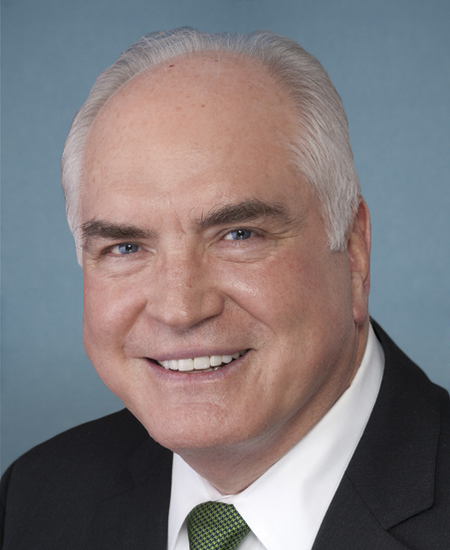
Rep. Mike Kelly
Sponsored bills
Maddy summaryThe Mountain Valley Pipeline Completion Act (HR 3500) requires federal agencies to expedite permits and approvals for the Mountain Valley Pipeline project within 21 days of enactment. It mandates the Army, Agriculture, and Interior secretaries to issue necessary permits for construction and operation, while blocking all legal challenges to these approvals through judicial review. The bill directly affects the pipeline project by overriding existing legal barriers and agency decisions related to its completion. Key provisions include ratifying prior approvals, expediting permits, and prohibiting lawsuits seeking to invalidate agency actions for this specific pipeline. This law aims to accelerate the pipeline's construction to meet regional natural gas demand, as stated in the bill.
Maddy summaryHJRES 44 is a congressional resolution seeking to block a 2021 rule by the Bureau of Alcohol, Tobacco, Firearms, and Explosives (ATF). The rule classified firearms with stabilizing braces as "short-barreled rifles," which would have required additional licensing and regulation. This resolution uses a specific legal process (under Title 5, U.S. Code) to formally disapprove the ATF rule, meaning the rule would no longer be in effect. It directly affects firearm owners, manufacturers, and dealers who would have been subject to the rule’s requirements.
Maddy summaryHRES 546 is a symbolic House resolution commemorating the one-year anniversary of the Supreme Court's June 24, 2022, Dobbs v. Jackson Women's Health Organization decision, which overturned Roe v. Wade. The resolution expresses support for the Court's ruling that the Constitution does not guarantee a right to abortion and celebrates the decision's impact on returning abortion policy authority to state legislatures. As a ceremonial resolution, it does not create new laws or directly affect any individuals or policies. The resolution focuses solely on marking the anniversary and affirming the position that unborn life should be protected.
Maddy summaryThe Neighborhood Homes Investment Act creates a new tax credit for developers who rehabilitate or build affordable homes in distressed communities. The credit is calculated based on the difference between rehabilitation costs and the sale price, with homes required to be sold at affordable prices to qualified homeowners with incomes up to 140% of the local median family income. The bill targets specific "qualified census tracts" defined by high poverty rates, low homeownership, and below-average home values. Developers must ensure homes are sold to qualified homeowners who use them as primary residences for at least five years, with additional safeguards to prevent program abuse and ensure fair housing practices.
This resolution declares that the life of each human person begins at fertilization and calls upon Congress to enact legislation to enforce the Fourteenth Amendment's guarantee of equal protection for unborn children nationwide.
This bill generally prohibits Title X grants for family planning services, research, and training from being used for a hotline, website, or other system that provides individuals with counseling and referrals regarding abortion services. However, the prohibition does not apply (1) in cases of rape or incest, or (2) when a physician certifies that the individual suffers from a physical condition that is life-threatening unless an abortion is performed.
Maddy summaryThis bill requires the Treasury Secretary to report quarterly on foreign countries imposing "extraterritorial" or "discriminatory" taxes targeting U.S. businesses. It mandates progressively higher tax rates (starting at 5% and increasing to 20% over time) on income and payments from foreign individuals and corporations in those countries. The U.S. government can also restrict federal procurement from such entities and consider these taxes in trade negotiations. These measures directly affect foreign businesses operating in the U.S. or conducting transactions with U.S. entities. The policy aims to counter foreign tax policies that the U.S. views as unfair under international tax norms.
Maddy summaryThis bill creates a new tax credit for expenses related to "qualified access technology for the blind" under the Internal Revenue Code. It allows taxpayers to claim a credit of up to $2,000 per year (adjusted for inflation) for costs paid for hardware, software, or IT that converts visual information into formats usable by blind individuals, covering the taxpayer, their spouse, or a dependent who is blind. The credit is limited to $2,000 over any three consecutive tax years per blind individual and expires after 2028. It directly affects blind individuals and their families who purchase qualifying assistive technology. The credit cannot be claimed for expenses already covered by other tax deductions or credits.
Financing Our Energy Future Act This bill expands the types of partnerships that qualify for treatment as publicly traded partnerships instead of as corporations for tax purposes. Under current law, partnerships that meet certain gross income requirements (i.e., at least 90% of the partnership's gross income in a taxable year consists of qualifying income) are excepted from being treated as a corporation for tax purposes. This bill expands the sources of income that are considered qualifying income and make a partnership eligible for such an exception. Specifically, the bill provides that income derived from the generation of specified alternative energy, alternative fuel projects, or the associated property, storage, or transportation for such projects (e.g., the conversion of renewable biomass into renewable fuel or the storage or transportation of such fuel) is considered qualifying income.