

Maddy summaryHR 7513, the Protecting America’s Seniors’ Access to Care Act, prohibits the Department of Health and Human Services from implementing or enforcing a proposed rule that would have set minimum staffing requirements for nursing homes and other long-term care facilities receiving Medicare or Medicaid funding. The bill specifically blocks the September 2023 proposed rule (88 Fed. Reg. 61352-61429) and any substantially similar rule. This directly affects long-term care facilities that rely on federal healthcare program payments. The key mechanism is a clear statutory prohibition preventing the rule from taking effect, without altering existing staffing standards or requirements.
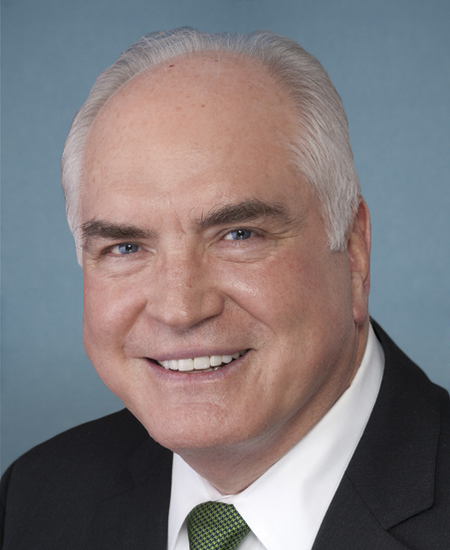
Rep. Mike Kelly
Sponsored bills
Maddy summaryThis bill allows Medicaid programs to enter into value-based purchasing (VBP) arrangements with drug manufacturers for innovative treatments like gene therapies. It codifies these arrangements by requiring states to report pricing structures based on patient outcomes and best prices for drugs sold under these agreements. The bill enables payments to be tied to treatment effectiveness, potentially reducing long-term healthcare costs by decreasing hospitalizations and other medical expenses. It also creates a requirement for a GAO study to evaluate how these arrangements impact patient access, outcomes, and healthcare system costs. The bill will sunset after 5 years, though existing VBP arrangements will continue beyond that date.
Maddy summaryHR 5798, the Protecting Our Nation’s Capital Emergency Act of 2023, aims to address rising crime in Washington, D.C., by reversing two specific policies affecting the city’s police force. It restores collective bargaining rights for police discipline (by removing a 2022 restriction) and reinstates a longer statute of limitations for claims against Metropolitan Police Department members (repealing a 2022 law that shortened it). These changes target D.C. law enforcement officers directly, seeking to improve recruitment and retention by ensuring fairer treatment. The bill focuses solely on modifying these two legal provisions, without introducing new funding or crime-fighting measures.
Maddy summaryThis bill would expand Medicare Part D coverage to include FDA-approved weight loss medications for dual-eligible beneficiaries (those enrolled in both Medicare and Medicaid), directly affecting approximately 12.5 million low-income Americans. It removes current coverage barriers by amending Medicare rules to require Part D plans to cover these medications for obesity treatment or weight loss management starting in 2026. This change would significantly reduce out-of-pocket costs for beneficiaries - from $900-$1,350 per month to as little as $25 monthly - based on existing cost data. The policy aims to address high obesity-related healthcare costs ($173 billion annually) while targeting a population where 38% of Medicaid and 48% of Medicare beneficiaries are affected by obesity.
Maddy summaryHR 9778, the PAVE Act, requires Medicare to include penicillin allergy verification during routine preventive exams and annual wellness visits for seniors aged 65 and older. The bill mandates identifying patients with self-reported penicillin allergies, assessing whether their history indicates a true allergy, explaining the health risks of a false label, and referring to specialists when needed. This applies to Medicare-covered visits starting January 1, 2025, directly affecting seniors with penicillin allergy labels in their medical records. The goal is to correct false allergies - supported by evidence showing over 90% of such labels are inaccurate - improving treatment options and reducing unnecessary healthcare costs.
Maddy summaryThis bill creates a new Medicare payment model for emergency medical services (EMS) that allows coverage when ambulance providers deliver critical care on-site without transporting patients to a hospital. It directly affects Medicare beneficiaries receiving such on-site emergency care and ambulance providers who would previously not be reimbursed for non-transport services. The key provision requires Medicare to pay for these services at rates matching what would have been paid for transport, based on state protocols and emergency call responses, for a 5-year trial period. A report due 4 years after implementation will evaluate impacts on patient outcomes, system efficiency, and regional access.
Maddy summaryThe University Accountability Act imposes penalties on tax-exempt universities found in federal court to have violated Title VI of the Civil Rights Act of 1964, requiring them to pay $100,000 or 5% of their administrative compensation per violation. It mandates the IRS to review the tax-exempt status of institutions with more than two such violations and requires these institutions to report civil rights violations on their tax returns. If a violation determination is overturned, the penalty must be refunded. The bill applies to most public and private universities that are tax-exempt under federal law, directly affecting their financial obligations and reporting requirements.
Maddy summaryThe Securing America’s Titanium Manufacturing Act of 2024 temporarily eliminates import duties on titanium sponge (used in defense and aerospace) for most countries starting 30 days after enactment, lasting until December 31, 2031, or earlier if the President terminates the policy. Imports from Belarus, Cuba, North Korea, and Russia remain subject to pre-enactment duties during this period. The President must review U.S. titanium production every three years to determine if domestic supply meets national security needs, with duty-free treatment ending one year after a positive determination. Additionally, the President may adjust duties (within World Trade Organization limits) based on factors like domestic production trends, imports from specific countries, and national security impacts.
Maddy summaryThis bill would allow individuals to deduct membership costs in health care sharing ministries as medical expenses on their federal income taxes, starting in 2025. It directly affects members of these ministries - organizations that share medical costs among members but are not traditional insurance. The bill amends tax law to explicitly include ministry membership fees and shared medical expenses in deductible medical costs, while clarifying these ministries are not treated as health insurance. This change provides a tax benefit for members without altering how the ministries operate.
Maddy summaryThe Safer Compounding in Hospitals Act of 2024 adds a $40 Medicare payment to hospitals for each sterile intravenous drug treatment prepared using FDA-cleared automated compounding systems meeting strict safety standards. These systems must prepare medications without human handling, maintain sterile environments, verify ingredients via barcode, and ensure dose accuracy - meeting all nine FDA-defined criteria. The payment applies to Medicare discharges between October 2025 and October 2031, with an annual cap of $40 million total. Hospitals must use specific coding methods to track qualifying treatments, and the payment is designed to offset costs while maintaining current Medicare budget levels.