

Maddy summaryHR 3881, the "Stop Dangerous Sanctuary Cities Act," denies certain federal grants to states or localities that restrict sharing immigration status information or comply with federal immigration detainers. Specifically, it defines "sanctuary jurisdictions" as those with policies prohibiting cooperation with federal immigration enforcement requests (under Sections 236/287 of the Immigration and Nationality Act). The bill blocks recipients from receiving Economic Development Administration grants and Community Development Block Grants if they are deemed a sanctuary jurisdiction. Local officials complying with federal detainers gain legal protections, including immunity from lawsuits, while jurisdictions violating the law face mandatory return of funds. The policy takes effect October 1, 2025.
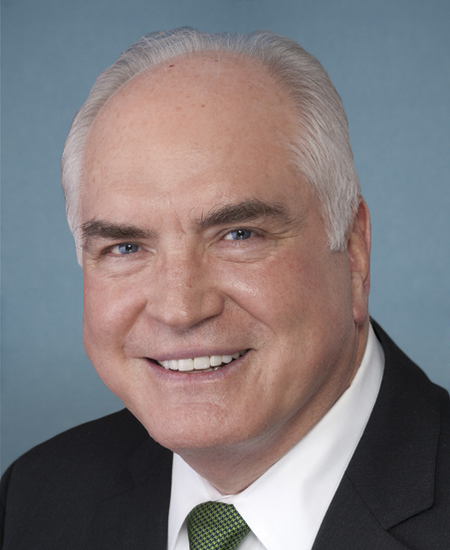
Rep. Mike Kelly
Sponsored bills
Maddy summaryThis bill expands Medicare coverage for diabetes self-management training. It requires Medicare to cover 10 initial hours of training plus 2 additional hours annually for beneficiaries with diabetes, eliminating cost-sharing (like copays) for these services. The policy directly affects Medicare beneficiaries with diabetes by making essential education and training fully covered. The changes apply to services provided on or after January 1, 2027.
Maddy summaryHR 649, the Whole Milk for Healthy Kids Act of 2025, amends the National School Lunch Act to allow schools participating in the program to offer students both organic and non-organic whole milk, in addition to reduced-fat, low-fat, and fat-free options. Key provisions include clarifying that milk fat in whole milk should not count toward saturated fat limits for meal compliance, prohibiting schools from purchasing milk from Chinese state-owned enterprises, and ensuring schools cannot be barred from offering the full range of milk types listed. The bill directly affects public and private schools serving the National School Lunch Program by expanding their milk options for students. It focuses on concrete policy changes to dietary offerings and sourcing restrictions within the school nutrition program.
Maddy summaryHR 3687 renews and enhances the Opportunity Zone program, which provides tax incentives for investments in designated low-income communities. The bill extends the program through 2033, increases tax benefits for rural Opportunity Zones (offering a 30% basis increase instead of 10%), and establishes new reporting requirements for Opportunity Zone funds and businesses. It also mandates annual Treasury reports tracking the program's economic impact, including job creation, poverty reduction, and other metrics to evaluate effectiveness.
Maddy summaryHCONRES 30 is a symbolic resolution expressing congressional support for local law enforcement officers. It does not create new laws or policies but formally recognizes their work through four non-binding actions: thanking officers and families for service, honoring those who died in the line of duty, and encouraging community-law enforcement collaboration. The resolution directly addresses Congress's acknowledgment of law enforcement efforts, not any specific group affected by a policy change. It has no legal effect or funding implications, serving solely as a statement of appreciation. This is a procedural resolution, not a legislative bill with concrete policy changes.
Maddy summaryThis resolution (HRES 433) is a symbolic congressional statement condemning former FBI Director James Comey for a social media post described in the bill as inciting violence against President Trump. It claims Comey's post - featuring the phrase "86-47" with "cool shell formation" - seemed to call for eliminating the president, jeopardizing his security during a foreign trip. The resolution formally condemns this as "indefensible," urges barring Comey from future federal employment, and requests a DOJ investigation into his post. As a non-binding resolution, it does not change laws but reflects the sponsors' position on the matter. The bill focuses on the stated claims within its text, not on verified facts about the post or Comey's intent.
Maddy summaryHR 3512, the Tackling Predatory Litigation Funding Act, imposes a new annual tax on funds received by third-party investors who finance lawsuits through litigation financing agreements. It directly affects investors (including foreign entities) who provide funding to plaintiffs or law firms in exchange for a share of settlement or judgment proceeds, excluding small agreements under $10,000 or standard loans. The tax equals the top individual income tax rate plus 3.8 percentage points, with 50% withheld from settlement payments by parties involved in the lawsuit. The law also clarifies that such funds cannot offset losses and excludes certain typical legal fee reimbursements from taxation. The provisions take effect for taxable years beginning after December 31, 2025.
Maddy summaryHR 3518 would deny federal funding to graduate medical schools that require certain diversity, equity, and inclusion (DEI) policies. Specifically, schools must certify they do not compel students or staff to affirm specific beliefs about race, gender, or systemic racism; require "diversity statements" for admission or employment; establish DEI offices; or discriminate based on race in programs. This affects graduate medical schools at institutions of higher education seeking federal financial aid, including student loan programs. The bill permits schools to teach about medical conditions related to race or collect demographic data, but prohibits policies mandating DEI-related pledges or offices.
Maddy summaryHR 3450 would allow taxpayers to deduct interest paid on certain car loans for tax years 2024 through 2028. This applies to loans for personal-use vehicles like cars, SUVs, motorcycles, or recreational vehicles (e.g., campers), but excludes commercial vehicles, leases, salvage-title vehicles, and fleet sales. The deduction is capped at $10,000 annually and phases out for higher-income taxpayers (starting at $100,000 for single filers or $200,000 for joint returns). Lenders must report such interest to the IRS and provide borrowers a statement if the interest received exceeds $600 in a year.
Maddy summaryThis bill adds a new tax credit for homeowners who install qualifying U.S.-grown hardwood products in their primary residence. It expands the existing energy efficient home improvement credit to cover "natural carbon sink expenditures," defined as flooring, paneling, cabinetry, or windows made from deciduous trees grown and processed in the U.S. The credit applies to products installed in a dwelling owned and used as the taxpayer’s principal residence, with the installation expected to last at least five years. The bill also extends the credit’s expiration date from 2032 to 2035.