

Maddy summaryThis bill creates a tax incentive for U.S. corporations to distribute company stock to employees. To qualify, corporations must have 500+ full-time U.S. employees, be U.S.-domiciled, and meet specific share distribution requirements (e.g., distributing at least 1% of shares to employees or maintaining a 5% "SHARE ratio" of shares granted). Eligible corporations receive a 3% reduction in corporate income tax and can deduct the fair market value of distributed stock. Employee stock received under these plans is excluded from taxable income, directly benefiting workers at qualifying companies while lowering tax liability for the corporations.
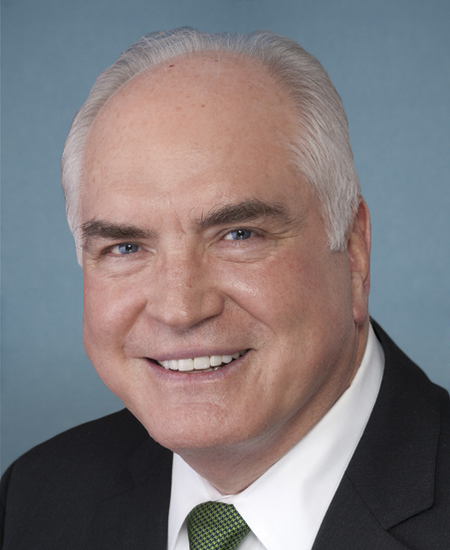
Rep. Mike Kelly
Sponsored bills
Veterans' Assuring Critical Care Expansions to Support Servicemembers Act of 2025 or the Veterans' ACCESS Act of 2025 This bill addresses the administration of the Veterans Community Care Program (VCCP) and other Department of Veterans Affairs (VA) health care matters. Among other provisions regarding the VCCP, the bill establishes in statute access standards that determine when a veteran is eligible to receive non-VA care through the VCCP, requires the VA to notify veterans regarding their eligibility for care within two business days after the VA is aware the veteran is seeking care, and extends the deadline for the submittal of claims under the VCCP by health care entities and providers. The VA must address its mental health treatment programs by establishing a standardized screening process to determine whether a veteran satisfies criteria for priority or routine admission to a mental health residential rehabilitation treatment program or a program for residential care for mental health and substance abuse disorders, tracking the performance of medical facilities and Veterans Integrated Service Networks in meeting the requirements for mental health treatment screenings and timely admission to treatment programs under such screenings, and establishing an appeal process for when a veteran is denied admission to a covered treatment program or is accepted into a program but not offered bed placement in a timely manner. Additionally, the VA must establish an online self-service module for veterans to request and manage appointments, track referrals, and appeal and track decisions related to requests for care.
Maddy summaryThis bill prohibits life, disability, and long-term care insurers from denying coverage, canceling policies, or increasing premiums based solely on a person's status as a living organ donor. It directly protects living organ donors by preventing insurance discrimination unrelated to actual health risks. The bill also requires the Health and Human Services Secretary to update public educational materials about organ donation benefits, risks, and insurance impacts within six months of enactment. These materials will include information on the new insurance protections established by the bill. The law relies on state insurance regulators for enforcement of the insurance provisions.
Maddy summaryHR 4620 amends federal law to include rioting as a form of racketeering activity under Title 18, United States Code. This change would allow prosecutors to charge individuals who organize or participate in riots as part of a larger criminal enterprise under federal racketeering laws. The bill specifically targets coordinated riot activities linked to organized crime, not isolated or spontaneous protests.
Maddy summaryThis bill modifies the tax treatment of certain alcoholic beverages by merging the classification for mead and low-alcohol wine under a single tax category. It defines "low alcohol by volume wine" as still wine containing less than 8.5% alcohol by volume and no more than 0.64 grams of carbon dioxide per 100 milliliters. This change directly affects winemakers and honey-based beverage producers who previously faced different tax rules for these products. The updated definition takes effect for wine produced after December 31, 2025.
Maddy summaryThis bill amends the Family and Medical Leave Act (FMLA) and federal employee leave rules to clarify that recovery from organ donation surgery qualifies as a "serious health condition." It directly affects private-sector workers covered by the FMLA and federal civil service employees. The key change adds "including recovery from surgery related to organ donation" to the definitions of serious health conditions in both the FMLA and federal leave statutes. This ensures eligible employees can use their existing family and medical leave benefits to recover after donating an organ, without requiring new leave entitlements.
Maddy summaryHR 4566, the Washington’s Trail - 1753 National Historic Trail Feasibility Study Act of 2025, authorizes a study to determine if a 500-mile historical route - from Williamsburg, Virginia, to Fort LeBoeuf (Waterford), Pennsylvania - taken by George Washington in 1753 should be designated as a National Historic Trail. The bill directly affects this specific historical corridor, which follows Washington’s diplomatic journey preceding the French and Indian War. The study will assess the route’s historical significance and suitability for National Historic Trail designation under the National Trails System Act. This is a procedural bill focused solely on evaluating the route’s potential, not implementing any immediate policy changes.
Maddy summaryThis bill prohibits Medicare from paying for orthotics or prosthetics delivered directly to patients without in-person training from a qualified provider (a "drop shipment"), ensuring beneficiaries receive proper fitting and use instructions. It expands the list of healthcare providers who can prescribe these devices to include physical therapists, occupational therapists, orthotists, and prosthetists. The bill also specifically requires Medicare to cover replacements for custom-fitted orthotics and custom-fabricated orthotic devices, aligning with existing rules for prosthetic replacements. These changes aim to improve patient safety and access to properly fitted devices under Medicare.
Maddy summaryThe Holy Sovereignty Protection Act ensures that U.S. citizens elected as Pope (head of the Roman Catholic Church) cannot lose their U.S. citizenship. It also grants these individuals federal income tax exemption during their papacy, covering taxable years ending after May 8, 2025. The citizenship protection takes effect immediately upon enactment, while the tax exemption applies starting in 2025. This bill directly affects U.S. citizens who become Pope, with no broader public impact.
Maddy summaryThis bill advances retired Navy Captain Thomas B. Hagen to the rank of rear admiral (lower half) while on the Navy's retired list. It specifically states this rank change does not alter his existing retired pay or benefits, nor does it impact benefits for any other military retirees. The bill affects only Thomas B. Hagen personally, as a procedural adjustment to his retired military status.