

Maddy summaryHR 5529, the Fair Housing for Disabled Veterans Act, changes how veteran disability payments are treated when determining eligibility for low-income housing programs. Specifically, it amends the tax code to exclude disability compensation or pension payments (under 38 U.S.C. chapters 11 or 15) from income calculations for low-income housing tax credits and residential rental project bonds. This means disabled veterans applying for these housing assistance programs will not have their disability benefits counted as income, potentially making them eligible for more housing options they otherwise might have been disqualified from. The bill directly affects disabled veterans seeking affordable housing through these federally supported programs.
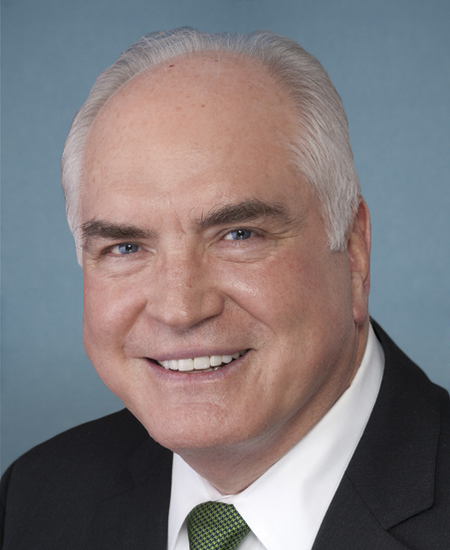
Rep. Mike Kelly
Sponsored bills
Maddy summaryThis bill requires health plans and insurers to create a clear, timely process for patients or doctors to request exceptions when step therapy protocols (which force patients to try cheaper drugs first) might harm them. It mandates approval for exceptions in six specific cases, such as when prior treatments failed, delaying care risks severe harm, or the required drug causes adverse reactions. Plans must respond within 72 hours (24 hours for emergencies) and cover the requested drug for at least one year if approved. Additionally, health plans must report annual data on exception requests, approvals, denials, and reasons to the government for transparency.
Maddy summaryThe HEADACHE Act establishes a National Headache Disorders Initiative (NHDI) under the Department of Health and Human Services to address conditions like migraines, cluster headaches, and other headache disorders affecting vulnerable groups including children, pregnant women, and older adults. It creates an Advisory Council with patient advocates, healthcare providers, and federal agency representatives to guide research, improve diagnosis protocols, and reduce disparities in care. The bill requires federal agencies to share headache-related data and mandates an annual congressional report evaluating progress, disparities across demographics, and recommendations for better access to treatment and stigma reduction, with the initiative set to expire after five years.
Maddy summaryHR 5493, the USA Workforce Investment Act, creates a federal tax credit for individual taxpayers who donate cash to approved workforce development or apprenticeship training programs. It directly affects U.S. individual taxpayers who contribute to qualifying 501(c)(3) organizations listed under the Workforce Innovation and Opportunity Act. The bill allows a credit of up to $1,700 per year for such donations, with adjustments for state tax credits and a prohibition on double-deducting the same contribution. Unused credit can be carried forward for up to five years.
Maddy summaryThe Essential Workers for Economic Advancement Act creates a new H-2C nonimmigrant visa category for foreign workers in non-agricultural jobs requiring little or moderate preparation (classified as zone 1-3 occupations), directly affecting employers in full employment areas (where unemployment is ≤7.9%) and workers in those occupations. To hire an H-2C worker, employers must first recruit U.S. workers through specific methods (advertising for 30 days and using at least 3 recruiting activities), pay a 5% "scarcity recruitment fee" if they can't find a U.S. worker, and register with the government. The bill sets an annual limit of 65,000 H-2C positions for the first year, with potential increases based on how quickly positions are filled, and includes worker protections like minimum wage requirements, prohibitions on treating workers as independent contractors, and whistleblower protections. Employers must also use E-Verify and participate in an electronic monitoring system to track H-2C workers' employment status.
Maddy summaryThe Make America's Youth Healthy Again Act of 2025 establishes a new President’s Council on Sports, Fitness, and Nutrition to advise the President on youth health initiatives. The Council, appointed by the President with up to 30 members serving two-year terms, will recommend strategies to reinstate the Presidential Fitness Test, develop school-based physical education programs, expand community sports access, and address childhood obesity as a national security concern. Key provisions include advising on fitness goals for American youth, promoting partnerships with sports organizations, and emphasizing active lifestyles and nutrition. The Council will terminate two years after enactment unless extended by the President. This bill directly affects federal policy coordination for youth fitness programs but does not create new funding or mandate changes to existing laws.
Maddy summaryHRES 732 is a symbolic resolution designating September 30, 2025, as "Rare Cancer Day" to raise public awareness about rare cancers. It directly affects patients with rare cancers, healthcare providers, and advocacy groups by highlighting challenges like delayed diagnosis, lower survival rates, and limited treatment options. The resolution urges increased awareness of rare cancer symptoms to improve early detection and supports partnerships to advance research and funding for better treatments. It does not create new laws or allocate funds but formally expresses congressional support for these efforts. The resolution was introduced by Representatives Kelly, Wasserman Schultz, Fitzpatrick, and Dingell and referred to the Energy and Commerce Committee.
Maddy summaryThis bill ensures Medicare coverage for new medical devices designated as "breakthrough devices" during a 4-year period after FDA approval. To qualify, devices must meet specific criteria, including FDA priority review, clinical data from Medicare beneficiaries, and a safety review showing benefits outweigh risks. Medicare must finalize coverage decisions within 6 months of manufacturer applications and before the 4-year period ends. The law appropriates $10 million annually (2025-2030) for Medicare to administer this process.
Maddy summaryThis bill permanently bans nitazenes and all structurally related synthetic opioids under federal law, creating a broad definition that covers numerous chemical variations designed to evade current restrictions. It directly affects anyone manufacturing, distributing, or possessing these substances without authorization, including illicit drug producers and users. The key mechanism is a class-wide Schedule I classification that includes specific structural features (like modified benzimidazole rings) and excludes new analogs from legal loopholes. This approach aims to prevent new nitazene variants from entering the illegal market and addresses their role in overdose deaths. Substances previously temporarily banned under similar rules will now be permanently prohibited as of the bill's enactment.
Maddy summaryHR 5401, the Pay Our Troops Act of 2026, ensures military personnel, civilian Defense workers, and supporting contractors receive pay during government funding gaps in fiscal year 2026. It appropriates emergency funds for active-duty service members, reserves, and their supporting personnel (including Coast Guard staff under DHS) if regular appropriations aren't enacted by the end of the fiscal year. The bill provides necessary pay and allowances during any period when full-year funding is unavailable, covering both active service and support roles. Funding expires when regular appropriations are passed, a funding resolution is enacted, or January 1, 2027, whichever comes first. This is a procedural measure to prevent pay delays for military and support staff during fiscal year 2026 funding lapses.