

Maddy summaryThis resolution (HRES 1008) supports designating February 8, 2024, as "Boy Scouts of America Day" to celebrate the organization’s 114th anniversary since its 1910 incorporation. It recognizes the Boy Scouts of America’s history, mission to develop youth leadership and character, and contributions like over 7 million community service hours in 2023. The resolution has no policy or funding impact - it is purely symbolic, expressing the House’s support for the organization’s work through commemorative recognition. It does not affect any individuals or create new obligations.
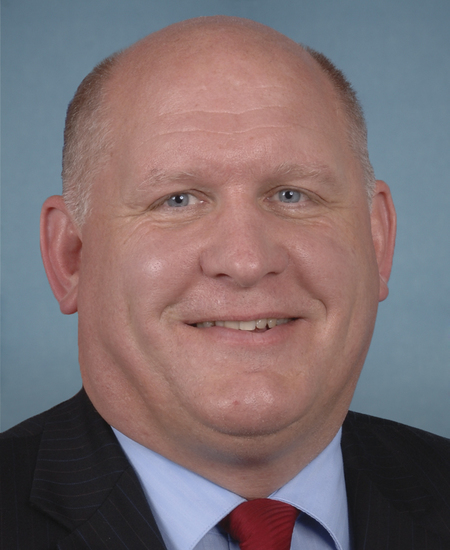
Rep. Glenn Thompson
Sponsored bills
Maddy summaryThe Community TEAMS Act of 2024 creates a new federal grant program to support medical student training in rural and medically underserved communities. It provides funding for 1-5 years to partnerships between medical schools and community health providers (such as rural clinics, Federally Qualified Health Centers, or facilities in underserved areas) to expand outpatient clinical rotations. The goal is to help train physicians who will practice long-term in high-need communities by increasing access to community-based training. Grant applicants must include detailed project plans, sustainability strategies, and evaluation methods in their proposals.
Maddy summaryHR 7276, the Telephone Excise Tax Repeal Act of 2024, eliminates a federal excise tax on telephone and communications services that has been part of the Internal Revenue Code since 1986. The bill removes Chapter 33, Subchapter B (which imposed the tax) from the tax code and makes minor technical adjustments to other sections to maintain consistency. This repeal directly affects consumers and businesses that previously paid this tax on phone service bills, as it will no longer be charged for services billed more than 90 days after the law's enactment. The change is purely procedural, removing an existing tax without creating new obligations or altering other tax policies.
Maddy summaryHRES 993 is a non-binding congressional resolution designating February as "Career and Technical Education (CTE) Month" to celebrate CTE programs nationwide. It supports CTE as a pathway preparing students for high-demand, skilled careers in fields like infrastructure and technology, recognizing that over 12 million students currently participate in CTE programs across high schools and colleges. The resolution encourages educators, counselors, and parents to promote CTE as a respected educational option, highlighting its role in reducing high school dropout rates and aligning student skills with workforce needs. It does not create new laws or allocate funding, but symbolically affirms bipartisan support for CTE, referencing the 1917 Smith-Hughes Act as foundational to current efforts.
Maddy summaryThe LAKES Act (HR 6906) allows local governments and nonprofit organizations to collect and retain user fees for managing lakes and recreation facilities under Army Corps of Engineers projects. It requires that at least 80% of fees collected at a specific site be used for that site's maintenance, while permitting entities to keep up to 100% of fees for related operations. The bill modifies existing laws to ensure these fees supplement, not replace, regular federal funding for recreation facilities. It directly affects local public entities and nonprofits managing Corps-managed water resources. The key change is enabling these groups to retain and use user fees they collect, improving local funding for facility upkeep.
Maddy summaryThis resolution expresses the U.S. House of Representatives' support for designating October 1-7, 2023, as "National 4-H Week." It recognizes 4-H as the nation's largest youth development organization, serving nearly 6 million young people through programs in health, science, agriculture, and civic engagement, delivered by land-grant universities and over 600,000 volunteers. The resolution does not create new laws or funding but formally acknowledges 4-H's role in empowering youth leadership and encourages public recognition of its impact. It directly affects 4-H members, volunteers, and the broader network of land-grant institutions and the USDA's Cooperative Extension System.
Maddy summaryThe Death Tax Repeal Act would eliminate the federal estate tax and generation-skipping transfer tax for estates of people who die on or after the bill's enactment date, and for generation-skipping transfers made after that date. It would also establish a new $10 million lifetime gift tax exemption (adjusted annually for inflation) and replace the existing gift tax rate schedule with a revised structure. These changes would primarily affect high-net-worth individuals and their heirs, as the estate tax and gift tax typically apply to large estates or gifts exceeding the new exemption threshold. The bill's provisions would take effect on the date of enactment, with transitional rules for the year the bill is signed into law.
Maddy summaryH.J.Res. 92 seeks congressional disapproval of a 2022 rule from the Food and Nutrition Service (FNS) that updated how discrimination complaints are processed in federal nutrition programs (like SNAP) following the *Bostock v. Clayton County* Supreme Court decision. The bill aims to block the rule’s implementation, which would have required agencies to handle discrimination complaints under the expanded protections established by *Bostock* (covering LGBTQ+ individuals). If passed, the resolution would make the FNS policy update ineffective, maintaining the previous complaint processing approach. This affects how federal nutrition programs address discrimination claims but does not change the underlying anti-discrimination law.
This resolution supports the designation of National Teach Ag Day and recognizes the important role of agricultural education and the National FFA Organization in developing the next generation of agricultural leaders.
Maddy summaryHRES 946 is a symbolic House resolution recognizing "Gold Shield Families" - defined as the families of fallen police officers, firefighters, EMTs, correction officers, emergency dispatchers, and emergency service providers who died in the line of duty. The resolution formally honors their sacrifices and resilience, affirming that their hardships should not be forgotten. It includes no new funding, regulations, or policy changes; instead, it serves as a commemorative gesture expressing national gratitude. The resolution directs that a copy be sent to the President and made public to publicly recognize these families' contributions.