

Maddy summaryHR 8633, the Stop Copay Overpay Act, caps TRICARE copayments for mental or behavioral health outpatient visits at the primary care rate for all TRICARE enrollees (including active duty, retirees, and families), regardless of provider type. It also temporarily freezes copayments for other specialty care services at 2021 levels for one year after enactment. The bill requires the Secretary of Defense to report on the policy’s impact on the military health system within one year, including any potential future copayment increases.
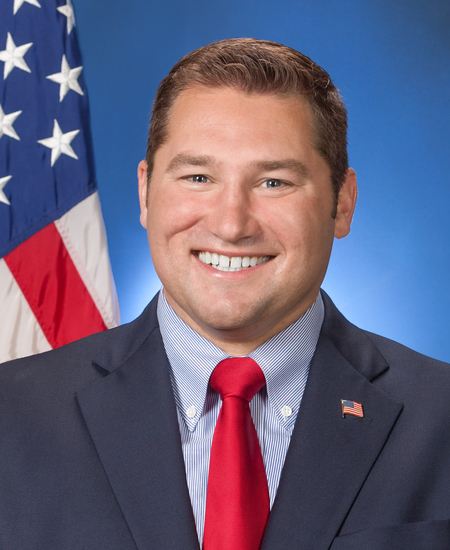
Rep. Guy Reschenthaler
Sponsored bills
Maddy summaryHouse Resolution 1269 is a procedural resolution that sets rules for debating two specific bills in the House of Representatives. It establishes time limits (one hour) and amendment procedures for H.R. 8580 (which funds military construction and veterans' programs for fiscal year 2025) and H.R. 8282 (which would impose sanctions on the International Criminal Court for investigating U.S. personnel or allies). The resolution waives points of order, specifies how amendments may be offered, and sets a timeline for final passage. This resolution itself does not change policy but governs the legislative process for these two bills.
Maddy summaryThis resolution (HRES 1272) calls on the Biden Administration to seek symbolic censure of Iran at the International Atomic Energy Agency (IAEA) for violating nuclear nonproliferation agreements and to refer Iran's case to the United Nations Security Council. It urges diplomatic action to prevent Iran from acquiring nuclear weapons, citing Iran's enrichment of uranium to 60% purity, obstruction of IAEA inspections, and development of advanced centrifuges. The resolution does not create new law but formally requests specific international diplomatic steps from the U.S. government.
Maddy summaryHR 5403, the CBDC Anti-Surveillance State Act, prohibits the Federal Reserve from issuing or facilitating central bank digital currency (CBDC) directly or indirectly to individuals through financial institutions. It specifically bans Federal Reserve banks from offering digital products to individuals, maintaining individual accounts, or using CBDC for monetary policy implementation. The bill also clarifies that its restrictions do not apply to existing physical cash or private, permissionless digital payment systems. This bill directly affects the Federal Reserve's ability to develop or deploy a government-run digital dollar. The law aims to prevent the Federal Reserve from creating a digital currency that could enable transaction tracking or government oversight of personal financial activity.
Maddy summaryHJRES 160 is a joint resolution seeking congressional disapproval of a rule issued by the Department of Health and Human Services (HHS) on May 6, 2024, regarding nondiscrimination in health programs and activities. If passed, the resolution would nullify the HHS rule, preventing it from taking effect and rendering it legally unenforceable. The bill directly affects the implementation of the HHS rule, which was published in the Federal Register (89 Fed. Reg. 37522), but does not alter the rule's content or create new policy.
Maddy summaryThe Alzheimer’s Accountability and Investment Act (HR 620) requires the National Institutes of Health (NIH) Director to annually submit a budget estimate for Alzheimer’s-related initiatives - including personnel needs - directly to the President for review and then to Congress. This budget must be prepared after public comment and submitted without changes by the Secretary of Health and Human Services or the Advisory Council. The bill directly affects the NIH’s budget reporting process for Alzheimer’s research and programs, mandating transparency in how funds are allocated. It does not change funding levels but establishes a specific annual reporting mechanism to improve accountability.
Maddy summaryHJRES 152 is a congressional resolution seeking to block an Environmental Protection Agency (EPA) rule on managing coal ash waste from power plants, specifically for older disposal ponds (legacy CCR surface impoundments). The rule, published on May 8, 2024, established requirements for electric utilities to handle coal ash, including safety standards for existing disposal sites. If passed, this resolution would prevent the EPA rule from taking effect, removing the compliance requirements for utilities. This directly affects electric utilities that manage coal ash and the EPA's regulatory authority over waste disposal practices.
Maddy summaryThis bill reauthorizes the National Alzheimer's Project Act through 2035 (extending the previous deadline of 2025) and adds new requirements to promote healthy aging and reduce Alzheimer’s risk factors. It mandates the program to provide information on healthy behaviors that may lower cognitive decline risk and expands the advisory group to include representatives from agencies like the Department of Justice, FEMA, and Social Security Administration, plus experts with diverse clinical trial experience. The bill directly affects Alzheimer’s research, care programs, and the federal advisory group overseeing national efforts. Key changes include requiring annual evaluations instead of initial ones and adding a focus on reducing health disparities in Alzheimer’s initiatives.
Maddy summaryHRES 1256 is a symbolic congressional resolution condemning the United Nations Security Council's decision to observe a moment of silence for Iran's late president, Ebrahim Raisi, following his death. The resolution claims this action contradicts the UN Charter's principles of promoting human rights, citing Raisi's alleged role in Iran's 1988 mass executions and subsequent human rights abuses. It specifically denounces U.S. UN Deputy Ambassador Robert Wood for participating in the moment of silence. As a non-binding resolution, it does not create new law or directly affect any individuals or policies.
Maddy summaryHR 895, the Combating Organized Retail Crime Act of 2023, expands federal law to better prosecute organized retail theft by amending sections 2314 and 2315 of Title 18. It clarifies that crimes involving stolen goods valued at $5,000 or more over 12 months - including retail theft - can be prosecuted under existing federal statutes, and broadens definitions to include goods taken via "any facility of interstate or foreign commerce." The bill also creates a new Organized Retail Crime Coordination Center within Homeland Security, requiring it to coordinate federal, state, and local law enforcement efforts, share threat information with retailers, and produce annual public reports on trends. This directly affects law enforcement agencies, retailers, and criminal justice systems by standardizing prosecution thresholds and enhancing interagency collaboration.