

Maddy summaryHJRES 142 is a congressional disapproval resolution targeting a Department of Labor rule issued on April 25, 2024. It seeks to block the "Retirement Security Rule: Definition of an Investment Advice Fiduciary" (89 Fed. Reg. 32122), which defined standards for financial advisors handling retirement accounts. If passed, this resolution would make the Labor Department's rule ineffective, directly affecting retirement plan advisors and financial institutions subject to the regulation. The bill uses a specific procedural mechanism under Title 5, U.S. Code, to nullify the rule without creating new law.
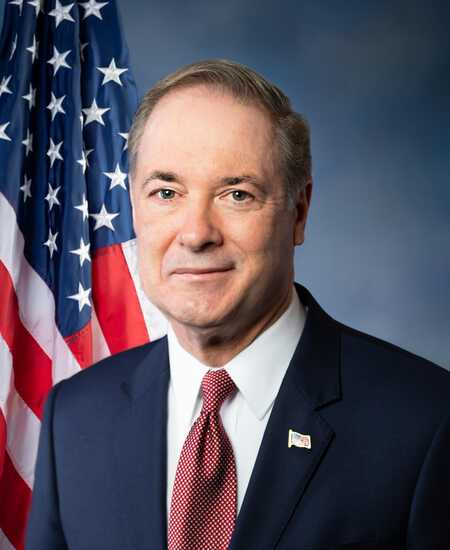
Rep. John Joyce
Sponsored bills
Maddy summaryHR 7438 directs the U.S. Treasury to mint commemorative coins for the 2026 FIFA World Cup, including 100,000 $5 gold coins, 500,000 $1 silver coins, and 750,000 half-dollar coins. The coins will be sold to the public at face value plus surcharges ($35, $10, and $5 per coin, respectively), with all surcharge revenue paid to FWC2026 US, Inc. for U.S. soccer programs. These funds must support soccer initiatives, particularly in underserved communities and youth development, as specified in the bill. The coins are legal tender but will only be issued during 2026, with no net cost to the U.S. government.
Maddy summaryHR 6073 designates the United States Postal Service facility at 9925 Bustleton Avenue in Philadelphia, Pennsylvania, as the "Sergeant Christopher David Fitzgerald Post Office Building." The bill updates all federal references - such as in laws, maps, regulations, and documents - to use this new name for the building. This is a procedural change that honors Sergeant Christopher David Fitzgerald, with no substantive policy impact beyond renaming the facility. The bill was enacted on November 25, 2024, as Public Law 118-122.
Maddy summaryThis bill (HR 5476) is a ceremonial naming resolution that designates the U.S. Postal Service facility at 1077 River Road, Suite 1, in Washington Crossing, Pennsylvania, as the "Susan C. Barnhart Post Office." It directly affects the physical post office location and all official U.S. government references to it. The bill requires all federal documents, maps, and records to use the new name instead of the previous designation. This is a procedural change with no policy or funding impact, solely honoring Susan C. Barnhart through the facility's name.
Maddy summaryThis non-binding resolution (HRES 1571) designates November as "National Bread Month" to symbolically celebrate bread's role in American diets. It highlights bread's nutritional benefits - including fiber, vitamins, and minerals - as noted in the resolution, and emphasizes its affordability, cultural diversity (citing varieties like naan, tortillas, and baguettes), and accessibility in combating food insecurity. The resolution specifically commends the baking industry and encourages Americans to explore bread's versatility in meals. As a symbolic gesture, it has no legal effect or direct impact on policy or affected individuals.
Maddy summaryHRES 1566 is a symbolic House resolution honoring all U.S. veterans on Veterans Day 2024. It recognizes the service and sacrifice of the estimated 15.8 million veterans living in the U.S. as of 2023, including those who served in conflicts from World War II to post-9/11. The resolution calls on the American public to observe Veterans Day to acknowledge veterans' role in preserving national freedom. As a non-binding resolution, it has no direct policy impact but formally expresses congressional recognition of veterans' contributions.
Maddy summaryHR 10096 strengthens the Vaccines for Children (VFC) program by providing financial incentives to healthcare providers who administer vaccines to eligible children. It offers $7,500 upfront and $2,500 annually through 2026 to providers participating in the program, while expanding eligibility to include children enrolled in State child health plans (like CHIP). The bill requires states to implement culturally competent vaccination outreach materials to qualify for a 1-percentage-point increase in federal Medicaid funding (FMAP) for 2025-2026. Additionally, it clarifies that providers may charge fees for vaccine administration only up to actual costs for eligible children and mandates annual public reporting on vaccination rates by state.
Maddy summaryHR 9950, the "Miracle on Ice Congressional Gold Medal Act," authorizes three gold medals to be awarded to the members of the 1980 U.S. Olympic men's ice hockey team for their historic victory over the Soviet Union during the Winter Olympics. The medals, designed by the Treasury Secretary, will be presented by Congress to honor the team's achievement, which revitalized American morale during the Cold War. One medal will be displayed at the Lake Placid Olympic Center, one at the USA Hockey Hall of Fame in Eveleth, Minnesota, and one at the U.S. Olympic Museum in Colorado Springs. The bill also permits the sale of bronze duplicates to cover production costs. This is a ceremonial honor, not a policy change, directly recognizing the team members and their legacy.
Maddy summaryThis bill clarifies Medicare rules to allow doctors to provide certain critical medications directly in their offices without extra administrative hurdles. It specifically amends a Medicare provision (Section 1877(b)(2) of the Social Security Act) to remove a requirement that drugs furnished in-office must follow specific administrative rules, effective May 11, 2023. The bill also directs the removal of conflicting Medicare guidance published in 2021 and 2023, which had previously restricted this practice. This change directly affects Medicare beneficiaries (seniors) and doctors' offices that supply covered medications during patient visits. It streamlines access to necessary drugs by eliminating an unnecessary barrier to in-office medication administration under Medicare.
Maddy summaryHJRES 136 is a resolution seeking to block an Environmental Protection Agency (EPA) rule that would have set new emissions standards for light and medium-duty vehicles sold in 2027 and later model years. The EPA rule, published in April 2024, aimed to require vehicle manufacturers to meet stricter pollution limits for these vehicles. If passed, this resolution would cancel the rule, preventing the EPA from enforcing the new standards. It uses a congressional process that allows Congress to reject agency rules with a simple majority vote.