

No Taxpayer Funding for Abortion and Abortion Insurance Full Disclosure Act of 2021 This bill modifies provisions relating to federal funding for, and health insurance coverage of, abortions. Specifically, the bill prohibits the use of federal funds for abortions or for health coverage that includes abortions. Such restrictions extend to the use of funds in the budget of the District of Columbia. Additionally, abortions may not be provided in a federal health care facility or by a federal employee. Historically, language has been included in annual appropriations bills for the Department of Health and Human Services (HHS) that prohibits the use of federal funds for abortions—such language is commonly referred to as the Hyde Amendment. Similar language is also frequently included in appropriations bills for other federal agencies and the District of Columbia. The bill makes these restrictions permanent and extends the restrictions to all federal funds (rather than specific agencies). The bill's restrictions regarding the use of federal funds do not apply in cases of rape, incest, or where a physical disorder, injury, or illness endangers a woman's life unless an abortion is performed. The Hyde Amendment provides the same exceptions. The bill also prohibits qualified health plans from including coverage for abortions. Currently, qualified health plans may cover abortion, but the portion of the premium attributable to abortion coverage is not eligible for subsidies.
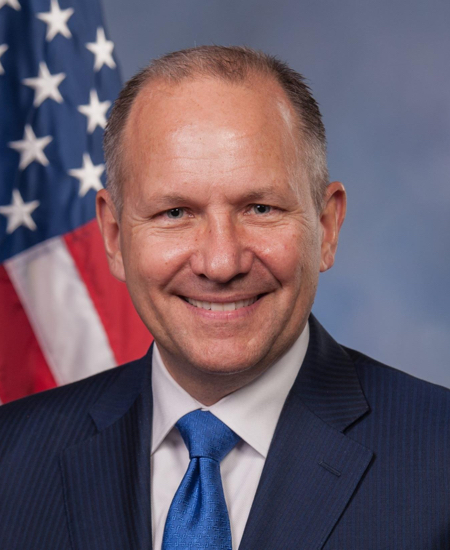
Rep. Lloyd Smucker
Sponsored bills
Chiropractic Medicare Coverage Modernization Act of 2021 This bill expands Medicare coverage of chiropractic services to include all services provided by chiropractors, rather than only subluxation corrections through manual manipulation of the spine.
Affordable Housing Credit Improvement Act of 2021 This bill revises provisions of the low-income housing tax credit and renames it as the affordable housing credit . The bill increases the per capita dollar amount of the credit and its minimum ceiling amount beginning in 2021 and extends the inflation adjustment for such amounts. The bill modifies tenant income eligibility requirements and the average income formula for determining such income. It also revises rules for student occupancy of rental units and tenant voucher payments, and prohibits any refusal to rent to victims of domestic abuse. The bill further modifies the credit to increase state allocations of the credit; repeal the qualified census tract population cap; prohibit local approval and contribution requirements; increase the credit for certain projects designated to serve extremely low-income households; increase the credit for certain bond-financed projects designated by state agencies; eliminate the basis reduction for properties that receive certain energy-related tax benefits; and increase the population cap for difficult development areas (i.e., areas with high construction, land, and utility costs relative to area median gross income). The bill also includes Indian and rural areas as difficult development areas and modifies other requirements relating to casualty losses, acquisition credits, and foreclosures.
Accelerate Long-term Investment Growth Now Act or the ALIGN Act This bill makes permanent the expensing of certain new business equipment. Expensing allows the deduction of the full amount of an expense item in the same taxable year.
Comprehensive Care for Alzheimer's Act This bill allows the Center for Medicare and Medicaid Innovation (CMMI) to test a Dementia Care Management Model that provides comprehensive care to Medicare beneficiaries with Alzheimer's disease or a related dementia. Under the model, participating health care providers receive payment under Medicare for comprehensive care management services that are provided to individuals with diagnosed dementia, excluding Medicare Advantage enrollees, hospice care recipients, and nursing home residents. Required services include medication management, care coordination, and health, financial, and environmental monitoring, as well as trainings and other support services for unpaid caregivers. Providers must furnish services through interdisciplinary teams and must ensure access to a team member or primary care provider 24-7. The CMMI must set payments and determine quality measures for the model in accordance with specified requirements. The bill also allows the CMMI to design a similar model under Medicaid.
Invest in American Railroads Act This bill revises and expands the Railroad Rehabilitation and Improvement Financing program of the Department of Transportation (DOT). Specifically, the bill authorizes DOT to pay certain credit risk premiums for loans or loan guarantees; requires DOT to set aside at least $100 million for passenger rail projects in a given fiscal year; directs DOT to provide loans and loan guarantees to private entities with controlling ownership in one or more freight railroads other than Class I carriers; expands eligibility under the loan program to include reimbursement of planning, permitting, and design expenses related to acquiring, improving, or rehabilitating intermodal or rail equipment or facilities; sets forth collateral and appraisal standards under the program; and allows loan repayment terms to be extended up to 50 years after the date of substantial completion of a project, or the estimated useful life of the rail equipment or facilities to be acquired, rehabilitated, improved, developed, or established.
Wage Equity Act of 2021 This bill addresses workplace wage discrimination based on sex. Specifically, it limits the acceptable reasons for wage disparities based on sex to legitimate business-related factors unrelated to sex. Italso protects from liability for such discrimination those employers who conduct a job and wage analysis audit to identify wage disparities and take reasonable steps to remedy any such disparities. Further, the bill prohibits employers from relying on, or requesting, the wage history of a prospective employee for hiring and wage determination purposes unless it is voluntarily provided by the prospective employee. Employers generally may not prohibit employees from inquiring about, or discussing, wage information concerning another employee or from requesting information from an employer about wage differentials. Finally, the bill permits the Department of Labor to establish a grant program for negotiation skills education for women and girls. It also requires the Government Accountability Office to study and report on the causes and effects of sex-based wage disparities.
Resetting the Impact Act of 2021 or the TRIA Act of 2021 This bill requires certain data collection and recommendations relating to a Medicare post-acute care prospective payment system to incorporate the effects of COVID-19 on providers and patients. Current law requires the Centers for Medicare & Medicaid Services (CMS) and the Medicare Payment Advisory Commission to develop a prototype for a unified Medicare payment system for post-acute care that is based primarily on patient characteristics (e.g., cognitive ability, functional status, or impairments) rather than the provider setting (e.g., skilled nursing facility, home health agency, inpatient rehabilitation facility, or long-term care hospital). The bill requires the prototype to account for the role of post-acute care providers during public health emergencies, particularly in light of the COVID-19 emergency and the related effects on such providers and their patients. The bill also delays the development of the prototype until two years after the later of January 1, 2022, and the date by which the CMS has collected eight calendar quarters of data after the emergency ends and other changes have been implemented.
This bill extends from April 15 to May 17 the date of the first installment of the estimated income tax for individuals for 2021.
Providing Responsible Emergency Plans for Animals at Risk of E merging Disasters Act or the PREPARED Act This bill establishes requirements governing the care of animals by entities, such as zoos, in emergencies or disasters. Specifically, the bill requires each research facility, dealer, exhibitor, intermediate handler, and carrier to develop and follow a contingency plan to provide for the humane handling, treatment, transportation, housing, and care of their animals in the event of an emergency or disaster.