Pregnancy Discrimination Amendment Act This bill expands protections against pregnancy discrimination in the workplace by requiring employers to provide the same accommodations for pregnant applicants or employees that it provides to applicants or employees who are not pregnant but have a similar temporary condition that affects their ability to perform their duties.
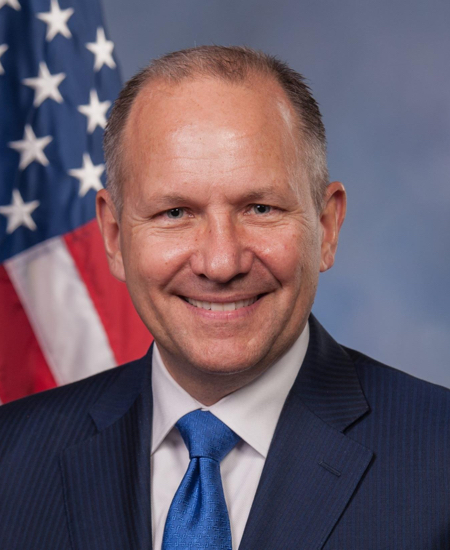
Rep. Lloyd Smucker
Sponsored bills
Accelerating Kids' Access to Care Act This bill requires state Medicaid programs to establish a process through which qualifying out-of-state providers may enroll as participating providers without undergoing additional screening requirements. Among other things, a qualifying provider must (1) serve minors, or adults whose condition began as a minor; and (2) have previously been screened for Medicare participation or for participation in the Medicaid program of the state in which the provider is located.
Equity in Neuroscience and Alzheimer's Clinical Trials Act of 2021 or the ENACT Act of 2021 This bill sets out activities and requirements to increase the participation of underrepresented populations in research and clinical trials for Alzheimer's disease and related dementias. Specifically, the National Institute on Aging (NIA) must establish and provide technical assistance to Alzheimer's research centers located in areas with higher concentrations of minority groups. These centers must establish diagnostic and treatment clinics designed to serve minority, rural, and other underserved populations; operate clinical trials; and carry out public outreach to encourage members of minority populations to participate in clinical trials and research. Additionally, the NIA must disseminate information to members of minority populations about participating in clinical trials and take other actions to enhance diversity with respect to the Alzheimer's research that it conducts or supports. The bill also directs the NIA to increase diversity among Alzheimer's researchers by encouraging the participation of individuals who are from groups that are underrepresented in clinical, behavioral, and social sciences.

Personal Health Investment Today Act of 2021 or the PHIT Act of 2021 This bill allows a medical care tax deduction for up to $1,000 ($2,000 for a joint return or a head of household) of qualified sports and fitness expenses per year. The bill defines qualified sports and fitness expenses as amounts paid exclusively for participating in a physical activity, including (1) fitness facility memberships, (2) physical exercise or activity programs, or (3) equipment for a physical exercise or activity program.
Adoption Tax Credit Refundability Act of 2021 This bill makes the tax credit for adoption expenses refundable.
Savings Access For Escaping and Rebuilding Act of 2021 or the SAFER Act This bill allows penalty-free distributions from tax-exempt retirement plans for domestic abuse victims.
Mainstreaming Addiction Treatment Act of 2021 This bill removes the requirement that a health care practitioner apply for a separate waiver through the Drug Enforcement Administration (DEA) to dispense certain narcotic drugs (e.g., buprenorphine) for maintenance or detoxification treatment (i.e., substance use disorder treatment). Further, a community health aide or community health practitioner may dispense certain narcotic drugs for maintenance or detoxification treatment without registering with the DEA if the drug is prescribed by a health care practitioner through telemedicine. It preempts state laws related to licensure for this activity. The bill also directs the Substance Abuse and Mental Health Services Administration to conduct a national campaign to educate health care practitioners and encourage them to integrate substance use disorder treatment into their practices.
LEOSA Reform Act This bill broadens the authority for certain law enforcement officers to carry concealed firearms across state lines. Specifically, the bill allows qualified active and retired law enforcement officers to carry concealed firearms and ammunition (including magazines) in school zones; in national parks; on state, local, or private property that is open to the public; and in certain federal facilities that are open to the public. Further, the bill permits states to reduce the frequency with which retired law enforcement officers must meet certain qualification standards.
Pain-Capable Unborn Child Protection Act This bill establishes a new criminal offense for performing or attempting to perform an abortion if the probable post-fertilization age of the fetus is 20 weeks or more. A violator is subject to criminal penalties—a fine, a prison term of up to five years, or both. The bill provides exceptions for an abortion (1) that is necessary to save the life of the pregnant woman, or (2) when the pregnancy is the result of rape or incest. A physician who performs or attempts to perform an abortion under an exception must comply with specified requirements. A woman who undergoes a prohibited abortion may not be prosecuted for violating or conspiring to violate the provisions of this bill.
Life at Conception Act This bill declares that the right to life guaranteed by the Constitution is vested in each human being at all stages of life, including the moment of fertilization, cloning, or other moment at which an individual comes into being. Nothing in this bill shall be construed to authorize the prosecution of any woman for the death of her unborn child.